














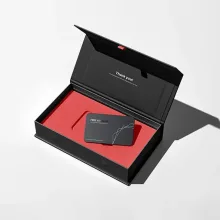



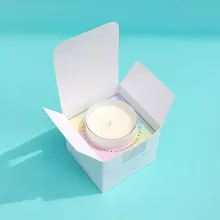









































To calculate the dimensions of a box, measure the product in the position it will occupy during packing. Write the dimensions as length by width by height, or L x W x H, and keep the unit system consistent. Then account for clearance, inserts, protective layers, closures, and the way the product enters and leaves the package. The result is an inside cavity target, not automatically the finished outside size.
What formula should I use for box dimensions?
Use the product's packed length, width, and height as the base of the calculation, then add the space required for the real packing method. Length is the first base direction, width is the second, and height is the vertical direction in the intended position. State which face points up. If the product can sit in more than one direction, choose one orientation and name it in the quote.
| Dimension input | What to measure | Why it matters |
|---|---|---|
| Length | First base direction of the packed product | Sets the long side of the product cavity |
| Width | Second base direction across the product | Sets the remaining base clearance |
| Height | Vertical space in the packing position | Includes lids, caps, handles, or attached parts that stay inside |
| Clearance | Space for insertion, removal, wrap, or movement | Connects the measurement to the actual packing workflow |
| Insert cavity | Usable pocket inside foam, tray, or divider | Defines the product fit separately from the outer box |
| Outside size | Finished exterior footprint | Accounts for board, folds, closures, sleeves, or lids |
Should I measure inside or outside?
Use inside dimensions when the question is whether the product or insert will fit. Use outside dimensions when storage, display, shipping, or a second package depends on the finished footprint. Give both when necessary, but label them separately. Board thickness, folds, closures, sleeves, and lids change the relationship between the cavity and the exterior.
An existing box is only a reference. Its outside size may include unused space, a different board build, or a closure that does not belong in the new package. Measure the product and packing method again instead of copying the old carton.
How much clearance should I add?
Add the clearance required by the actual packing workflow, not an unexplained allowance. Clearance may create room for a soft wrap, an insert edge, a lid, a finger space, or controlled movement during handling. It may also be needed when a product has a fragile surface, a protruding part, or an unusual shape.
Describe what the clearance does in the quote request. Include a sketch or photo when the product shape is difficult to capture with three measurements. A box that fits on paper can still be awkward if the product cannot be inserted or lifted out without rubbing the package.
Does an insert change the box calculation?
Yes. An insert becomes part of the box calculation because it occupies the outer cavity and creates a separate product pocket. First describe where the product sits in the insert. Then describe the insert's footprint inside the box. Keep the product cavity, insert size, and outer box dimensions as separate lines in the brief.
Custom foam box inserts are a useful reference when a product needs fixed pockets or organized support. Custom DNA test kit boxes show why a kit with several parts needs its internal arrangement defined before the outside box is settled. For an upright presentation, compare wine box packaging and note how product position affects the cavity.
Why do packaging formats need different dimension logic?
Different formats create different measurement problems. A bottle package may need an upright cavity and a controlled opening. A footwear package may need a broad footprint and easy access. A tin may have a fixed shell, while a kit box may need several separate positions. Measure the product for the selected structure, not for a catalog label.
Shoe box packaging is a retail reference for a broad footprint and easy access. Embossed tin boxes show a different container direction, so their dimensions should not be transferred to a folding or rigid box without checking the structure.
What goes in CPL's quote form?
Send the product's packed length, width, height, orientation, clearance needs, preferred structure, insert or closure request, artwork status, quantity, and destination. Identify the unit system and label every measurement as inside or outside. Mention any sleeve, window, lid, or special opening before the dieline is prepared. Use custom packaging solutions when the measurements need to be connected to a broader package plan.
What should I check before proof approval?
Check the inside cavity, product orientation, clearance, insert fit, opening behavior, outside footprint, artwork panels, finish notes, and supplied copy. Review the assembled package as well as the flat dieline. CPL uses a minimum order of 100 units. Pricing is from $0.49 per unit at volume, quoted to spec. Production is typically 8 to 10 business days after proof approval, plus delivery. Free US shipping and free design support are available. The $19.99 sample kit can help compare physical structures before approval, and it is credited toward the first order.
Frequently Asked Questions
What do L, W, and H mean in box sizing?
L, W, and H mean length, width, and height. Use one order throughout the request and state the product orientation. Also label the measurements as inside cavity dimensions or outside package dimensions. That distinction matters when the box includes board, folds, a closure, an insert, a sleeve, or a lid.
How do I add clearance to a box calculation?
Add clearance based on the real packing workflow. State whether the space is for insertion, removal, a soft wrap, an insert edge, a lid, a finger space, or controlled movement. Do not copy an unexplained allowance. A sketch or photo helps when the product has a protruding part or an unusual shape.
Which measurement matters when a box has an insert?
When a box has an insert, describe both the product cavity inside the insert and the insert footprint inside the outer box. The insert occupies part of the box cavity, so the product dimensions alone are not enough. State the insert type, product position, contact points, and outside box dimensions separately.
Why are inside and outside box dimensions different?
Inside and outside box dimensions differ because board, folds, closures, sleeves, lids, and attached parts sit between the product cavity and the finished exterior. Use inside measurements to check product fit. Use outside measurements for storage, display, shipping, or a second package. Label both when the quote needs them.
What details should I send with a box quote?
Send the product's packed length, width, height, orientation, clearance, structure preference, insert or closure request, artwork status, quantity, and destination. Label inside and outside measurements. The minimum order is 100 units. Pricing is from $0.49 per unit at volume, quoted to spec. Production is typically 8 to 10 business days after proof approval, plus delivery.