
















































































What should a macaron box protect?
The insert decides whether each macaron has its own pocket or shares a divided tray. Macarons have fragile shells and a filling profile that changes their packed height, so the brief should state diameter, height, count, arrangement, and how each piece is removed. A box that looks right empty can still let the pieces rub or shift once it is carried.
Ask us about food-contact options when the box, liner, window edge, or insert may touch macarons. Put that question beside the board, coating, adhesive, and insert choice. The package should be sized around the filled configuration, not an empty shell or a drawing that ignores the tray.
Which macaron box structure fits the order?
Two-piece rigid packaging gives the lid and base separate jobs, while a drawer or slide adds a guided pull.
| Structure | Common use pattern | Planning question |
|---|---|---|
| Two-piece rigid | Presentation-focused gift packaging | Will a separate base and lid improve access and display? |
| Drawer or slide | Controlled reveal with an inner tray | Is there enough clearance for the tray to slide without disturbing the product? |
| Sleeve | Brand wrap around an inner pack | Which panel should carry the product name and handling message? |
| Straight tuck end or reverse tuck end | Folding carton for efficient assembly | Will the closure and insert keep each macaron in position? |
An insert is the part that separates or supports the macarons inside the outer box. A paperboard divider can split a grid; a formed or custom-cut insert can create individual pockets. Foam can frame a non-food-contact protective component, but ask about food-contact options whenever the insert could touch the macarons. Size the insert and box as one system.
Which board and finish suit macaron presentation?
SBS, C1S, and C2S paperboard in the 12 to 24 pt range cover common folding-carton starting points. C1S has one coated face, C2S has coated faces on both sides, and SBS is commonly chosen for a bright print surface. Kraft board commonly falls around 18 to 24 pt when a natural board color is wanted. A rigid presentation box may use 1.5 to 3 mm chipboard wrapped in 100 to 157 gsm art paper.
Board caliper, the thickness of the board, affects the space left for the insert and the movement of the lid. Offset CMYK suits detailed artwork on paperboard, while digital printing can suit a short run or a variable design. Matte or gloss lamination changes reflection. Soft-touch changes the hand feel. Spot UV, foil stamping, embossing, and debossing can draw attention to a logo or pattern, but keep them clear of folds, glue panels, and high-friction edges.
Can a macaron box include a window?
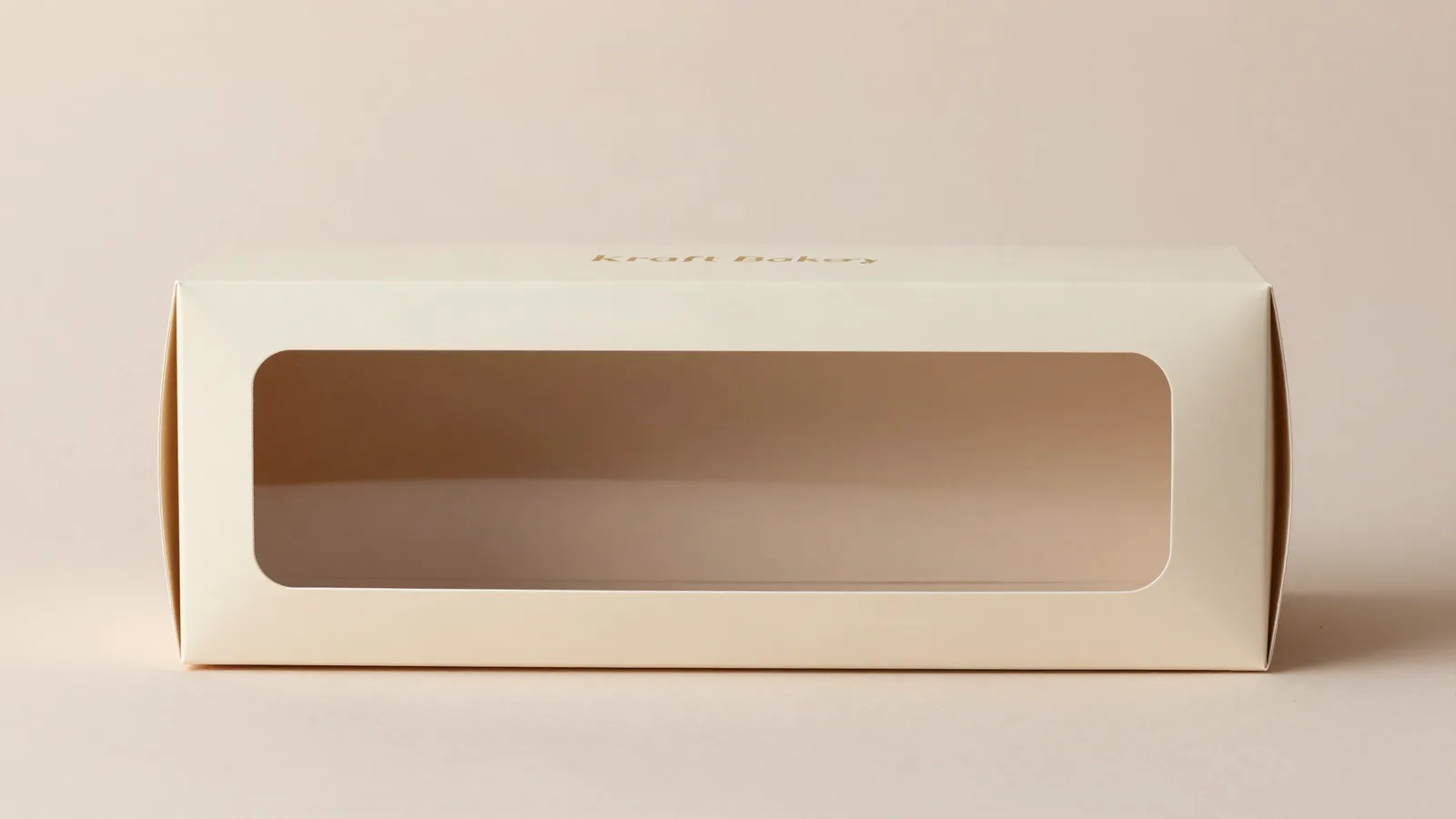
A PET window is a clear plastic film patch, and 0.2 to 0.3 mm is a common reference range. The window can show the arrangement before opening, but it removes board from a panel and adds a patch edge that the artwork and folds must accommodate. Keep the viewing area away from glue zones and fold lines, then check whether the window changes how the tray loads.
How should I size and test a macaron box?
Measure each filled macaron at its widest and highest points before setting the cavity. Record the count per row, number of rows, vertical clearance, insert thickness, and lid or sleeve clearance. Box dimensions are conventionally stated as length x width x depth, and about 1/16 inch, or 1.5 mm, is a common planning tolerance. Test a sample with the actual product and insert.
- Check whether each macaron has an individual pocket or shares a divided tray.
- Carry the filled box flat and upright, then inspect movement around the shells.
- Keep the window away from folds and confirm that the viewing area supports the display plan.
- Review board caliper, coating, laminate, and insert material together.
- Ask about food-contact options for any surface that may touch the product.
What should the macaron box proof show?
The proof must show the flat sheet and assembled box together. A dieline is the flat cutting template that maps panels, scores, trim, bleed, and glue tabs before the printer cuts the sheet. Show the insert, window, lid or sleeve clearance, product arrangement, first-open panel, and removal direction on the same review.
Build artwork from the approved dieline. Keep type away from scores, trim, glue tabs, tuck areas, window edges, and product contact points. Leave bleed on the file. RGB artwork can shift when it is converted for press, and low-resolution art can print soft. At a press check, inspect ink coverage, small type, color blocks, window edges, and any score that crosses artwork.
Which catalog pages help compare macaron formats?
The custom macaron boxes page is the closest catalog reference for a confectionery-centered package. Compare custom printed macaron packaging boxes when the printed structure needs a separate review. A tin-based direction can be compared through chocolate tin boxes, while custom foam box inserts can frame questions about protective interiors. The filled count and insert still decide the final dimensions.
How do I start a macaron box project?
A complete brief starts with the filled product, not the box name. Send the macaron dimensions, count, arrangement, insert idea, box style, artwork status, finish preference, quantity, food-contact use, and delivery location.
Custom Packaging Lane quotes to spec from a 100-unit minimum, with pricing from $0.49 per unit at volume. Production is typically 8 to 10 business days after proof approval, plus delivery. Free US shipping, free design support, and a free dieline are available. The $19.99 sample kit is credited to the first order. Use the custom packaging for small business hub for planning context.
Frequently Asked Questions
What insert is best for a macaron box?
The best insert is the one that holds each macaron with limited movement and leaves enough clearance for opening and removal. Paperboard dividers, formed trays, and custom-cut pockets are common approaches. Choose by count, layout, handling path, and whether the insert touches the food. Ask about food-contact options before selecting the material or coating.
Should a macaron box have a window?
A PET window can show the macaron arrangement before opening. PET window film around 0.2 to 0.3 mm is a common reference range. Place the window on a stable panel, keep it away from folds and glue zones, and check that the opening does not reduce protection or interfere with loading and removal.
What board is commonly used for folding macaron cartons?
SBS, C1S, and C2S paperboard in the 12 to 24 pt range are common folding-carton references. C1S has one coated face, C2S has coated faces on both sides, and SBS is a bright print-surface reference. The final choice should account for insert fit, product weight, closure behavior, and the intended presentation.
How should the dimensions of a macaron box be specified?
State the dimensions as length x width x depth and clarify whether they describe inside or outside measurements. Measure the filled macaron at its widest and highest points, then account for the insert, rows, vertical clearance, and lid or sleeve movement. About 1/16 inch, or 1.5 mm, is a common planning tolerance.
What should a macaron box proof include?
A macaron box proof should show the flat dieline, assembled structure, product arrangement, insert or divider, window area, closure, and removal direction. Artwork should show bleed, scores, glue tabs, trim, and important type in their actual positions. Review low-resolution art, RGB conversion, ink coverage, and finishes before approving the printed file.












