













































What makes a packaging website useful for a real buying decision?
A buyer needs five visible pieces of information before choosing a package: format, material, structure, print method, and proof path. People searching for best packaging websites usually want more than a gallery. The site should connect a folding carton, mailer, rigid box, pouch, sleeve, or bag to a real product-handling job.
A page earns a closer look when it names what the buyer still needs to measure. It should show how artwork reaches the dieline, where the package opens, and what the physical sample will prove. That is the difference between browsing and preparing a usable request.
Which package structures should a website explain?
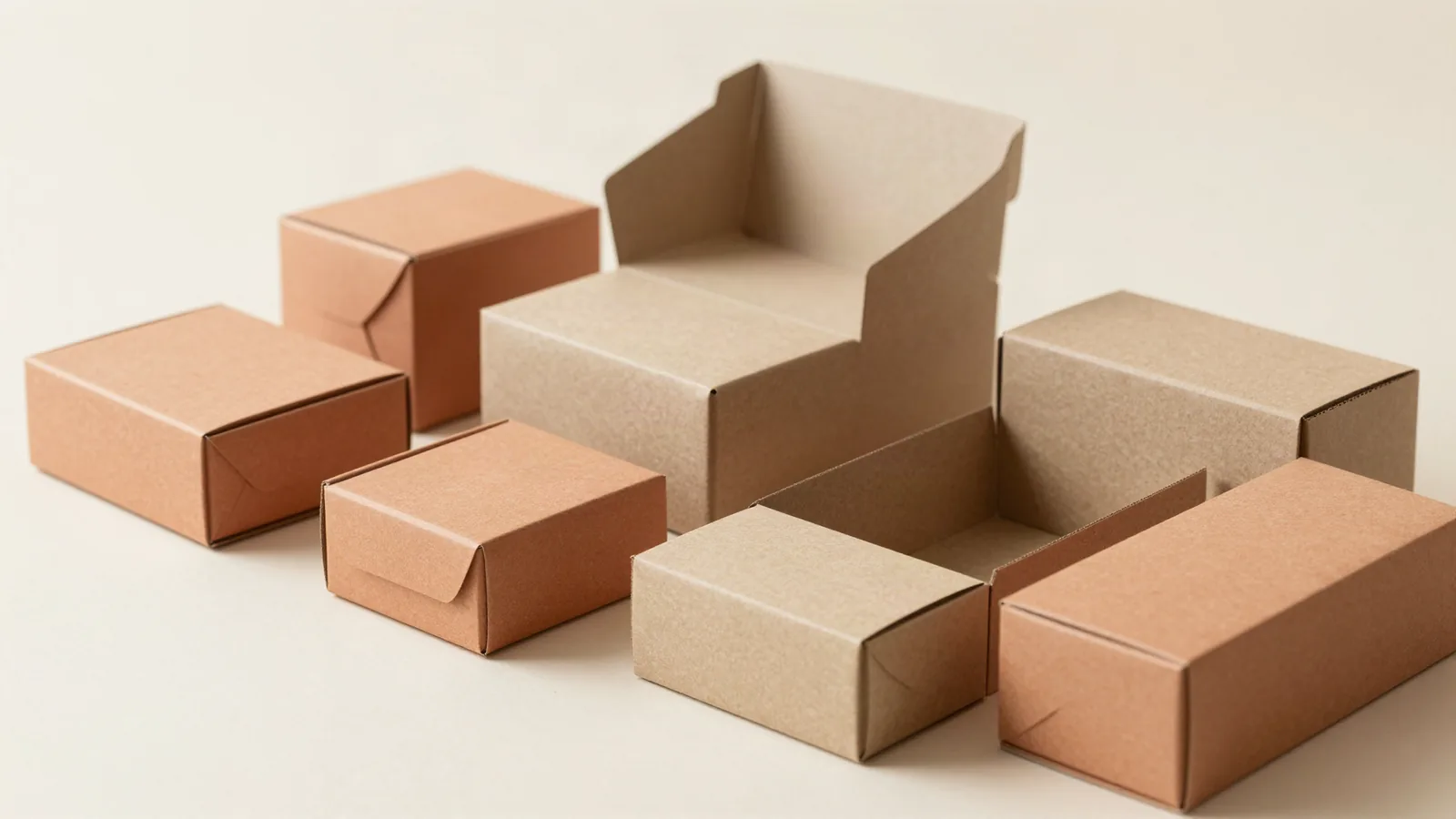
Structure names tell you how a package folds, closes, and loads. A straight tuck end and reverse tuck end use different flap directions. An auto-lock bottom or crash-lock base changes how the bottom forms. A mailer with a roll end tuck top is commonly associated with FEFCO 0427, a standard reference code for that folded mailer format. Two-piece rigid, magnetic flap, and drawer structures change the lid, closure, or pull sequence.
Record the loading direction, glue or lock areas, score lines, insert depth, and packer access. A sleeve wraps a separate inner package. A gable or pillow structure changes the opening and presentation. These names become useful only when the page ties them to fit, access, and assembly.
What materials and board grades should I compare online?
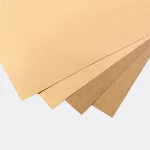
SBS, C1S, and C2S paperboard share a 12 to 24 pt reference range for printed cartons. A point, written pt, is a board-thickness unit. Kraft board is commonly discussed around 18 to 24 pt. Rigid chipboard is commonly 1.5 to 3 mm, wrapped in 100 to 157 gsm art paper. Caliper is the measured thickness of the board.
| Buyer question | Common direction | What to confirm |
|---|---|---|
| Detailed retail graphics | Offset CMYK on SBS, C1S, or C2S board | Caliper, crease lines, and artwork coverage |
| Shipping-oriented format | E, B, or C flute corrugated board, commonly 32 ECT | Interior fit, compression, and handling |
| Firm presentation | Rigid chipboard with an art-paper wrap | Edges, inserts, wrap, and opening sequence |
| Tactile contrast | Matte or gloss lamination, soft-touch, spot UV, foil, embossing, or debossing | Finish registration and small-type clarity |
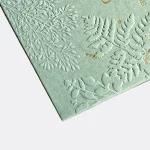
Digital printing is commonly considered for short runs or artwork versions. Offset CMYK is commonly used for repeatable retail graphics, while flexo is common for corrugated packaging. Matte or gloss lamination changes reflectivity and handling. Spot UV, foil stamping, embossing, and debossing create selected effects. Keep each treatment on the artwork map, away from folds, seams, seals, glue, and small type.
How do real product pages narrow the format?
Use wax packaging to study a compact retail direction, shoe box packaging to study a larger opening pattern, and private label packaging to study information hierarchy. Treat each page as a format reference, then replace the category assumption with your product's dimensions, loading method, and artwork requirements.
If visibility matters, PET window film is commonly around 0.2 to 0.3 mm. Flexible packaging may use mylar or foil laminates with PET, AL, and PE layers when barrier and sealing needs call for them. A website should connect those material names to the product and its handling path.
What measurements should I send before requesting a quote?
Use inside length x width x depth when fit matters. About 1/16 in, or 1.5 mm, is a common tolerance reference. State whether each measurement describes the product or finished package, and list any clearance for inserts, seals, or protective material.
For a flexible stand-up pouch, a width from 3 to 7.5 in is a common industry discussion range, but fill volume, seal area, gusset behavior, and the way the pouch stands still need checking. For parcel planning, US ground dimensional weight commonly uses L x W x H / 139.
What should I inspect before approving a package?
The physical sample should settle fit, closure, print, and finish questions before approval. Load the actual product. Open the package repeatedly. Check interior clearance, crease placement, glued seams, edge alignment, barcode space, contrast, and finish registration. A screen image cannot show whether an insert holds the item or whether a drawer pulls cleanly.
Low-resolution art stays soft, RGB art can shift when converted for press, type too close to a score can break on the fold, and missing bleed can leave an unprinted edge after trimming. The proof should show the folded panel order and the actual finish locations.
Custom Packaging Lane is a US-based packaging supplier. Projects use a 100-unit minimum, from $0.49 per unit at volume, quoted to spec. Production is typically 8 to 10 business days after proof approval, plus delivery. Free US shipping, free design support, and a free dieline are included. The $19.99 sample kit is credited to the first order. Review custom packaging design when you are ready to turn the brief into artwork.
Frequently Asked Questions
How do I judge the best packaging websites?
The best packaging websites give you enough detail to compare a structure, material, artwork method, dimensions, proof steps, and the next buying action. Look for specific terms such as tuck end, rigid drawer, paperboard caliper, corrugated flute, finish registration, and inside measurements rather than a gallery with no specifications.
What structure information should a packaging website show?
A packaging website should explain how each structure folds, closes, loads, and opens. Useful examples include straight tuck end, reverse tuck end, auto-lock bottom, crash-lock base, mailer roll end tuck top, two-piece rigid, magnetic flap, and drawer. The page should also identify glue areas, score lines, inserts, and the loading direction.
Which board references are common for printed boxes?
SBS, C1S, and C2S paperboard are commonly referenced in a 12 to 24 pt range. Kraft board is commonly discussed around 18 to 24 pt. Rigid chipboard is commonly 1.5 to 3 mm with a 100 to 157 gsm art-paper wrap. The package structure and product weight still determine which board reference fits the job.
When should I compare digital and offset printing?
Digital printing is commonly considered for short runs, artwork versions, or early package development. Offset CMYK is commonly used for detailed repeat graphics, while flexo is common for corrugated packaging. Compare small type, gradients, brand colors, substrate, quantity, and finish registration on the selected proof before approving the artwork.
What should I check in a physical package sample?
Check the physical package sample with the actual product inside. Inspect fit, clearance, crease placement, glued seams, edge alignment, closure behavior, barcode space, print contrast, and finish registration. Open it repeatedly and check any insert, window, seal, gusset, or drawer action. The sample should answer practical questions that a screen image cannot.