




























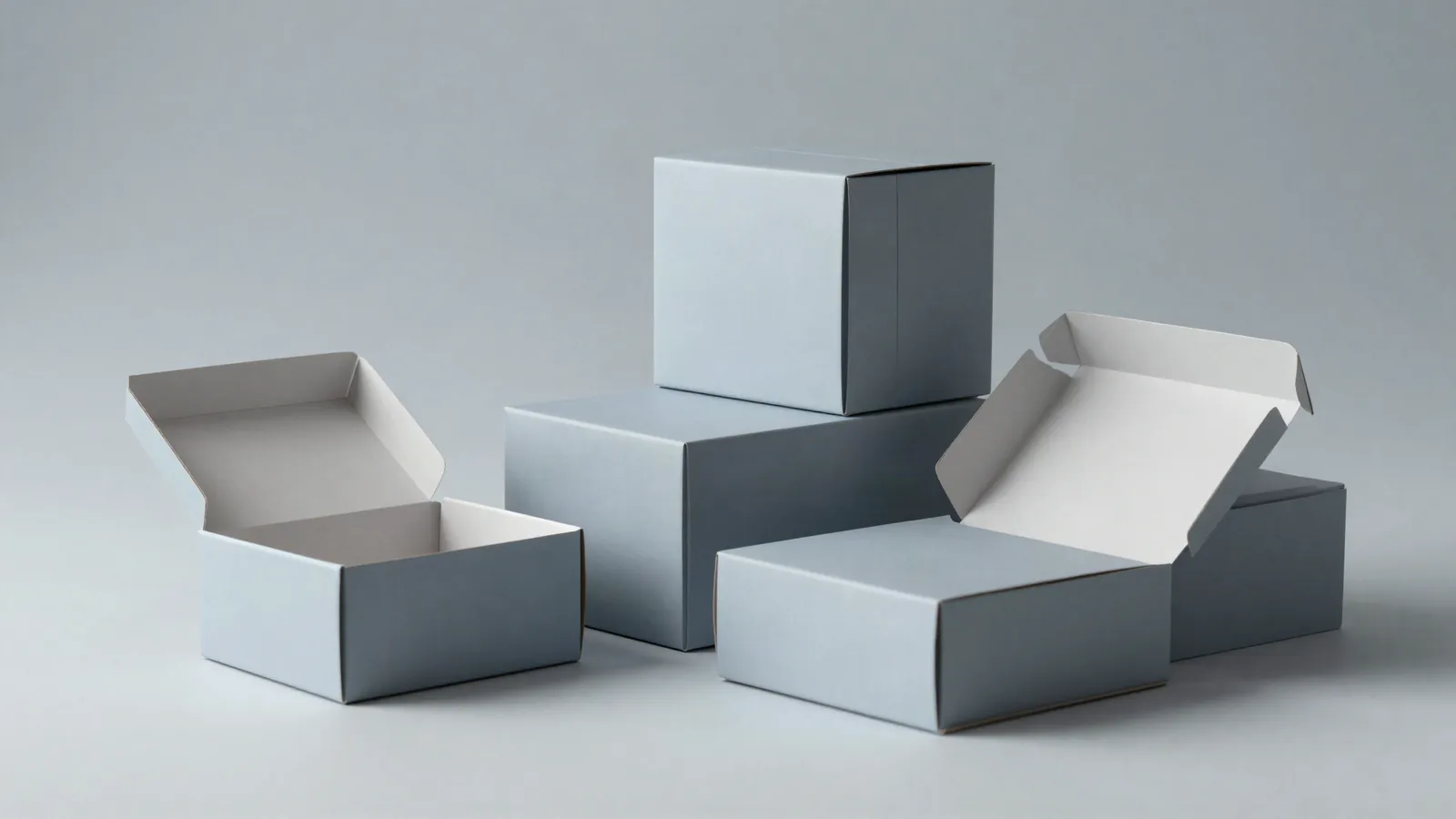




















































Midwest custom packaging starts with the route a product will take, not the state on the ship-to line. A pack-out is the way the product, insert, and inner components sit inside the package. A Midwest brief may cover several ship-to locations, mixed product categories, and seasonal storage conditions. Write that arrangement down with the product's inside measurements, display position, and carrier handoffs. A box that looks right on a screen can still pinch a score, leave a void around the product, or put a printed panel on the wrong side after assembly.
What should Midwest custom packaging account for?
The brief should name the product, its pack-out, the handling path, and the place where the package will be displayed. Tins, candles, hardware, cards, and technical products put different demands on the opening and interior. Mark whether the item will sit on a shelf, go inside a master carton, or move through parcel handling. If a pallet is stacked, note the orientation. That detail changes the board discussion before artwork begins.
Which structures fit different Midwest product orders?
A taper candle needs a different opening from a drone box, and the table below keeps those choices tied to the product.
| Product context | Structure direction | What to check |
|---|---|---|
| Tin packaging | Folding carton or sleeve | Board caliper, print panel, closure, surface finish |
| Taper candle packaging | Straight tuck end, reverse tuck end, or sleeve | Product alignment, opening, artwork area, handling |
| Stevia packaging | Compact folding carton or pillow format | Panel hierarchy, insert need, product visibility |
| Screw packaging | Folding carton with controlled movement | Internal fit, cutouts, hanging or shelf presentation |
| Scissor packaging | Folding carton with controlled movement | Internal fit, cutouts, hanging or shelf presentation |
| Greeting card packaging | Sleeve, folding carton, or mailer | Face protection, stack orientation, print clarity |
| Drone packaging boxes | Mailer or corrugated outer carton | Flute, inside measurements, void control, carrier handling |
Which board and flute should I compare?
For folding cartons and sleeves, compare SBS, C1S, and C2S paperboard at 12 to 24 pt; pt is the board caliper unit used to discuss thickness. Kraft board commonly falls in the 18 to 24 pt range when the project calls for a kraft surface. Rigid chipboard commonly measures 1.5 to 3 mm and can be wrapped in 100 to 157 gsm art paper. E, B, and C flute corrugated board are common outer-pack choices, with 32 ECT as a recognized board-strength convention. Compare those references against the assembled size, stacking orientation, void space, and handling route.
How does print change across the formats?
Offset CMYK suits detailed paperboard artwork, flexo is common on corrugated outer packs, and digital printing fits short runs or version changes. On the artwork check, look for low-resolution files, RGB art after conversion for press, bleed at the cut line, and type set too close to a score or glue tab. Matte or gloss lamination changes sheen. Soft-touch changes hand feel. Spot UV, foil stamping, embossing, and debossing need marked finish zones. A finish that looks clean on white board can read differently on kraft board, so review the chosen substrate before approval.
How should I state dimensions and carrier cube?
Write length x width x depth for both the assembled inside and the outside, then identify which measurements control the product fit. A common tolerance convention is about 1/16 in, or 1.5 mm. Check that allowance against the assembled interior, folds, insert, and product shape rather than the flat artwork alone. For US ground carrier planning, dimensional weight commonly uses L x W x H / 139. That formula is a freight planning convention, not a delivery promise. Ask for an outer carton plan when cube or freight matters.
What should I send before the quote is built?
A usable request begins with dimensions and a pack-out sketch before it names finish effects. Send the following:
- Product dimensions, product weight, assembled inside measurements, outside measurements, and pack-out sequence.
- Board or flute direction, opening style, closure, insert, stacking orientation, and master carton plan.
- Artwork panels, logo and barcode locations, bleed, print coverage, and finish areas.
- Ship-to region, storage conditions, display setting, carrier handoffs, and any outer-carton requirement.
Custom Packaging Lane quotes Midwest projects from a 100-unit minimum, with pricing from $0.49 per unit at volume, quoted to spec. Production is typically 8 to 10 business days after proof approval, plus delivery. The quote includes free US shipping, free design support, and a free dieline. A digital proof is sent before anything prints. The $19.99 sample kit is credited toward the first order. For a broader wholesale brief, visit wholesale custom packaging and request the sample kit.
Frequently Asked Questions
Is Midwest custom packaging limited to one box style?
Midwest custom packaging is a buying context, not a fixed local box style. The structure depends on the product, inside measurements, pack-out, display position, and handling route. A folding carton can suit shelf presentation, while a corrugated outer carton may fit a product that travels through parcel handling. Geography describes the ship-to plan, not the material by itself.
What does 32 ECT tell me about a shipping carton?
32 ECT is a corrugated board-strength convention used when buyers compare outer cartons. It does not choose the flute or settle the fit by itself. Compare the carton size, E, B, or C flute, product weight, stacking orientation, void space, and carrier handling before the board is approved.
Should I provide inside or outside measurements first?
Inside measurements describe the usable space around the product and insert. Outside measurements describe the space occupied by the assembled package and help with master cartons, pallets, and carrier cube. Give both sets in length x width x depth, then review the assembled pack because a flat cutting template does not show every folded clearance.
What finish works on a kraft carton?
Kraft board at 18 to 24 pt gives a different surface and fold response from SBS, C1S, or C2S board. Matte or gloss lamination changes sheen, while kraft changes contrast and color appearance. Mark the finished panels on the artwork check and keep type away from scores, glue tabs, and folds.
How do I compare the catalog formats?
Use product-specific references for the structure question: tin, taper candle, stevia, screw, scissor, greeting card, or drone packaging. A catalog page is a comparison point, not a substitute for dimensions. Match the reference to the opening, internal fit, display position, flute or board choice, and handling route.












