




























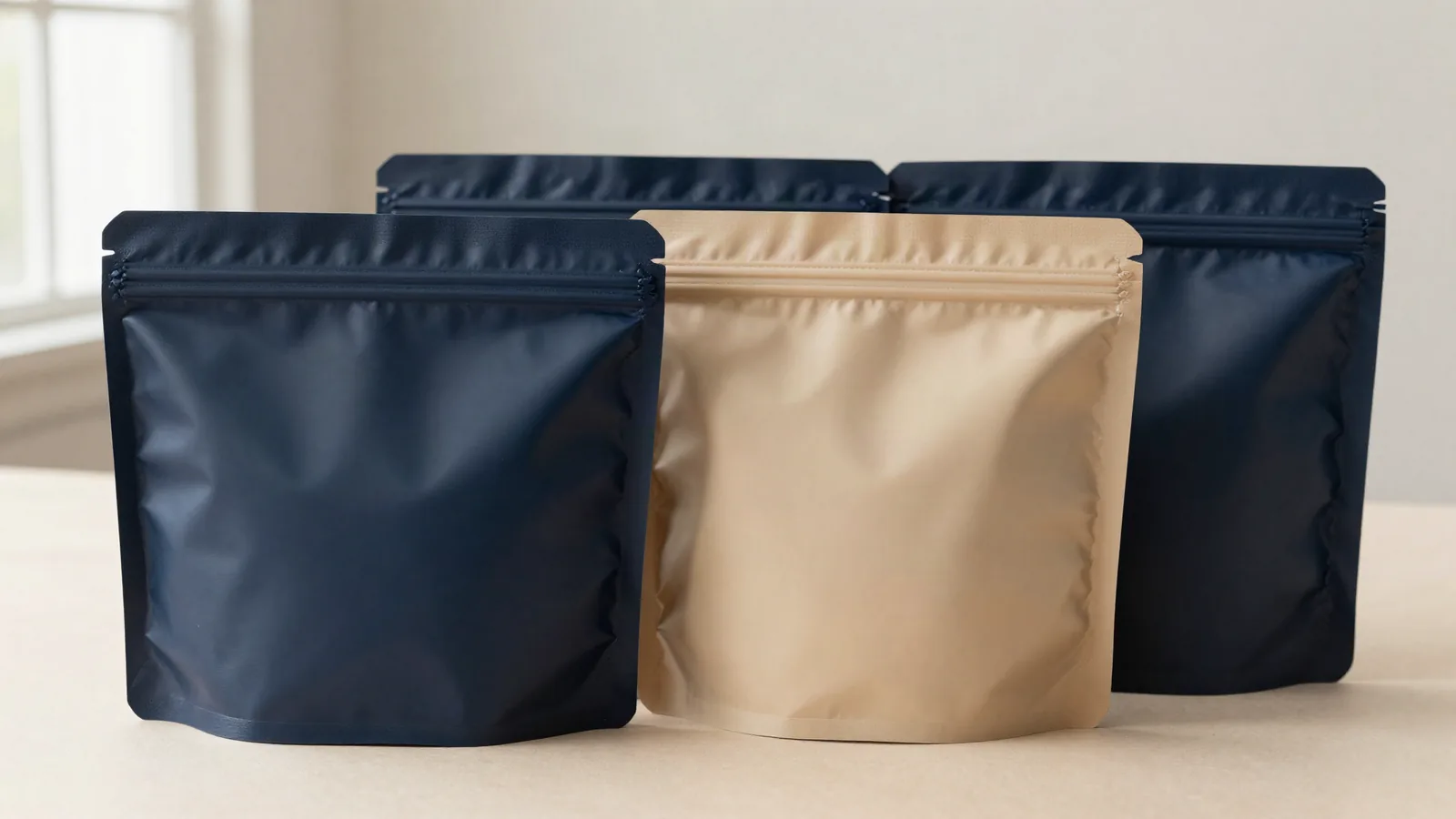




















































Shape Mylar bags around the filled product, filling method, storage position, and presentation. A flat Mylar bag stays low profile. A gusset is a folded section at the side or base that adds depth. A stand up Mylar bag uses a bottom gusset for upright presentation. A die-cut or irregular-shape bag changes the outside perimeter, so the usable fill area has to be checked inside that outline.
Which Mylar bag shape fits your product?
The right Mylar bag shape is the one that matches the filled product and how the package must sit, close, and open. A low-profile fill may suit a flat bag. A product that needs depth or shelf-facing presentation may suit a gusseted or stand-up form. A shaped outline needs a die-cut review.
CPL's Mylar bag dimension records cover these shape directions and provide a starting point for comparison. The filled product still sets the final dimensions. CPL lists irregular-shape Mylar bags, die-cut Mylar bags, and custom Mylar ziplock bags. Use wholesale custom packaging when the bag is part of a larger purchase plan.
How do flat, gusseted, stand-up, and die-cut bags compare?
Flat, gusseted, stand-up, and die-cut bags change the way the filled package occupies space and presents its front panel.
| Shape | What it changes | What to measure |
|---|---|---|
| Flat Mylar bag | Low-profile storage and display | Filled thickness, seal area, closure |
| Gusseted Mylar bag | Side or bottom depth | Gusset width, filled depth, stability |
| Stand up Mylar bag | Upright shelf-facing position | Bottom-gusset proportions, capacity, seal |
| Die-cut Mylar bag | Custom perimeter and visual outline | Cut path, usable fill area, seal path |
The table describes the shape decision, not a universal size chart. Confirm the filled dimensions and closure on the approved proof.
What dimensions should you measure first?
Measure the product in the condition in which it will be packed. Record length, width, height, density, and whether the fill settles, expands, or contains irregular pieces. Then account for the zipper, top seal, and headspace. For a gusseted or stand-up bag, filled depth matters as much as flat width and height.
For larger formats, review large Mylar bags. If the application involves freeze-dried goods, see Mylar bags for freeze drying and ask for the film construction that matches the product and storage conditions. If contents will contact the package, ask us about food-contact options for your product.
Does the bag shape affect film and closure?
Yes. A gusset, die-cut edge, zipper, window, or unusual seal path changes how the bag is formed and how much printable area remains. The film construction is evaluated against the product's exposure to moisture, oxygen, light, or odor. Ask the quote to identify the seal layer, barrier construction, finish, closure, and artwork area.
For a print-led format, see custom printed Mylar bags. The practical check is the usable panel space. Product name, instructions, branding, and supplied copy should fit without being pushed into a seal, cut edge, or zipper track.
What should a custom Mylar bag quote identify?
A custom Mylar bag quote should identify the finished shape, outside dimensions, usable fill area, gusset or die-cut geometry, closure, film construction, finish, artwork, quantity, and destination. Those fields let you compare a flat Mylar bag, stand-up Mylar bag, gusseted Mylar bag, or shaped alternative on the same basis.
What are the order terms for custom Mylar bags?
The minimum order quantity is 100 units. Pricing is from $0.49 per unit at volume, quoted to spec. Shape complexity, dimensions, film structure, printing, finish, closure, and quantity affect the quote. Free US shipping and free design support are available.
How should you approve a custom bag shape?
Production is typically 8 to 10 business days after proof approval, plus delivery. Before approval, confirm the filled dimensions, usable capacity, gusset or cut outline, seal path, closure, film, artwork, finish, quantity, and destination. The clock starts at proof approval.
Order the $19.99 sample kit if you need a physical format reference. Then send the product measurements and intended use for a shape review. For a larger wholesale request, send the same measurements with the intended quantity and destination.
Frequently Asked Questions
Which product works best in a flat Mylar bag?
A flat Mylar bag fits a product that can stay low profile after filling and closing. Check the filled thickness, seal area, closure, storage position, and front-panel space before choosing it. The approved proof should show the actual product dimensions and how the filled bag sits.
Do stand-up Mylar bags always need a bottom gusset?
A stand up Mylar bag uses a bottom gusset for upright presentation. The gusset creates a base, but the filled dimensions, product weight, stability, closure, and seal area still need review. Confirm the bottom-gusset proportions and filled shape in the quote and proof.
What does a gusset change inside a Mylar bag?
A gusseted Mylar bag adds side or bottom depth around the fill. That changes the filled width, depth, stability, usable capacity, seal path, and front-panel proportions. Send the product dimensions and filling method so the gusset width and finished shape can be checked before approval.
Can a shaped Mylar bag include a ziplock closure?
A shaped Mylar bag can be discussed with a ziplock closure when the selected construction supports both features. The proof should show the cut outline, usable fill area, zipper track, seal path, artwork panel, film construction, and finish. Custom Packaging Lane lists die-cut, irregular-shape, and custom ziplock Mylar directions.
What details affect a custom Mylar bag quote?
A custom Mylar bag quote depends on the finished shape, outside dimensions, usable fill area, gusset or die-cut geometry, closure, film construction, finish, artwork, quantity, and destination. The MOQ is 100 units. Pricing is from $0.49 per unit at volume, quoted to spec.












