

































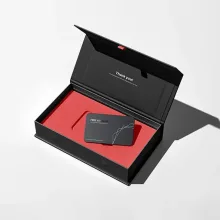














































Corrugated inserts are internal board components that separate, support, or organize products inside an outer box. Corrugated board has a fluted middle layer between liner sheets, so an insert can create walls, slots, trays, or platforms without turning the outer box into a larger empty space. The fit starts with the packed product, not the insert name. Send the product dimensions, orientation, packing order, and outer box details.
What are corrugated inserts?
Corrugated inserts are folded, slotted, or layered board pieces placed inside a box to control product position. A corrugated divider creates separate spaces. A corrugated tray insert supports a product from below or around its base. A pad adds a flat separation layer, while a platform changes the product level inside the box.
The insert and outer box are one packing system. A divider can keep products apart, but it cannot correct an outer box that is too short, too loose, or closed by the wrong flap. The proof should show the product in the insert and the insert inside the selected box.
Should you use dividers, a tray, or a pad?
Use dividers for separate spaces, trays for base support, and pads for a flat layer.
| Insert format | Primary job | Planning question |
|---|---|---|
| Corrugated divider | Separates products or components | How many spaces does the packed layout need? |
| Corrugated tray insert | Supports a product from its base or sides | Where should the product sit when the box opens? |
| Pad | Creates a flat layer between surfaces | Which surfaces need separation? |
| Platform | Lifts the product and creates clearance below | What level and opening view does the pack need? |
| Foam insert | Uses a contoured cushioning material | Does the fit call for a different material? |
A divider suits separate items. A tray fits a product that needs a defined base. A pad works when a flat layer is enough. Choose the format by product shape, load, packing motion, and presentation.
How many dividers does the layout need?
The divider count is the number of separate spaces the packed layout needs. A cavity is one planned space for a product or component. A single product may need a platform or pad instead of a grid, while several products may need partitions that match their orientation and loading order.
Each divider consumes interior width and changes how a packer loads the box. Draw the grid around the actual product dimensions, then check the clearance at the walls, corners, and closure. A generic divider count can leave a product loose, pinch the product, or make the outer box larger than needed.
What board weight and flute should a corrugated insert use?
There is no one board weight for every corrugated insert. Board weight describes the paper fiber used in the sheet, while flute profile describes the shape and height of the fluted layer. The choice follows the product load, divider span, outer box, packing motion, and handling route.
E-flute is thinner and supports finer printed detail. B-flute is thicker. Ask for the board weight and flute in the quote, then check scores, cavity size, and product contact points in the proof.
How should a corrugated insert fit the outer box?
The corrugated insert should be drawn from the finished inside dimensions of the outer box. Corrugated boxes are the reference when the outer shipper is the main handling question. Custom corrugated mailer boxes are the reference when the insert must work inside a mailer that also controls the opening.
Confirm the insert width, height, product orientation, closure clearance, and loading sequence together. A tray that fits the product can still block a tuck flap or press against a score. The proof should show the assembled outer box, insert, product, and closed position.
When should you compare corrugated with foam or rigid inserts?
Compare corrugated with foam when the product needs a contoured cavity, and compare it with rigid construction when the package needs a firm presentation. Custom foam box inserts use a different cushioning approach. Custom rigid boxes with inserts are a reference for chipboard-based presentation. Jewelry boxes with inserts show how a tight product layout can become part of the opening.
Choose the material by the product shape, contact points, loading method, outer box, and presentation requirement. For food products, ask us about food-contact options for your product before the insert direction is finalized.
What should the corrugated insert proof show?
The corrugated insert proof should show the product, the outer box, the insert form, and the complete loading sequence. Free design support can organize the dieline before approval. A dieline is the flat cutting template that maps panels, slots, scores, and glue areas.
- Show each product in its packed orientation, with the product dimensions and arrangement.
- Mark every divider, tray wall, slot, fold, glue area, and contact point.
- Confirm the insert fits the selected outer box and leaves closure clearance.
- State the board weight, flute direction, print coverage, and finish where requested.
- Check loading and product removal.
What are the order terms for corrugated inserts?
The MOQ is 100 units. Pricing is from $0.49 per unit at volume, quoted to spec. Production is typically 8 to 10 business days after proof approval, plus delivery. Free US shipping and free design support are available. The $19.99 sample kit can help compare board feel and presentation direction. For volume packaging planning, see wholesale custom packaging.
Frequently Asked Questions
Do corrugated dividers and tray inserts solve the same problem?
Corrugated dividers separate products or components into planned spaces, while a corrugated tray insert supports a product from below or around its base. A project can use either format or combine them. The product arrangement, loading order, outer box, and required opening view determine the practical layout.
Can one corrugated insert hold more than one product?
One corrugated insert can hold more than one product when the divider or tray layout creates the required separate spaces. Send the product dimensions, orientation, quantity in the box, and packing order. The proof should show the full arrangement, because each divider changes the usable interior space.
What does board weight change in a corrugated insert?
Board weight changes the amount of paper fiber in a corrugated sheet, while flute choice changes the sheet profile and folded behavior. Those choices affect stiffness, divider span, cavity size, scores, and product contact. The selected board weight and flute should be named in the quote and checked on the insert proof.
Can a corrugated insert go inside a mailer box?
A corrugated insert can go inside a mailer box when the insert leaves room for the product, closure, and loading motion. Custom Packaging Lane links the insert layout to the outer box dimensions. Send the mailer style, finished inside dimensions, product arrangement, and required presentation before proof approval.
What does a corrugated insert order cost and require?
A corrugated insert project has a 100-unit MOQ. Pricing is from $0.49 per unit at volume, quoted to spec. Production is typically 8 to 10 business days after proof approval, plus delivery. Free US shipping and free design support are available, and the sample kit is $19.99.