




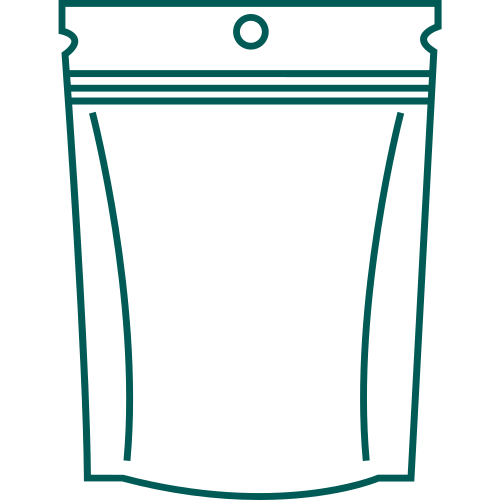












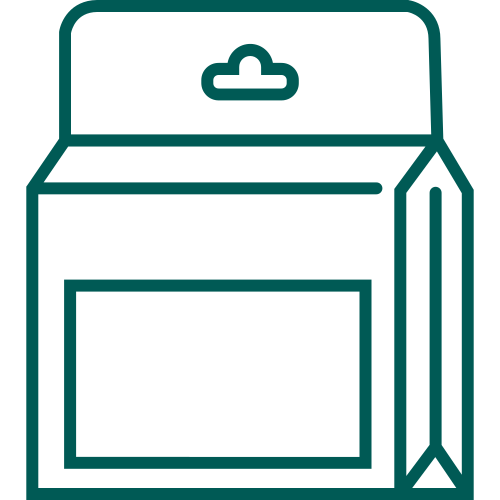




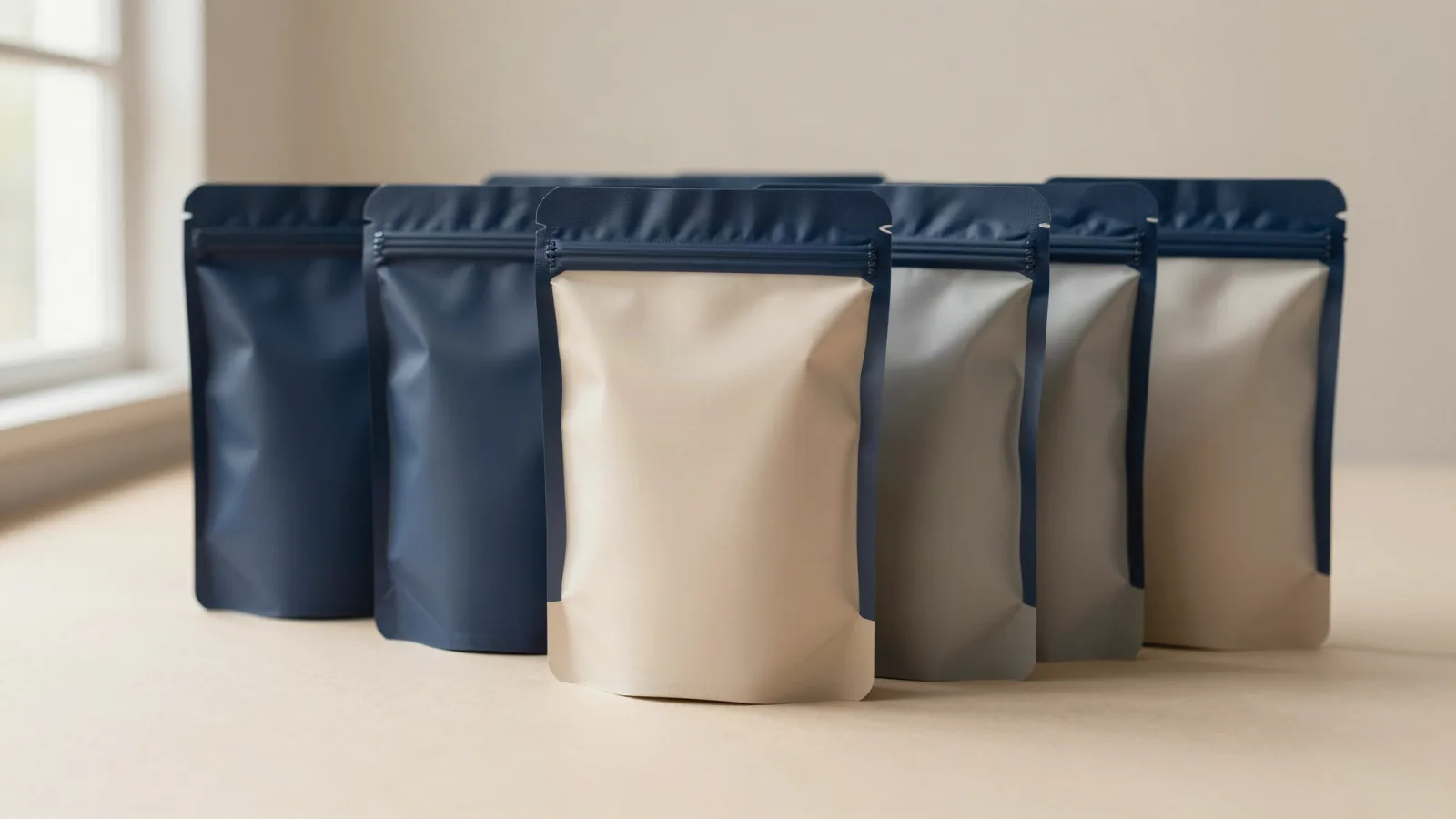



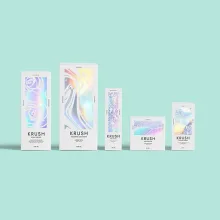
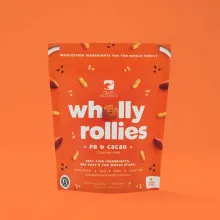































A Mylar bag with a window is a flexible bag with a planned transparent viewing area. The window can show the product while the printed area carries the brand, product name, and variant. Window film clarity means how clearly the contents can be seen through that area. The placement, cut line, material, closure, and artwork belong on one dieline, the flat cutting template used to place print and cuts.
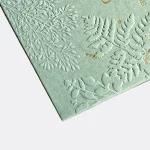
CPL's catalog includes aluminum and polypropylene bag directions, die-cut window options, resealable closures, and finishes such as matte, gloss, soft-touch, foil, embossing, debossing, spot UV, and holographic treatments on relevant formats. A quote should identify which of those applies to the selected bag, not leave the window as a loose design note.
What does a clear window change on a Mylar bag?
A clear window trades part of the printed panel for a view of the contents. That view can show product color, texture, or fill level, while the surrounding print carries the brand and product information. The window also takes space away from the logo, barcode, instructions, and variant field, so its boundary belongs on the dieline before final artwork.
Where should a window go on the bag?
Place the window where the product will be seen after the bag is filled and held in its normal display position. A front window gives the contents the main view. An upper window can leave a larger printed panel below. A shaped window can follow a graphic silhouette, but its cut line still has to clear the seal, side seam, closure, and artwork.
| Window direction | Useful when the buyer wants | Production check |
|---|---|---|
| Front viewing area | Product visibility from the main display side | Logo and copy stay outside the clear boundary |
| Upper viewing area | A glimpse of fill while keeping a lower front panel | Opening and seal do not cover the viewing area |
| Die-cut shaped area | A graphic silhouette around the product view | Cut line clears seams, scores, and closure |
| No window | A continuous printed or opaque barrier surface | Brand information works through print alone |
Keep the window large enough to show the intended part of the product, but do not place it where the contents bunch against a fold. A clear area that faces the back of the filled bag does not help the front presentation.
Which material and finish choices affect window clarity?
The material in the viewing area controls how clearly the contents appear. An aluminum barrier layer is opaque where it remains in the package, while a clear polypropylene section can create the view. Film clarity is separate from the word window, so the quote should name the window material and surface along with the bag construction.
A matte finish scatters reflected light and can soften glare. Gloss reflects more light and can make a window or printed panel look brighter under direct lighting. Soft-touch changes the hand feel. Foil, embossing, debossing, spot UV, and holographic treatments need clear boundaries so they do not cover the viewing area by accident.
Which Mylar bag formats should I compare?
Custom printed Mylar bags fit projects where artwork and panel hierarchy drive the package. Die-cut Mylar bags fit a shaped outline or window cut discussion. Large Mylar bags help frame how a bigger front panel changes the viewing area. Custom plastic Mylar bags give another material and size direction to compare before the window is fixed.
How should artwork sit around a clear window?
Place the window boundary on the dieline before laying out the logo, product name, variant, barcode, and instructions. Keep essential copy away from folds, seams, the closure, and the window edge. RGB artwork can shift during press conversion, low-resolution files can soften, and type too close to a score can fold through a word. Leave bleed on the file where the printer requires it, then check the assembled view before anything prints.
- Mark the window location and safe artwork area.
- Show the front, back, side seam, and closure relationship.
- Identify the surface that stays clear and the surface that receives print.
- Call out any tear notch, hang hole, zipper, or heat-seal direction.
- Keep the approved window intent with the production proof.
What should I include in a window bag quote?
A window bag quote should identify the product visibility goal, window location, material direction, closure, finish, and artwork status. Send these five items:
- Product dimensions, fill method, and normal display position.
- Front, upper, or shaped window location and viewing area.
- Aluminum or polypropylene direction, plus the window film and surface.
- Closure, tear notch, hang hole, print coverage, and finish.
- Artwork files, quantity, delivery destination, and any food-contact question.
If the contents touch the package, ask us about food-contact options for your product. Use custom packaging design to organize the file, dieline, and finish notes. Custom orders use an MOQ of 100 units. Pricing is from $0.49 per unit at volume, quoted to spec. Production is typically 8 to 10 business days after proof approval, plus delivery. Free design support and free US shipping are available. The $19.99 sample kit is credited toward the first order.
Are custom Mylar bags with windows the same as window boxes?
A flexible pouch and a paperboard carton are different structures, even when both reveal the product. Buyers who combine those terms may mean a printed flexible pack with a transparent panel, or a pouch placed inside a separate carton. Specify which package receives the main artwork, barcode, lot code, and product information. If both components are used, size the outer carton from the filled pouch because bottom and side gussets expand after filling.
Which barrier data should a custom window pouch specification include?
OTR and WVTR should be stated for the finished film structure when shelf-life protection matters. OTR is oxygen transmission rate, commonly tested under ASTM D3985, while WVTR is water vapor transmission rate, commonly tested under ASTM F1249. These are public test standards, not claims about a particular bag. Ask for the test conditions and complete layer structure because temperature, humidity, film thickness, seals, and the clear panel all affect the result.
A laminate is a set of bonded films that acts as one packaging web. A common specification may identify printable PET, an aluminum layer, and a PE heat-seal layer, written as PET/AL/PE. PET means polyethylene terephthalate, and PE means polyethylene. The finished specification should also name zipper, tear-notch, and final seal requirements. Compare custom Mylar heat-seal bags when the filling operation ends with a top seal.
What affects the price of custom window Mylar bags?
Bag dimensions, laminate structure, print coverage, clear-panel tooling, closure, quantity break, and shipping zone set the quote. Width alone does not determine material use because height and the opened gusset add web area.
| Quote driver | Production input | Cost mechanism |
|---|---|---|
| Size and gusset | Finished width, height, and expanded depth | Film area and case count |
| Layer structure | Named films, thicknesses, and sealant layer | Material composition and converting steps |
| Clear panel | Straight or shaped boundary | Registration and tooling |
| Printing | Digital, flexographic, or rotogravure | Setup, ink coverage, repeat length, and versions |
| Closure | Zipper, tear notch, hang hole, and top seal | Components and production operations |
Digital printing can suit short versioned runs. Flexographic or rotogravure printing can become more efficient as quantity rises, but the crossover depends on repeat length, color count, ink coverage, and setup. Browse the custom Mylar bag range, then use custom die-cut Mylar bags when the outer silhouette also needs tooling.
How do I prepare a window pouch for wholesale packing?
A filled-pack trial exposes sealing and packing problems before the production layout is approved. Test the zipper and final heat seal with the real fill, then inspect for product trapped in the seal, gusset bridging, film curl, window scuffing, and a pouch that leans after filling. Record the filled width, depth, and height because those dimensions determine how many packs fit in a master carton and how the cases build on a pallet.
The final proof should mark the clear panel, white-ink mask, seal zones, gusset folds, and printed version name on one dieline. Use the sample kit to compare film and finish appearance, then test the selected construction with the actual product before approving a full run.
Frequently Asked Questions
Can a window have a custom shape?
A Mylar bag window can have a shaped cut when the silhouette, seam, closure, artwork, and product position are planned together. Die-cut Mylar bags are a useful catalog direction for that discussion. Put the window boundary and cut line on the dieline, then check the assembled proof before approving production.
Does an aluminum bag show the product through the window?
An aluminum barrier layer is opaque where it remains in the bag, so the product view must come through a separate clear window area. Ask Custom Packaging Lane to identify the window material, placement, and surface in the quote. The proof should show how the clear area sits beside the printed barrier panel.
Can a clear window sit near a zipper or seal?
A clear window can sit near a zipper or seal only after the closure, cut line, seam, and product position are mapped on the dieline. Leave enough clear area for the intended view and keep artwork away from the closure. The assembled proof should show the filled bag in its normal orientation.
Which finish makes a window easiest to see?
A matte finish scatters reflected light and can soften glare, while gloss reflects more light and can look brighter under direct lighting. The window film itself controls clarity, so finish alone does not answer the question. Ask for the window material, surface, and surrounding print to be shown together.
What is the starting order for a window bag?
The starting quantity for a custom Mylar bag with a window is 100 units. Pricing is from $0.49 per unit at volume, quoted to spec. Production is typically 8 to 10 business days after proof approval, plus delivery. Free design support, free US shipping, and the $19.99 sample kit are available.