




























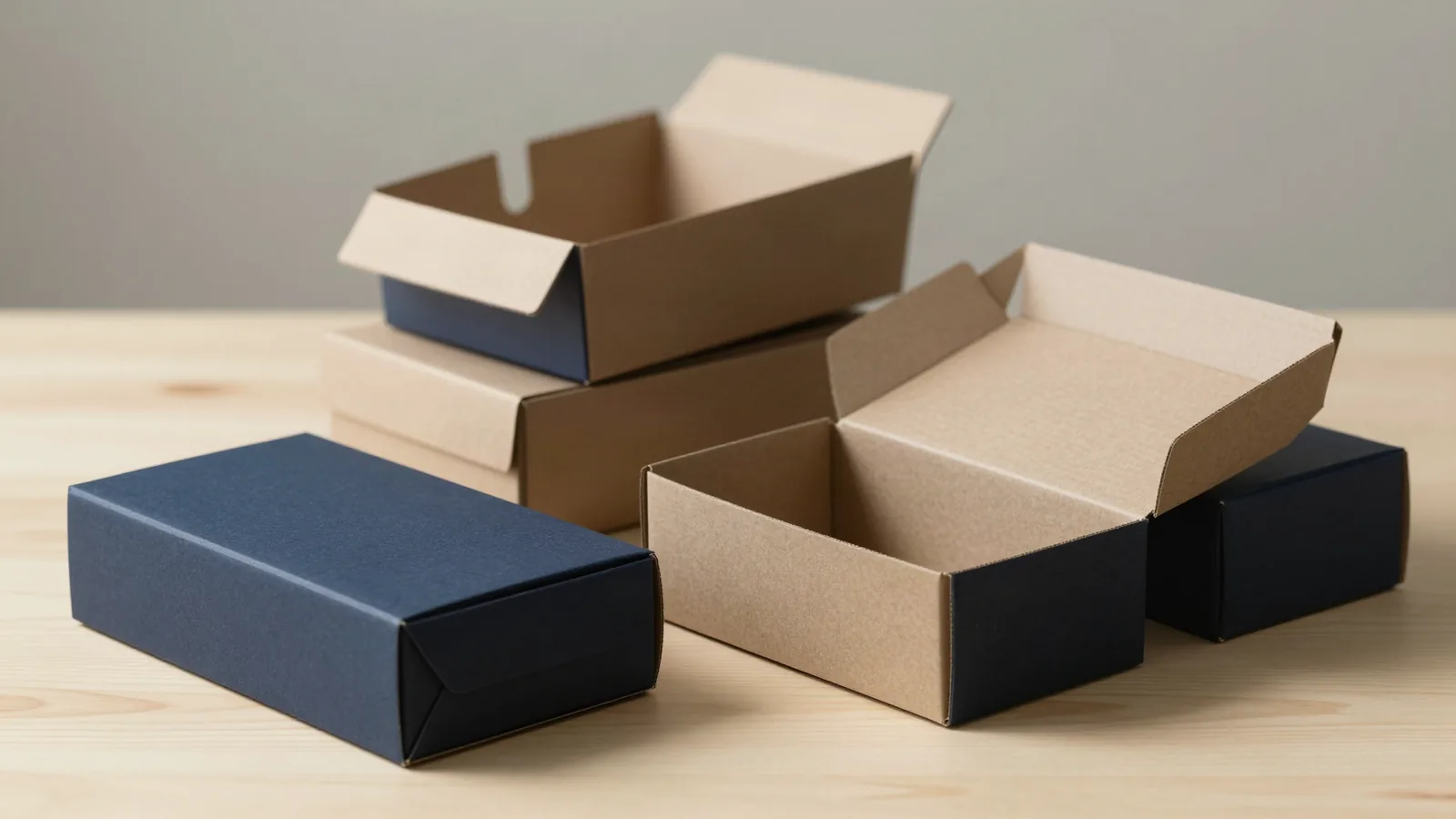




















































Need custom packaging? Start with the product, not a box shape. Give the supplier the finished length, width, and depth, the way the item enters the package, and what must stay still after packing. A dieline is the flat cutting template used to print, cut, score, and fold a package. It turns a rough idea into panels, glue tabs, score lines, bleed areas, and a defined cavity.
What should I tell a packaging supplier first?
Send the inside length, width, and depth first, then describe how the item enters the package. State the quantity per package and the orientation. Add caps, handles, delicate surfaces, separate accessories, liners, and inserts. If the product sits on a shelf, enters a parcel stream, or is packed at a bench, say so. The packing motion changes the closure and the room needed around the product.
Ask about food-contact options early when the package touches a consumable. Include the product, liner, tray, window, and laminate in that question. The material direction should be settled before artwork is locked.
Which format should I compare for my product?
Folding cartons, rigid boxes, flexible pouches, tins, and corrugated packages solve different packing jobs. SBS means solid bleached sulfate paperboard. C1S and C2S mean coated one side and coated two sides. PET is polyester film, AL is aluminum, and PE is polyethylene. In the references below, pt is a paperboard caliper unit, gsm means grams per square meter, and ECT is edge crush test.
| Format | Typical industry reference | First check |
|---|---|---|
| Folding carton | SBS, C1S, or C2S paperboard, 12 to 24 pt | Panel span, fold direction, and ink coverage |
| Kraft carton | Kraft board, 18 to 24 pt | Natural tone, ink contrast, and base stiffness |
| Rigid box | 1.5 to 3 mm chipboard wrapped in 100 to 157 gsm art paper | Lid fit, edge wrap, and stacking |
| Flexible pouch | Mylar or foil laminate with PET, AL, and PE layers | Closure, seal area, and layer order |
| Corrugated package | E, B, or C flutes, with 32 ECT as a common reference | Flute direction, outer footprint, and stacking |
These are typical industry references, not a finished specification. The product, closure, insert, and handling path decide which range belongs in the dieline.
How do I choose the structure and closure?
The right closure is the one your packing station can repeat without forcing the product past a score or glue tab. Straight tuck end and reverse tuck end cartons are familiar folding options. Auto-lock bottoms and crash-lock bases change setup at the bottom of the box.
A roll end tuck top mailer is a parcel-oriented structure, and FEFCO 0427 is a standard code commonly used for that format. Sleeves can wrap an inner package. Gable and pillow structures change the silhouette, while drawers, slides, magnetic flaps, and two-piece rigid boxes change the opening motion. If the item must stay separated, specify a paperboard partition, tray, or fitted foam insert. A PET window needs clear space around the cut, folds, and glue areas.
What material and print facts affect the quote?
Board caliper changes stiffness, fold behavior, edge feel, and the room left inside the package. Offset CMYK suits detailed paperboard graphics, digital printing can suit short runs, and flexo is common for corrugated work. Matte or gloss lamination changes glare. Soft-touch changes hand feel. Spot UV, foil stamping, embossing, and debossing add a localized effect, so mark each one on the artwork.
Flexible packaging should be described by its layer construction, not only by a color or film nickname. A non-woven polypropylene bag commonly uses 80 to 120 gsm material. Cotton canvas commonly uses 8 to 12 oz material. Those are typical material references. The final construction still needs to match the product, closure, and use.
Which catalog examples can help me explain the need?
A product page gives the brief a physical reference, but it does not replace measurements. Custom drone packaging boxes point to geometry and protective inserts. Custom printed macaron packaging boxes show a compact printed-box direction. Custom screw packaging gives a small-part organization reference. Custom tin packaging shows a metal-container direction.
How should I handle size and fit?
Use inside cavity measurements for the product and outside measurements for the packed footprint. State the assembled box as length x width x depth. About 1/16 in (1.5 mm) is a common tolerance reference, subject to the material and structure.
Check the real product with the normal insert, liner, or accessory. Look for movement, pressure at corners, lid interference, and removal friction. Keep type away from scores and glue zones. Leave bleed in the artwork, and check RGB artwork after conversion for press color shifts before the proof is approved.
What should I include in the final request?
A useful final request separates product facts from choices the supplier still needs to resolve.
- Product dimensions, quantity per package, orientation, and packing method.
- Format, structure, closure, insert, window, or flexible-package layer direction.
- Board or material preference, print coverage, artwork status, and finish.
- Destination ZIP code or shipping region and the expected handling path.
- Food-contact questions, opening requirements, or presentation priorities.
Fit comes before finish, structure before artwork placement, and material before surface treatment. Use the dieline and a physical sample to check the result.
For a quote, the project starts at a 100-unit minimum and is quoted to spec. Pricing is from $0.49 per unit at volume, quoted to spec. Production is typically 8 to 10 business days after proof approval, plus delivery. Free US shipping, free design support, and a free dieline are part of the brief. The $19.99 sample kit is credited toward the first order. Compare custom packaging solutions and request the sample kit after the product dimensions are ready.
Frequently Asked Questions
What details belong in a first packaging request?
A first packaging request should include the product's finished length, width, and depth, the quantity per package, orientation, packing method, structure, material, artwork status, finish, insert needs, and destination ZIP code. Note caps, handles, delicate surfaces, accessories, and any direct contact with a consumable. Those details give a supplier enough context to draw the first dieline.
How do I compare a pouch with a box or tin?
A pouch uses flexible layers and a closure, a folding carton uses scored paperboard, and a tin uses a metal container. Compare the product's need for shape, visibility, opening, protection, and reuse before choosing the format. A rigid box adds chipboard walls and an outer wrap when the package must hold its shape.
What does a dieline show?
A dieline is the flat cutting template for a package. It shows panels, scores, cuts, glue tabs, bleed, window openings, and the fold direction before printing. Review it with the product dimensions and insert, because a clean-looking file can still put type across a score or leave too little room for the packed item.
Why do inside and outside box measurements differ?
Inside measurements describe the cavity available to the product, insert, liner, and closure. Outside measurements include board thickness and folding space, so they describe the packed footprint instead. State the assembled box as length x width x depth, label which measurement set you mean, and test the fit with the actual packed item.
When should food-contact options be discussed?
Ask about food-contact options before the material, coating, laminate, window, or insert is fixed when the package touches a consumable. Describe the product and every separator between it and the package. A general carton shape does not answer the material question for every use, so put the contact detail in the first brief.












