




























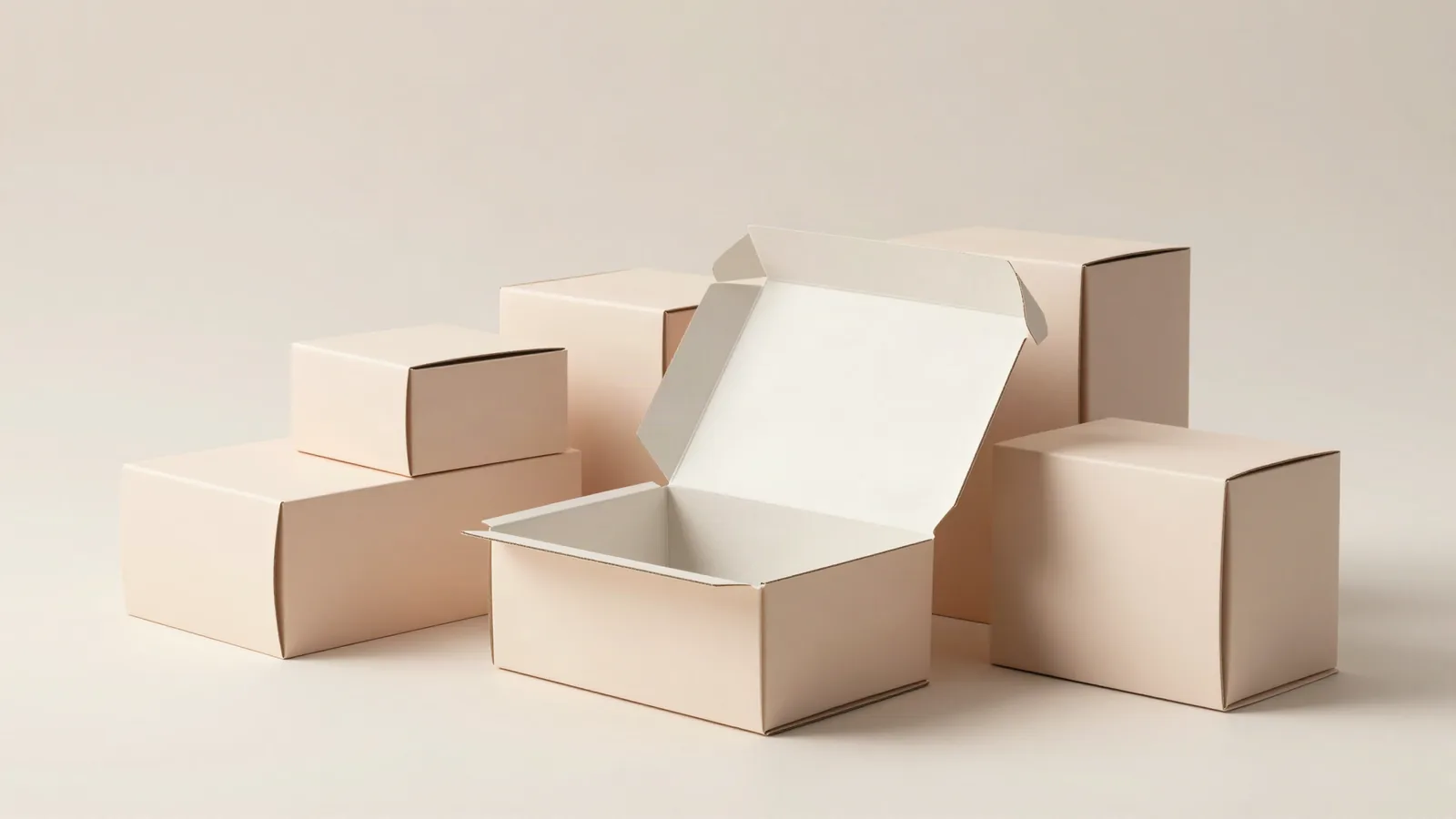




















































Packaging lock usually means the way a carton closes and stays assembled during packing, display, handling, or opening. Straight tuck, reverse tuck, auto-lock bottom, crash-lock, mailer, sleeve, and rigid constructions create different panel motions. Choose the closure after the cavity and handling path are clear, then inspect the assembled package with the real product inside.
What does a packaging lock control?
The closure controls how the package assembles, holds its shape, and opens. Describe whether the box is assembled by hand, filled at a station, placed on a shelf, carried away, or sent through parcel handling. Also record whether the product needs an insert, divider, window, liner, or separate lid. A lock cannot correct a cavity that is too loose or too tight.
Which carton lock should I compare?
Start with the base and opening motion, then compare the lock style against the packing sequence. The table names the physical check that matters for each construction.
| Closure or structure | Common use direction | What to test |
|---|---|---|
| Straight tuck end | Folding carton with a familiar top tuck | Panel order, tuck depth, opening motion |
| Reverse tuck end | Folding carton with the tuck direction reversed | Closure alignment, printed front panel |
| Auto-lock bottom | Carton base that assembles through folded panels | Base closure, setup sequence, product support |
| Crash-lock bottom | Pre-glued style that opens into a formed base | Flat shipment, opening force, bottom alignment |
| Roll end tuck top mailer | Parcel-oriented format commonly associated with FEFCO 0427 | Lid engagement, corner fit, packed footprint |
| Sleeve or rigid format | Outer layer, drawer, slide, magnetic flap, or lid | Reveal, friction, clearance, repeat opening |
The item and packing motion decide which lock deserves the first sample. A tuck closure can suit a compact retail carton. An auto-lock or crash-lock base changes bottom setup. A mailer joins parcel handling to a branded opening. A sleeve, drawer, slide, magnetic flap, or two-piece rigid structure changes reveal and clearance.
How do board and cavity dimensions change lock fit?
Board caliper changes how folds hold their shape and how tabs engage. Typical industry references place SBS, C1S, and C2S paperboard in the 12 to 24 pt range. Kraft board commonly sits in the 18 to 24 pt range. Rigid chipboard commonly measures 1.5 to 3 mm wrapped in 100 to 157 gsm art paper, so it behaves as a wall construction rather than a folding carton board. Corrugated E, B, and C flutes create another structural direction, with 32 ECT as a common reference.
State the box as length x width x depth and use inside measurements for the cavity. About 1/16 in (1.5 mm) is a common tolerance reference, subject to the material and structure. Check the lock with the real product, insert, and liner. Look for tabs that catch too early, a lid that rubs, a base that twists, and a cavity that leaves too much movement around the item.
What should a lock sample prove?
The sample must show cavity fit, panel order, closure engagement, opening direction, base support, and clearance around the real product. Assemble it with the normal packing sequence. Insert the product, accessory, and insert, then close the package fully. Open it from the normal customer-facing direction. If the box will travel through parcel handling, check the packed exterior and the way the closure behaves after the package is picked up.
- Check the intended board and normal assembly sequence.
- Insert the actual product, accessory, liner, and insert.
- Open the package from the customer-facing direction.
- Watch for rubbing, catching, twisting, movement, or difficult release.
Which print and finish choices should stay clear of lock tabs?
Offset CMYK is common for detailed paperboard graphics, digital printing can suit short runs, and flexo is common for corrugated work. Matte or gloss lamination changes glare near the opening. Soft-touch changes hand feel. Spot UV, foil stamping, embossing, and debossing can draw attention to a front panel or logo, but critical copy should stay clear of folds, tabs, scores, and glue areas. Low-resolution art, RGB conversion shifts, and missing bleed can create separate artwork problems even when the lock works.
Which catalog formats help compare closure paths?
Use actual catalog formats to discuss closure mechanics without assuming the listed product is identical to the packed item. Wine box packaging can frame vertical cavities and top closures. Seed packaging can inform small-format folds and compact panels. Perforated packaging can raise opening and tear-path questions. Private label packaging can organize the brand panel, product information, and closure notes in one brief.
What belongs in a packaging-lock request?
- Product dimensions, inside cavity, orientation, and packed accessories.
- Preferred lock style, opening direction, assembly sequence, and reuse needs.
- Board or flute reference, insert, window, liner, and finish requirements.
- Artwork status and panels that must remain clear of folds or tabs.
- Handling path, destination region, and the result the sample must prove.
How do I approve lock artwork?
Approve lock artwork only after the assembled sample closes cleanly, holds the intended shape, and releases in a predictable way. The dieline should show cut lines, fold lines, glue areas, lock tabs, and any window or insert relationship. If the package directly touches a consumable, ask about food-contact options for your product. Custom Packaging Lane quotes the selected structure from a 100-unit minimum. Pricing is from $0.49 per unit at volume, quoted to spec. Production is typically 8 to 10 business days after proof approval, plus delivery. Free US shipping and free design support support the request, and the free dieline records the lock geometry. The $19.99 sample kit is credited to the first order. Compare custom packaging design before approving lock-tab artwork.
Frequently Asked Questions
Are auto-lock and crash-lock the same?
Auto-lock and crash-lock are different folding carton base references with different panel geometry and setup sequences. Check each structure with the chosen board, product, insert, and packing motion. The sample should show how the base arrives, opens, supports the item, stays aligned, and behaves during normal handling.
Can a packaging lock replace an insert?
A packaging lock controls assembly and opening. An insert, tray, divider, or fitted foam component controls product position and separation. If the item moves inside the cavity, improve the fit or revise the insert. Test the lock and insert together because the insert can change the clearance needed by tabs, lids, and closure panels.
How should a locked box be measured?
A locked box should be stated as length x width x depth, with inside measurements used for the product cavity. About 1/16 in (1.5 mm) is a common tolerance reference, subject to the structure and material. Check the real product, liner, and insert inside the closed package so tab engagement and lid clearance are measured in context.
Which print process fits a locking carton?
Offset CMYK is common for detailed paperboard graphics, digital printing can suit short runs, and flexo is common for corrugated work. Compare the process with the substrate, artwork detail, quantity, and finish plan. Matte or gloss lamination changes glare, while soft-touch changes hand feel. Keep critical copy clear of folds, tabs, and glue areas.
What should a closure sample reveal?
A closure sample should reveal the cavity, panel order, lock engagement, opening direction, base support, and clearance around the real product. It should also show any insert, window, liner, or printed area that affects the lock. Handle the assembled box in the intended workflow and note rubbing, catching, twisting, unwanted movement, or difficult release.












