












































































What does sandwich packaging need to protect?
The packed sandwich must stay intact from loading through handoff, with enough clearance for bread, fillings, and the liner. Start with the largest packed length, width, and depth. Record whether the sandwich is wrapped, lined, warm, chilled, displayed, handed across a counter, or carried in a parcel. Those details change the opening and the food-facing construction.
A printed carton can borrow structural ideas from wine box packaging, while perforated packaging can inform a marked opening path. Wax packaging is another reference for a wrapped presentation. These pages are format references. Ask us about food-contact options for your product before selecting a direct-contact layer.
Which sandwich structure is easiest to load?
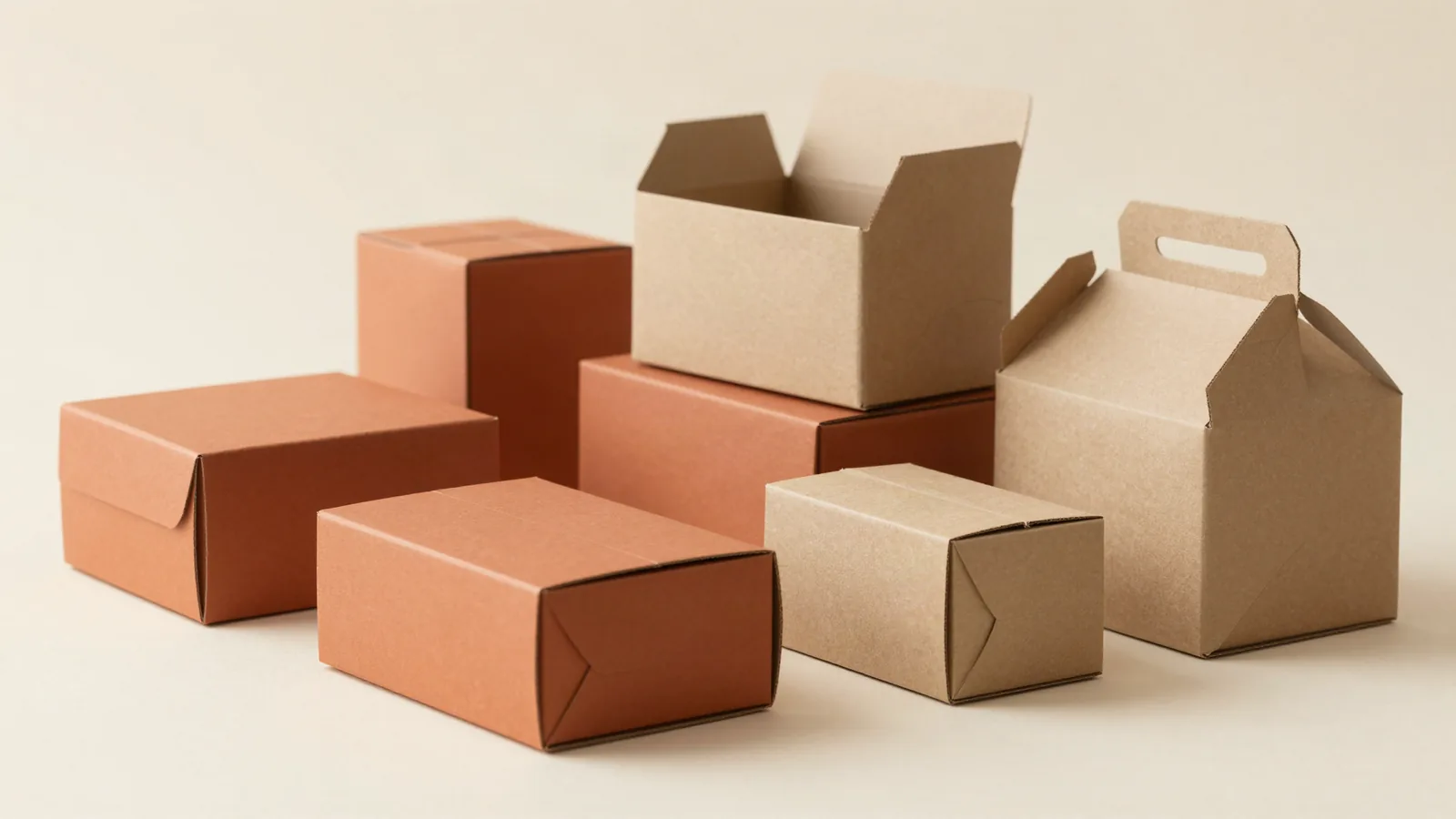
A sleeve keeps the printed wrap separate from a tray, liner, or inner pack. A folding carton can use tuck, lock, or sleeve construction. A mailer-style carton is a roll end tuck top structure, commonly identified by FEFCO 0427, an industry reference code for that folded format. A perforated format adds a marked tear path, which changes both the cut and the artwork.
| Structure | Common use pattern | Buyer checkpoint |
|---|---|---|
| Folding carton | Paperboard pack with tuck, lock, or sleeve construction | Does the opening protect the sandwich without crushing it? |
| Sleeve | Printed wrap around a tray, liner, or inner pack | Can the sleeve stay aligned during handling? |
| Mailer-style carton | Roll end tuck top structure, commonly linked to FEFCO 0427 | Is the structure oversized for a fresh food item? |
| Perforated format | Guided opening path for the customer | Can it open cleanly with one hand? |
| Windowed carton | Visible product area in the front panel | Does the window leave room for copy and the food-facing layer? |
Choose the shortest opening path that matches the handoff. A sleeve can stay clean outside the liner, but it needs enough overlap to hold alignment. A carton needs clearance around bread corners. A mailer-style carton may be too much structure for a fresh item. A window adds visibility and another patch area to inspect.
Which materials can sandwich packaging use?
SBS, C1S, and C2S paperboard are commonly specified in the 12 to 24 pt range for folding cartons. A point, written pt, is a board-thickness unit. Kraft board is commonly discussed around 18 to 24 pt. These ranges describe packaging references, not a conclusion about a particular food-contact application. Ask us about food-contact options, coating, liner, and intended use before selecting a material for direct or indirect contact.
Flexible formats may use mylar or foil laminates with PET, AL, and PE layers. PET contributes a film surface, AL is the aluminum layer, and PE is often used where a sealable inner layer is needed. A paperboard carton, a lined wrap, and a flexible laminate solve different moisture and handling problems. State whether the food touches the package, a liner, or an inner wrap, and whether sauces or condensation are expected.
How do moisture and heat change the package?
A warm sandwich can put condensation inside a closed pack before the customer opens it. Test the package at the actual packing condition, not only with an empty carton. Depending on the food, a liner, inner wrap, controlled opening, or venting approach may be worth testing. A sealed package is not automatically better when moisture needs somewhere to go.
Moisture also changes the customer's grip. A slick wrap, damp carton, or leaking filling can turn a clean handoff into a mess. Check the bottom panel, seams, overlap, and any window patch with the filled product. Record what happens after packing, carrying, opening, and setting the sandwich down.
What opening style works at handoff?
A perforation gives the customer a marked tear path, while a tuck flap or sleeve opening keeps the package more intact. Put the opening where one hand can reach it without pressing the sandwich. Keep the perforation away from the main logo and critical copy. If the cut crosses a fold, the opening behavior needs a physical check.
Offset CMYK is common for detailed paperboard graphics. Digital printing can suit short runs or versioned artwork, and flexographic printing is common on corrugated surfaces. Matte or gloss lamination, soft-touch, spot UV, foil stamping, embossing, and debossing change the outer surface. Keep these treatments away from folds, glue, seals, and the food-facing layer.
What should I include in a sandwich packaging request?
Start with the sandwich dimensions after wrapping or lining it. State inside length x width x depth, packed height, largest filling, loading direction, opening method, display setting, liner or wrap, product count, material preference, print coverage, finish, and delivery destination.
A common planning tolerance is about 1/16 in, or 1.5 mm, but bread, fillings, wraps, and packing variation can matter more than the nominal carton size. A physical sample with the actual sandwich checks clearance, grip, opening, moisture, and mess risk.
Custom Packaging Lane quotes sandwich packaging from a 100-unit minimum, from $0.49 per unit at volume, quoted to spec. Production is typically 8 to 10 business days after proof approval, plus delivery. Free US shipping, free design support, and a free dieline are included. The $19.99 sample kit is credited to the first order. Use the custom packaging solutions hub to organize the brief.
Frequently Asked Questions
How should I measure a sandwich before requesting a package?
Measure the sandwich after wrapping or lining it, including the tallest filling and any folded edge. Record inside length, width, and depth, then explain how the package will be loaded. A common planning tolerance is about 1/16 inch, or 1.5 mm, but food variation and compression can matter more than the nominal measurement.
Can a sandwich carton include a clear window?
A window can be considered when product visibility is useful, but it adds a patch area and another surface to evaluate. PET window film is commonly about 0.2 to 0.3 mm. Check the window location against folds, moisture, condensation, and food-facing layers. Ask us about food-contact options for the specific sandwich application before approving the design.
What packaging detail matters most for condensation?
Inspect the package with the sandwich at its actual packing temperature and moisture level. Depending on the food, a liner, inner wrap, controlled opening, or venting approach may help. A sealed package is not automatically the best package. Test for sogginess, leakage, condensation, and opening performance with the actual product rather than an empty carton.
Which opening style suits a handoff package?
A perforation gives a marked tear path, while a tuck flap or sleeve opening keeps more of the package intact. Place the opening where a customer can reach it without pressing the sandwich. Check the loaded package with one hand, because fillings, wraps, and condensation can change how cleanly the opening works.
What should the printed artwork avoid?
Keep the main logo, product name, and required copy away from folds, perforations, glue areas, seals, and window patches. Offset CMYK, digital printing, and flexographic printing suit different substrates. Matte or gloss lamination, soft-touch, spot UV, foil, embossing, and debossing should be mapped before the proof is approved.