


































































What should I compare when searching for Packola custom boxes?
A like-for-like quote starts with the finished structure and the packed carton. Put the same inside dimensions, board, print coverage, finish, quantity, and delivery destination on every request. A folding carton and a mailer can carry the same product but create different assembly and shipping work. A quote that leaves out the closure or packed carton leaves too much room for a false comparison.
| Comparison point | Question to ask | Effect on the job |
|---|---|---|
| Structure | Tuck carton, mailer, rigid box, sleeve, or drawer? | Changes assembly, protection, opening, and packing labor |
| Board | What caliper or chipboard construction is proposed? | Changes stiffness, fold behavior, weight, and surface |
| Offset CMYK, digital, or flexo? | Changes detail, consistency, and substrate fit | |
| Finish | Lamination, spot UV, foil, or relief? | Changes sheen, touch, and processing |
| Logistics | What are the packed dimensions and destination? | Changes carton count and dimensional weight |
Which box structures belong in a fair comparison?
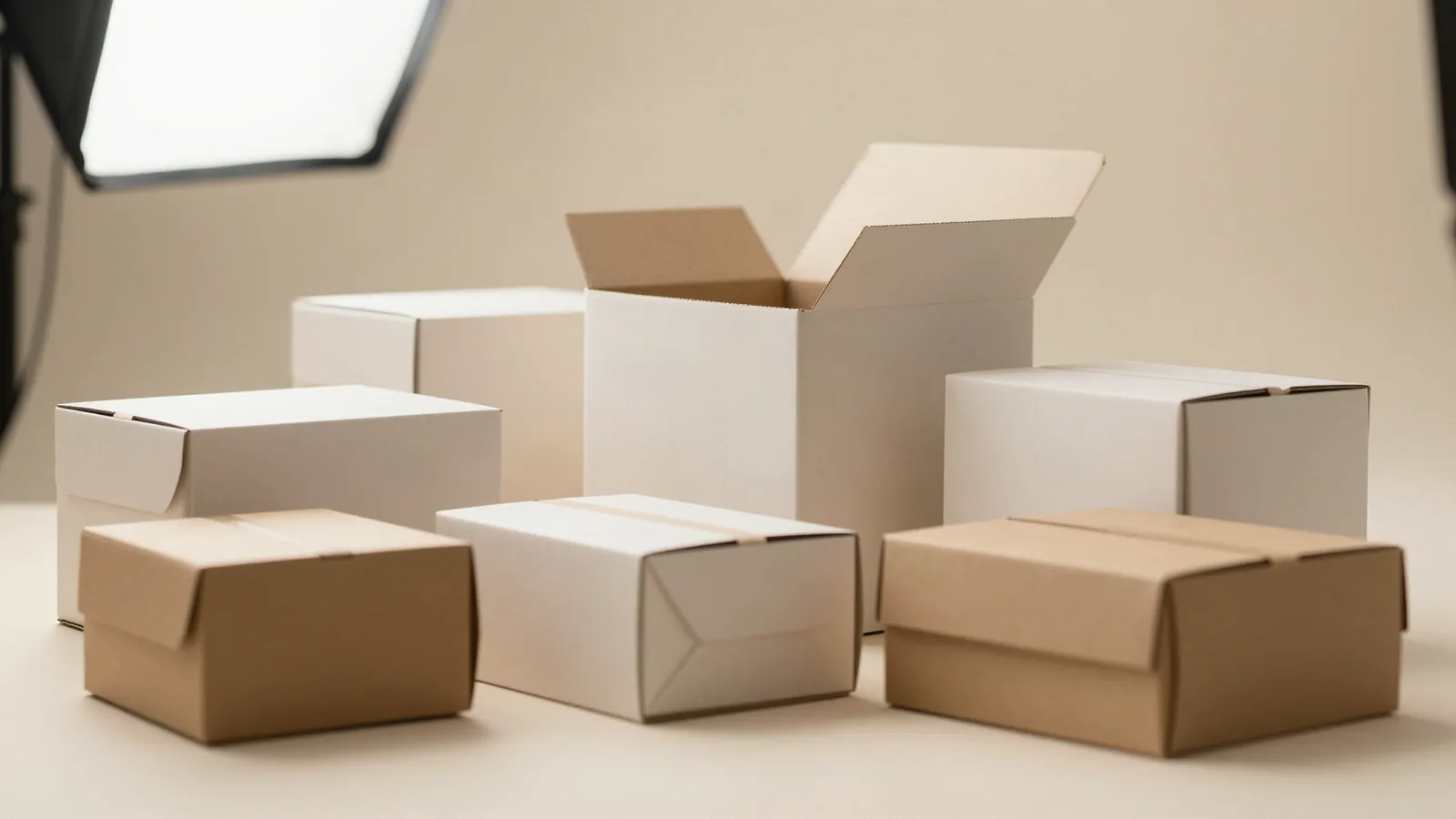
Straight tuck end and reverse tuck end cartons fold flat, while auto-lock bottom and crash-lock bottom structures change the packing step. Mailers often use a roll end tuck top construction, including the FEFCO 0427 style. Two-piece rigid, magnetic flap, drawer or slide, and sleeve formats create different opening motions. Gable and pillow boxes change the shelf footprint. A windowed carton favors product visibility, while a custom insert controls movement inside the package.
For ecommerce, compare a mailer against a folding carton inside an outer shipper. The mailer can combine presentation with a shipping closure. The carton can give more retail panels or a tighter shelf footprint. Check board, dimensions, scores, glue tabs, and closure details before treating a structure name as a complete specification.
What board and print facts should I verify?
SBS, C1S, and C2S paperboard from 12 to 24 pt cover a common folding-carton range. Kraft board around 18 to 24 pt gives a natural surface. Rigid boxes commonly use 1.5 to 3 mm chipboard wrapped in 100 to 157 gsm art paper. Corrugated packaging uses E, B, or C flutes, and 32 ECT is a common strength reference for shipping discussions.
Offset CMYK suits detailed paperboard graphics. Digital printing suits short runs or version testing, while flexo is common for corrugated. Ask which process is quoted, where ink coverage sits, and whether a white base is needed on kraft. Those choices affect small type, color repeatability, and the board surface.
Which finish choices change the surface?
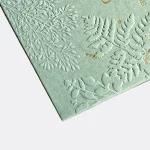
Matte lamination reduces glare, while gloss lamination raises reflectivity. Soft-touch changes the hand feel. Spot UV puts a hard gloss on selected areas, and foil stamping, embossing, or debossing adds a separate decoration step. Window patching adds film and a bonding step. Confirm whether the finish covers the full sheet or only named panels, then keep decoration away from scores, folds, glue tabs, and seams.
How do shipping dimensions affect the quote?
The packed carton sets the dimensional-weight check. Record its length, width, height, carton count, destination, and carrier assumptions. For US ground shipping, a common dimensional-weight convention is L x W x H divided by 139. Use the completed shipping carton in the comparison because the product cavity alone does not describe the parcel.
What should I check on the digital proof?
The digital proof is the flat artwork and structure check before anything prints. Compare panel orientation, grain direction when relevant, bleed, safe areas, barcode placement, window position, closure clearance, and insert fit. Low-resolution art can soften small detail, and RGB art can shift when converted for press. Type set too close to a score can break across a fold.
Review the assembled sample when fit or finish is uncertain. A window can move a logo, a glue flap can cover copy, and an insert cut without enough clearance can let the product rattle. Check the folded package from the same angle a customer or packer will see.
Which CPL product pages show useful box formats?
Window placement is easiest to judge on finished product formats. Compare window soap boxes, window display boxes, and window boxes, then use wallet boxes to inspect a compact folding format. The wholesale custom packaging hub gives the quote a volume context. Order the sample kit when board, window, closure, or finish still needs a hands-on check.
Custom Packaging Lane quotes from a 100-unit minimum. Pricing is from $0.49 per unit at volume, quoted to spec. Production typically takes 8 to 10 business days after proof approval, plus delivery. Free US shipping, free design support, and a free dieline are available. The $19.99 sample kit is credited toward the first order.
Frequently Asked Questions
What should a fair Packola custom boxes comparison include?
A fair Packola custom boxes comparison uses the same finished structure, inside dimensions, board construction, print coverage, finish, quantity, tooling assumptions, packed carton, and delivery destination for every supplier. Record the closure and insert too. Without those details, two prices may describe different packages and cannot be compared as finished goods.
Which structures suit a shipped product?
A shipped product may use a roll end tuck top mailer, a folding carton inside an outer shipper, or a corrugated case. Straight tuck end and reverse tuck end cartons fold flat. Auto-lock and crash-lock bottoms change packing. Choose after checking product movement, closure strength, packed dimensions, and the amount of retail surface required.
What board ranges are common for custom boxes?
Folding cartons commonly use SBS, C1S, or C2S paperboard from 12 to 24 pt. Kraft board around 18 to 24 pt gives a natural surface. Rigid boxes commonly use 1.5 to 3 mm chipboard wrapped in 100 to 157 gsm art paper. Corrugated comparisons should name the flute and any strength reference, such as 32 ECT.
What does a box proof check before printing?
A box proof checks panel order, orientation, bleed, safe areas, barcode placement, window position, scores, glue tabs, closure clearance, and insert fit. Low-resolution artwork can lose detail, while RGB artwork can shift during press conversion. Fold the approved structure and inspect type near scores before the production file is released.
Which shipping figures belong in a box quote?
A box quote should identify the packed carton length, width, height, carton count, destination, and carrier assumptions. A common US ground dimensional-weight convention is L x W x H divided by 139. The finished shipping carton matters because the product cavity does not show the parcel footprint or the space used by packing.