




























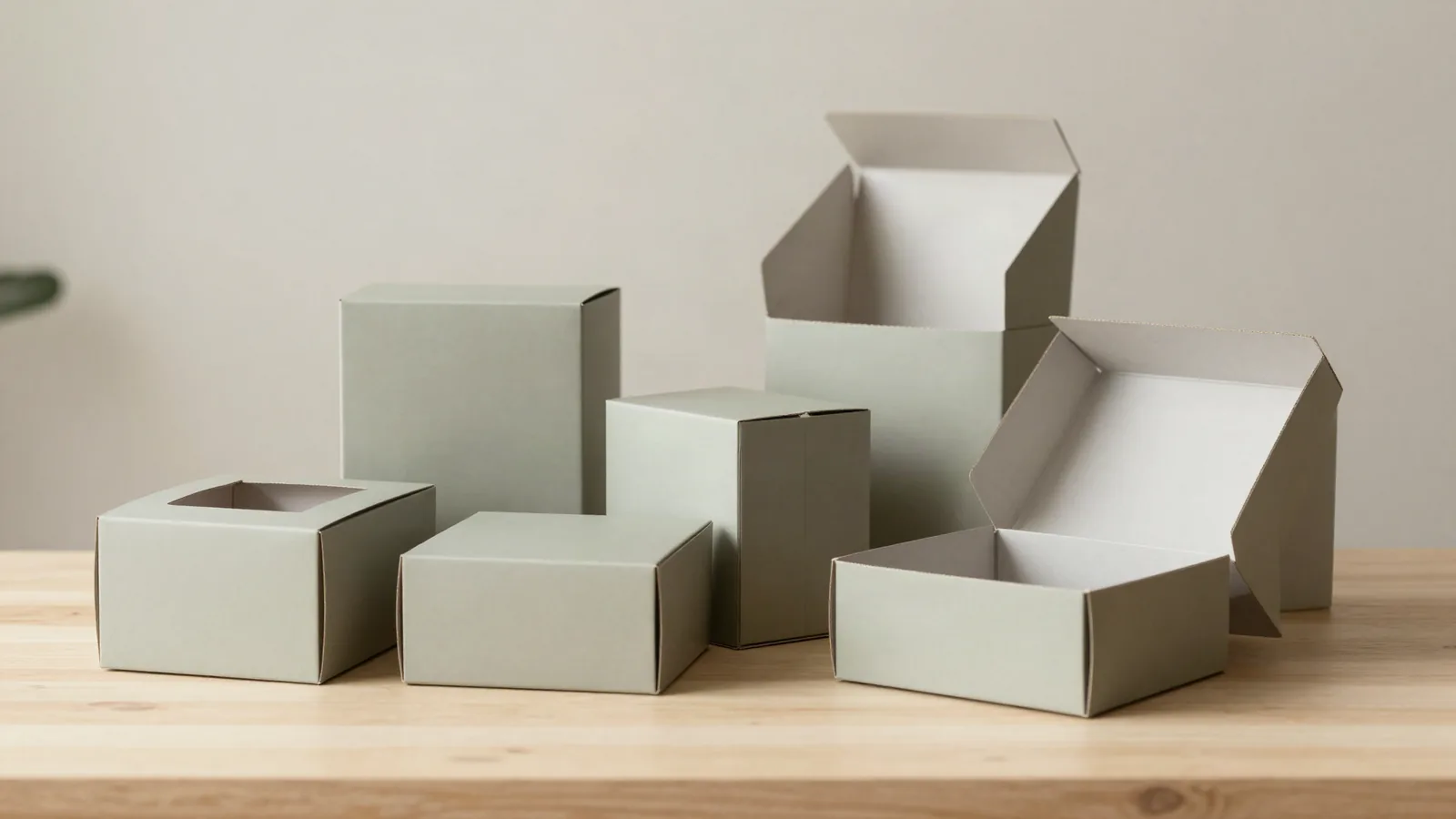




















































Packaging paperboard is a paper-based board cut and scored into cartons, sleeves, trays, and wraps. Paperboard names the material; the structure tells the converter how that material becomes a package. A useful brief states the packed product, board face, caliper, fold pattern, print coverage, finish, and opening motion. Those details keep the paperboard choice tied to the way the package is filled.
Caliper is the board thickness named in points, written as pt. Surface matters too. A coated face takes ink differently from a natural face, and a large panel bends differently from a small one. Measure the packed product first. The box name can come after.
Which paperboard thickness works for a folding package?
A 12 to 24 pt range is a common starting point for SBS, C1S, and C2S folding cartons. SBS is used for a clean printed surface. C1S has one coated side, while C2S has coated surfaces on both sides. Kraft board commonly falls around 18 to 24 pt when a natural surface and board feel belong in the brief. Product weight, panel size, fold pattern, stacking, and print coverage decide whether the first caliper choice holds up.
| Board reference | Common range or convention | Surface decision |
|---|---|---|
| SBS | 12 to 24 pt | Clean printed surface |
| C1S | 12 to 24 pt, coated one side | Printed exterior with a different interior |
| C2S | 12 to 24 pt, coated two sides | Coated appearance on both faces |
| Kraft board | Commonly 18 to 24 pt | Natural visual direction and board feel |
Which paperboard structure fits the product?
Straight tuck end and reverse tuck end close with folding panels, while sleeves and mailers shift more of the opening work to the outer wrap. A sleeve goes over an inner tray or box. A mailer can use a roll end tuck top or follow the FEFCO 0427 convention. A two-piece setup separates the outer piece from the inner piece. Pillow cartons create a shaped presentation, gable cartons can add a handle, and an auto-lock bottom forms during setup.
| Structure | Typical role | Construction check |
|---|---|---|
| Straight tuck end | Retail cartons and small product boxes | Top and bottom panels tuck in the same direction |
| Reverse tuck end | Lightweight folding cartons | Opposing tuck flaps change the opening edge |
| Sleeve | Wrapped presentation over an inner tray or box | Inner package carries the product fit |
| Mailer | Ship-ready product presentation | Roll end tuck top or FEFCO 0427 convention |
| Auto-lock bottom | Folding carton base | Base forms as the carton opens |
How should paperboard packaging fit the product?
Inside length x width x depth controls the cavity, so those measurements belong in the first line of the brief. Label inside measurements separately from exterior dimensions. A common packaging reference allows about 1/16 in, or 1.5 mm, tolerance, but wraps, inserts, closure friction, and product variation change the working clearance. A physical sample should be checked with the packed product, not an empty carton.
Map the product orientation before drawing the dieline. Mark the front panel, opening edge, glue area, score lines, window, and insert position. If the carton goes into a master carton, check the folded package, flat blank, case orientation, and storage footprint together.
How should paperboard packaging be printed?
Offset CMYK is a common choice for detailed folding-carton artwork and broad color coverage. Digital printing can suit short runs or versioned artwork. Flexo is more commonly associated with corrugated board. The board face changes how the same art reads, so the print process belongs in the same conversation as the material and finish.
Start with the panels customers see first. Leave room for glue areas, scores, bleed, safe zones, and barcode quiet space. Low-resolution art softens small type. RGB art can shift when converted for press. We send a digital proof before anything prints. Use that proof to check panel order, color, fold direction, and whether artwork sits too close to a score.
What changes when a paperboard package has a window?
A window replaces part of a printed panel with direct product visibility. A window patch may use PET in a common 0.2 to 0.3 mm range. The dieline needs to reserve the patch area, keep the window clear of scores and glue, and leave enough board around the opening. Ask us about food-contact options for your product. Child-resistant functionality can be built into a suitable structure, but it changes the closure and opening checks.
Which products suit paperboard packaging?
Wine, towels, socks, shoes, and seeds can use paperboard structures, but each needs a different cavity and opening. Review wine box packaging when the package needs to hold a bottle presentation. For textile formats, compare towel packaging and sock packaging. A footwear carton brief can start with shoe box packaging. Seed products can be explored through seed packaging.
What should a paperboard packaging brief include?
A quote becomes usable when the request names the item, the structure, and the artwork state.
- Provide packed product length x width x depth, weight, wrap, insert, lid, and removal clearance.
- Name the board family, caliper, printed face, print coverage, coating, and finish.
- Choose straight tuck end, reverse tuck end, sleeve, mailer, two-piece, pillow, gable, or auto-lock.
- Mark window, insert, glue, score, bleed, barcode, shelf direction, and master carton needs.
- Attach artwork or identify it as pending, then state the desired proof version.
Custom Packaging Lane quotes paperboard packaging to spec from a 100-unit minimum. Pricing is from $0.49 per unit at volume, quoted to spec. Production is typically 8 to 10 business days after proof approval, plus delivery. The quote includes free US shipping, free design support, and a free dieline. Order the $19.99 sample kit, credited to the first order, then send the product dimensions and artwork status. For artwork planning, see custom packaging design.
Frequently Asked Questions
Is paperboard the same as cardboard?
Paperboard is a paper-based packaging board used for folding cartons, sleeves, trays, and wraps. Cardboard is a broader everyday term for several paper-based materials. A useful specification names the board family and caliper, such as SBS, C1S, C2S, or kraft board, because surface, stiffness, print behavior, and folding performance differ.
What paperboard thickness should I choose?
A common paperboard range is 12 to 24 pt for SBS, C1S, or C2S folding cartons. Kraft board commonly falls around 18 to 24 pt. The right choice depends on product weight, panel size, fold pattern, stacking, and finish. Larger panels or heavier contents may need a more supportive structure, while a small carton may prioritize clean scoring.
Can paperboard packaging include a window?
Paperboard packaging can include a cutout and a patched film window when product visibility supports the package. PET window film commonly falls around 0.2 to 0.3 mm. The dieline needs to reserve the patch area, keep the window clear of scores and glue, and account for how the exposed product will be protected during packing.
Which print process works for folding cartons?
Offset CMYK is commonly used for detailed folding-carton artwork and broad coverage. Digital printing can suit short runs or multiple artwork versions. Flexo is more commonly associated with corrugated board. The choice follows the board surface, color expectations, quantity, and finishing plan. A proof checks how coated and natural boards render the same artwork.
What information belongs in a paperboard packaging brief?
A paperboard packaging brief should include packed product dimensions, requested length x width x depth, weight, opening style, board preference, artwork coverage, finish, window or insert needs, and shipping use. Clarify inside measurements and identify any food-contact question or desired child-resistant feature so the structure can be checked before the dieline is prepared.












