




























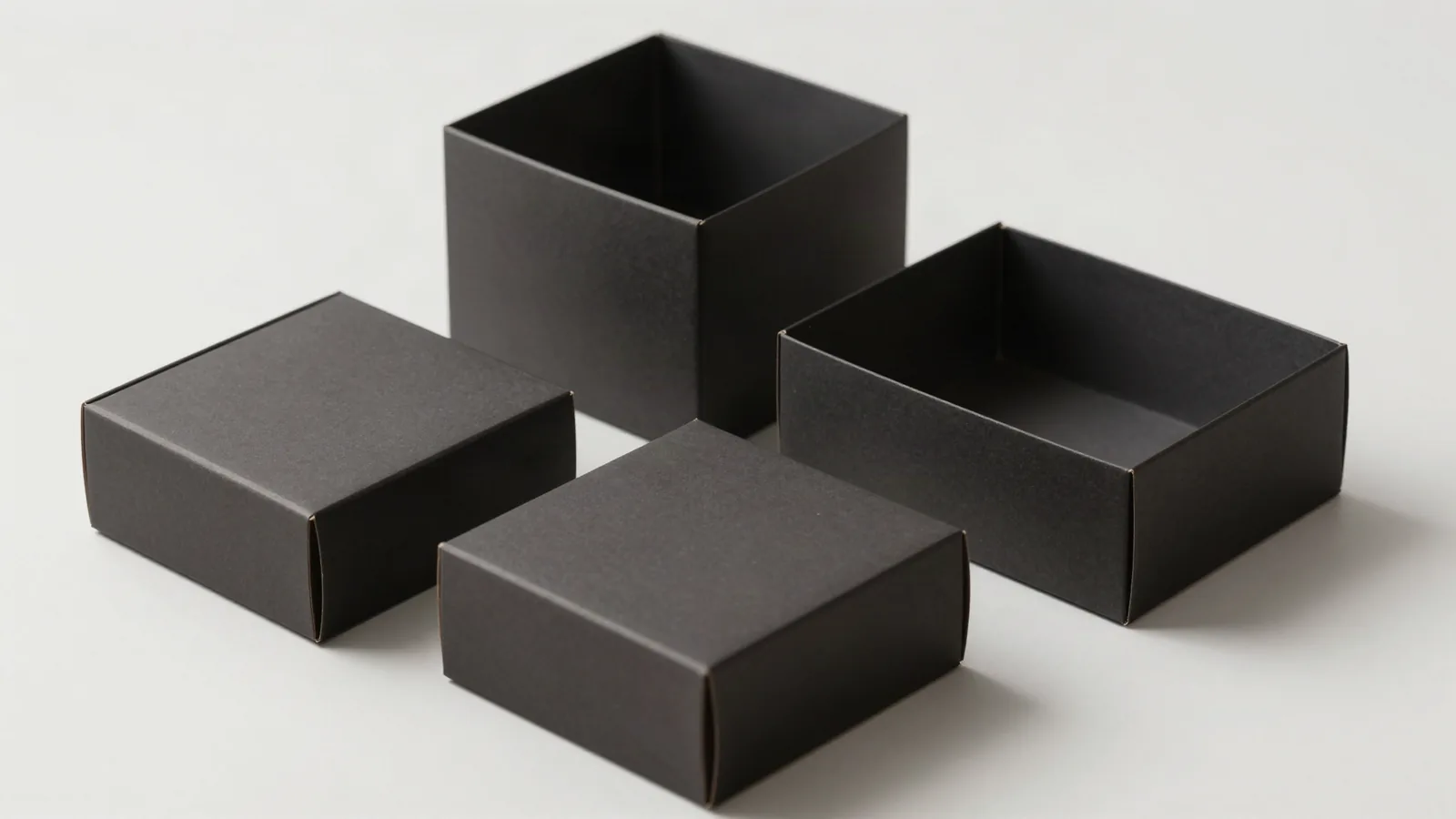




















































A paperboard carton is a flat board blank that is cut, scored, printed, folded, and closed around a product. The flat cutting template is called a dieline. It fixes panel order, glue tabs, score lines, bleed, closure, and any window or insert before artwork is approved. A carton brief should start with the packed product, then record how a person fills, closes, stores, and opens it.
Send product dimensions before anyone draws panels. A mailer or retail carton can look right on a screen and still fail when type crosses a score or the flap lands on the wrong panel. The wholesale custom packaging page is useful when the carton sits inside a larger purchasing plan. For the package itself, start with custom folding cartons.
Which paperboard grade and caliper should you choose?
The board choice sets how the printed face behaves at a score and how much the panels resist bending. Common references are SBS, C1S, and C2S from 12 to 24 pt. SBS is used for a clean printed surface. C1S has one coated side, while C2S has coated surfaces on both sides. Kraft board commonly falls around 18 to 24 pt when the brief calls for a natural surface and board feel. Panel size, product weight, folds, stacking, print coverage, and inside visibility still need a check.
| Board reference | Common range or convention | Useful decision point |
|---|---|---|
| SBS | 12 to 24 pt paperboard | Detailed graphics and clean surface |
| C1S | 12 to 24 pt, coated one side | Printed exterior with a different interior |
| C2S | 12 to 24 pt, coated two sides | Both faces need a coated appearance |
| Kraft board | Commonly 18 to 24 pt | Natural visual direction and board feel |
Which carton structure fits your packing line?
Straight tuck end and reverse tuck end cartons close with tuck panels. Auto-lock and crash-lock bottoms change how the base forms and how the blank stores flat. Straight tuck end keeps the top and bottom tuck panels moving in the same direction. Reverse tuck end uses opposing tuck flaps. An auto-lock bottom forms as the carton opens, while a crash-lock bottom arrives folded for a faster setup sequence.
Gable cartons can add a handle. Pillow cartons create a shaped presentation. Mailer structures can use a roll end tuck top or follow the FEFCO 0427 convention. Choose the structure from the actual filling motion, not from the artwork alone. Keep the carton format reference tied to the selected closure.
How do you size a paperboard carton?
Write length x width x depth on the request and label each measurement as inside or outside. Inside dimensions control the product cavity. A common packaging reference allows about 1/16 in, or 1.5 mm, tolerance when product size becomes a carton specification. The working clearance depends on wrap thickness, insert fit, closure friction, product surface, and how easily the customer should remove the item.
Map the product orientation before drawing the dieline. Mark the front panel, opening edge, glue flap, score lines, window, and insert location. If cartons nest in a master carton, check the folded carton, flat blank, case orientation, and storage footprint. An insert cut with no clearance can hold the product too tightly. Excess clearance lets it move in transit. Use the folding carton reference while those measurements are still easy to change.
Which print and finish choices make sense?
Offset CMYK is a common choice for detailed carton artwork and broad ink coverage. Digital printing suits short runs or versioned artwork. Flexo is more commonly associated with corrugated board. Matte or gloss lamination changes reflectivity. Soft-touch changes the feel of the surface. Spot UV can isolate a logo or panel. Foil stamping, embossing, and debossing add surface contrast. A window patch can use PET around 0.2 to 0.3 mm when specified.
Low-resolution art softens small type. RGB art can shift when it is converted for press. Leave bleed on the flat file, keep type and barcodes clear of scores and glue flaps, and check the folded orientation. A press check looks at color, ink coverage, registration, and type near a score. We send a digital proof before anything prints. That is where panel order, finish zones, closure, and window placement get checked together.
What belongs in a paperboard carton quote?
A useful request contains the packed product, the fold pattern, and the artwork status in plain terms.
- Send inside length x width x depth, including wrap, insert, lid, accessory, and removal clearance.
- Name the structure: straight tuck end, reverse tuck end, auto-lock, crash-lock, gable, pillow, or mailer.
- State the board reference, caliper range, print coverage, coating, window, and surface finish.
- Describe filling speed, shelf orientation, master carton needs, flat storage, and any pallet plan.
- Attach the artwork and mark the panel that must face the customer first.
Custom Packaging Lane quotes paperboard cartons to spec from a 100-unit minimum. Pricing is from $0.49 per unit at volume, quoted to spec. Production is typically 8 to 10 business days after proof approval, plus delivery. The quote includes free US shipping, free design support, and a free dieline. Order the $19.99 sample kit, credited to the first order, then send the dimensions and artwork status.
Frequently Asked Questions
How are paperboard cartons made?
Paperboard cartons start as a flat board blank. A printer applies the artwork, then a die cuts the outline and adds score lines. The blank folds at those scores and closes with tuck panels, a locking bottom, glue, or another specified structure. A dieline is the flat cutting template that sets panel order, glue tabs, scores, and window placement.
What does 12 to 24 pt mean for a carton?
12 to 24 pt is a common paperboard caliper range for SBS, C1S, and C2S cartons. Pt describes board thickness. Kraft board is commonly around 18 to 24 pt. The useful choice also depends on panel size, product weight, fold pattern, stacking, print coverage, and the surface the buyer wants to show.
Should carton dimensions be inside or outside?
Carton dimensions for product fit should start as inside length x width x depth. A common packaging reference allows about 1/16 in, or 1.5 mm, tolerance, but wraps, inserts, closure friction, and product variation affect the working clearance. Put inside and outside measurements on separate lines so the dieline uses the right cavity.
Do tuck end and locking-bottom cartons pack differently?
Tuck end cartons close with folding panels, while auto-lock and crash-lock cartons form a more structured base. Tuck panels can be straightforward for manual packing. Locking bottoms change the flat blank, setup motion, folds, and storage footprint. The product load and the packer's actual sequence should decide which structure goes into the dieline.
Can paperboard cartons have windows and surface finishes?
Paperboard cartons can use window patching, matte or gloss lamination, soft-touch, spot UV, foil stamping, embossing, and debossing. A PET window commonly falls around 0.2 to 0.3 mm. Keep the window, finish zones, scores, glue areas, and important type visible in the folded proof before the artwork is released.












