
















































































What are rigid cartons used for?
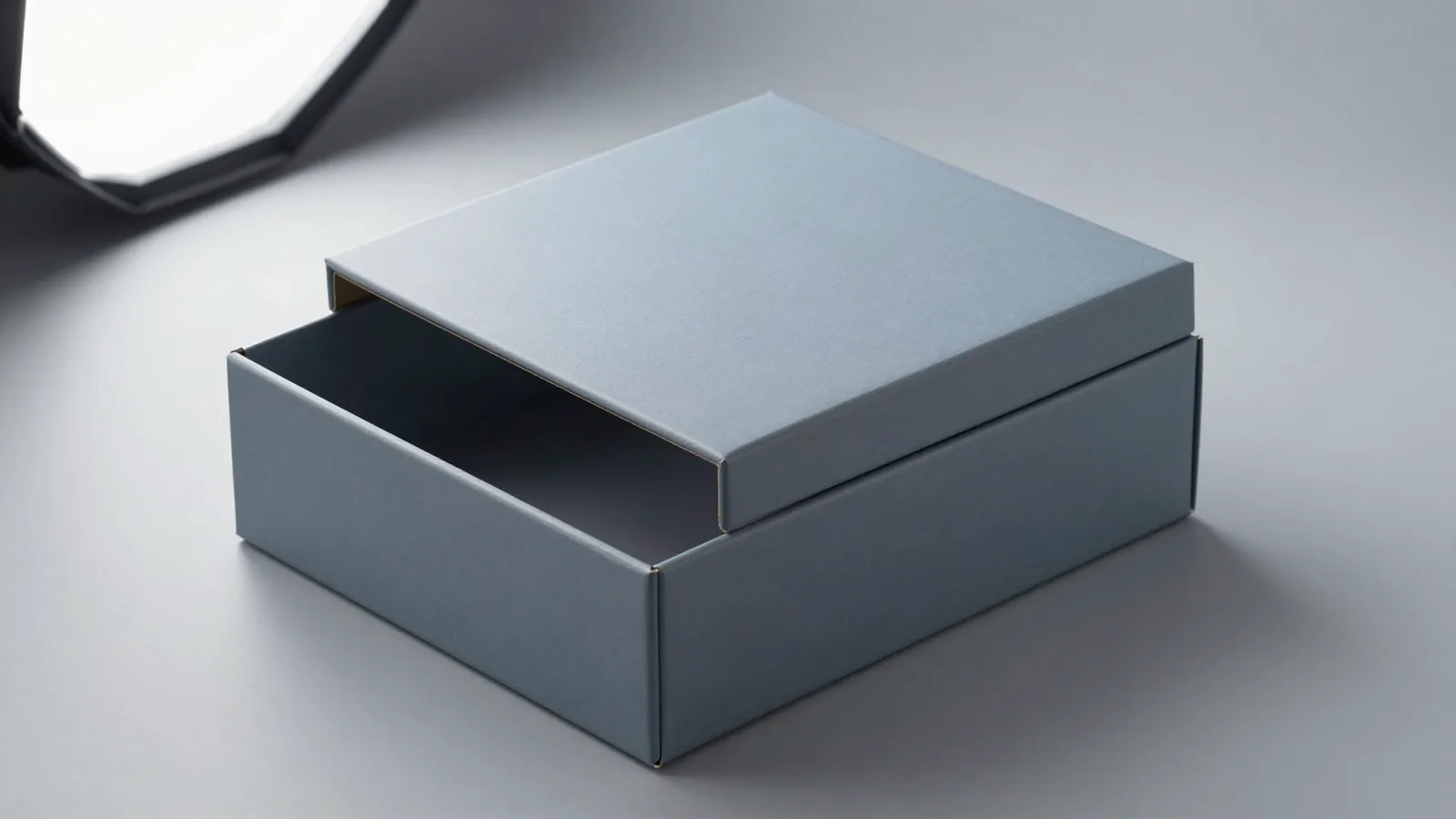
Rigid cartons are boxes built from board that keeps its shape after assembly, unlike folding cartons that ship flat and are erected during packing. A rigid carton suits gift sets, candles, cosmetics, jewelry, electronics accessories, subscription assortments, and products that need a firm base under the item. The box can hold one product or a set, with a tray or insert controlling the layout.
A presentation box and a shipping carton do different jobs. The presentation box carries the printed wrap and opening experience, while a separate shipper takes the rougher parcel handling. If one carton must do both jobs, specify the outside dimensions, interior clearance, and protection around the product before the finish is chosen. A crushed corner is usually a structure problem first, not a printing problem.
Which materials build a rigid carton?
Chipboard is the compressed board core, and art paper is the printed wrap. A typical industry reference is 1.5 to 3 mm chipboard wrapped in approximately 100 to 157 gsm art paper. The core controls wall firmness and edge definition; the wrap supplies the printable face. The two layers work as one build.
Core thickness changes lid clearance, corner turns, tray depth, and package weight. Wrap turns also consume space at the inside edges, so measure the product after any insert or protective layer is included. Compare rigid printed boxes when the wrapped exterior carries the brief. Custom rigid set-up boxes are the base-and-lid format to compare when the opening should stay simple.
Which opening structure fits the product?
A two-piece lid and base give a lift-off reveal, a magnetic flap hinges open, and a drawer pulls an inner tray through an outer sleeve. A removable lid suits a set that needs a full view at opening. A sleeve adds a printed outer layer around a separate box. Choose the motion around handling frequency, product height, and how the contents need to sit after opening.
| Rigid structure | Opening behavior | Planning check |
|---|---|---|
| Two-piece lid and base | Lift-off reveal | Lid clearance and tray support |
| Magnetic flap | Hinged opening | Closure and hinge placement |
| Drawer or slide | Pull-out presentation | Sleeve, tray, and grip alignment |
| Sleeve | Outer wrap around a box | Visible panels during storage and display |
For a coordinated tray and outer cover, compare rigid boxes with sleeve and tray. A hinged presentation points to rigid boxes with magnetic closure, while separated cavities point to custom rigid boxes with inserts.
How do print and finish choices change the result?
Offset CMYK carries detailed artwork on the wrapped art paper. Matte lamination reduces reflection, gloss lamination increases it, and soft-touch changes the hand feel. Spot UV adds a hard gloss area over selected artwork; foil stamping adds a metallic detail; embossing and debossing change the paper's relief. Keep those treatments away from corners, edges, lid seams, and hinge areas.
Check the flat artwork against the assembled box. Type set too close to a score or seam can look crooked after wrapping, and a finish that crosses a lid edge can break when the box opens. Mark the wrap direction, front panel, inside lid, and any insert-facing surface before approving the proof.
How should I specify rigid carton dimensions?
Write the size as length x width x depth and mark each measurement as inside or outside. A common packaging convention is about 1/16 in, or 1.5 mm, tolerance for fit planning. Give the product dimensions, desired clearance, insert thickness, box style, artwork, wrap paper direction, finish ideas, lid overlap, and delivery destination. The dieline is the flat cutting template for the carton; it should reflect the actual construction, not a generic square. Include the packed product in any physical check; an empty box cannot show rubbing, rattling, or awkward removal.
Custom Packaging Lane quotes rigid cartons from a 100-unit minimum. Pricing is from $0.49 per unit at volume, quoted to spec. The quote accounts for board, wrap, construction, quantity, and finish. Production is typically 8 to 10 business days after proof approval, plus delivery. Free US shipping, free design support, and a free dieline are available. The $19.99 sample kit is credited to the first order. Start with custom packaging solutions and send the product dimensions before the dieline is drawn.
Frequently Asked Questions
What makes a rigid carton different from a folding carton?
Rigid cartons keep their assembled shape because chipboard forms the core, while folding cartons arrive as flat printed blanks that are erected during packing. A rigid carton therefore changes storage, lid clearance, and packing steps. The product still determines the inside dimensions, insert fit, and whether the box should open with a lid, flap, sleeve, or drawer.
How thick is chipboard for rigid cartons?
Rigid carton chipboard commonly falls in the 1.5 to 3 mm range, with 100 to 157 gsm art paper as a typical wrap. The core sets wall thickness and edge definition, while the paper carries the printed surface. Check both layers against the product, lid clearance, tray depth, and corner construction.
Which rigid carton closure suits a gift set?
A two-piece lid and base gives a full lift-off reveal, while a magnetic flap keeps the lid attached during opening. A drawer uses a sliding tray and sleeve, and an insert can hold several pieces in a fixed layout. Choose the motion that matches how the gift set is opened and packed.
Can rigid cartons use foil or tactile finishes?
Rigid cartons can use matte or gloss lamination, soft-touch, spot UV, foil stamping, embossing, and debossing. Offset CMYK carries detailed artwork on the wrapped paper. Map each treatment to a panel, because corners, seams, hinges, and lid edges can interrupt a finish after assembly.
What information is needed for a rigid carton quote?
A rigid carton quote needs the product dimensions, quantity, inside or outside length x width x depth, box structure, closure, insert requirements, artwork, finish ideas, and delivery destination. State whether the package holds one item or a set. That information gives the dieline and interior clearance a usable starting point.












