




























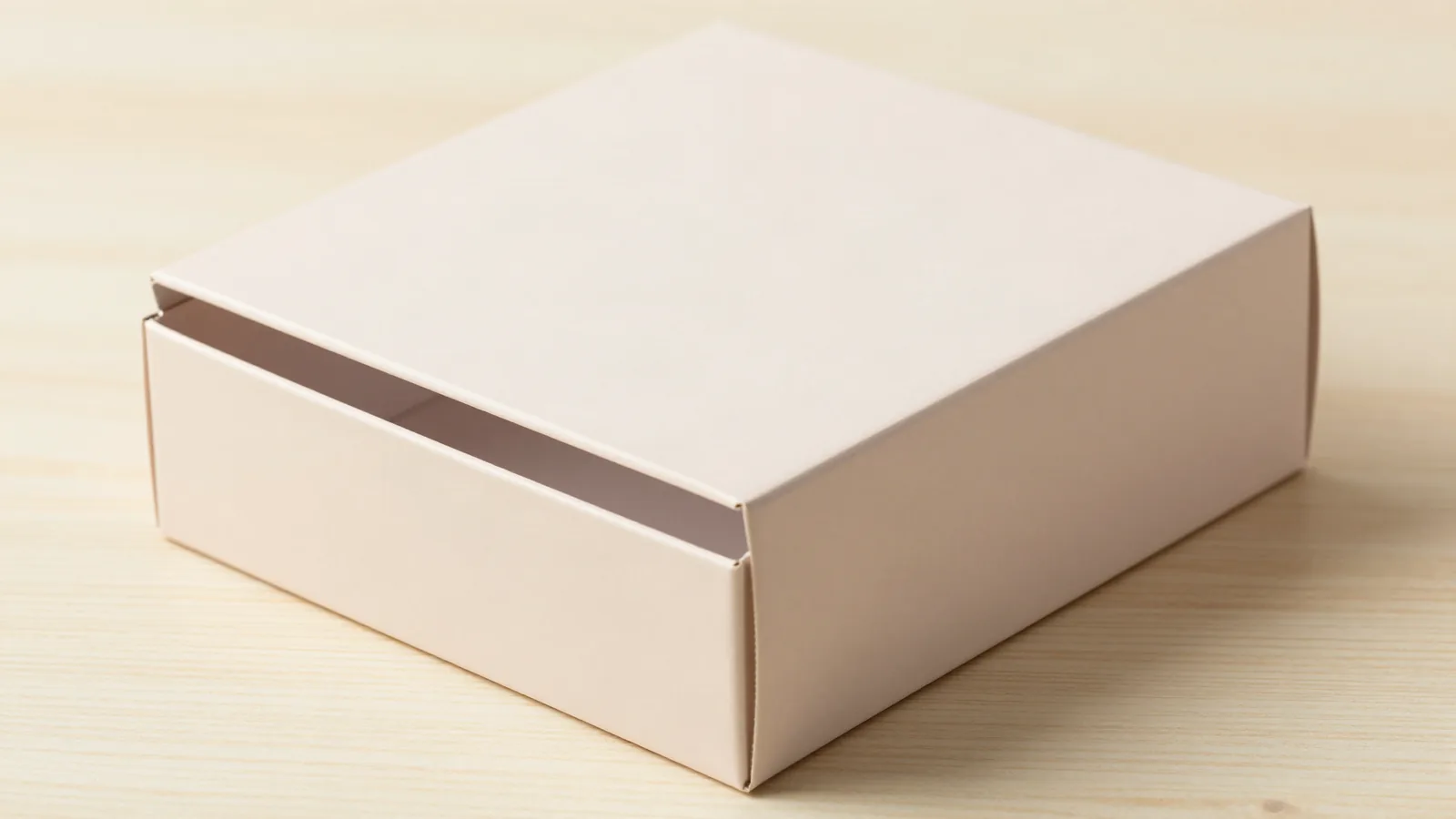




















































A slip case rigid box has two coordinated parts: a rigid inner box that holds the product and an outer case that slides over it. The case controls the opening, protects the wrapped box during handling, and adds another surface for graphics. For a factory OEM packaging brief, specify the case, inner box, insert, artwork, and finish as one repeatable package.
Start with product orientation and opening direction. Inside measurements are normally written as length x width x depth, with the product cavity kept separate from outside dimensions. About 1/16 in (1.5 mm) is a common planning tolerance for fit discussions, but the assembled box, wrap, insert, and sleeve movement still need a physical check.
Which rigid board construction suits a slip case?
Chipboard from 1.5 to 3 mm creates the rigid shell, while 100 to 157 gsm art paper carries the outer wrap. The shell gives the box its shape; the wrap carries the printed surface. A paperboard insert, foam insert, or folded support then organizes the product, and each layer takes space away from the finished cavity.
| Packaging decision | Common trade reference | What to specify |
|---|---|---|
| Rigid shell | 1.5 to 3 mm chipboard | Inner box, sleeve, lid, or tray role |
| Wrap stock | 100 to 157 gsm art paper | Color, artwork coverage, and surface finish |
| Structure | Two-piece rigid or sleeve-and-tray | Opening direction and sleeve coverage |
| Fit convention | Length x width x depth, inside measurements | Product, insert, and tolerance check |
What print and finish options should an OEM buyer compare?
Offset CMYK is a common route when the wrap needs detailed graphics and controlled color. Matte or gloss lamination changes reflection across the panel, soft-touch changes the hand feel, and foil stamping, embossing, or debossing can separate a selected mark from the print. Map the sleeve and box separately because a treatment that works on a flat wrap may cross an opening or corner after assembly.
Low-resolution artwork can show rough edges, RGB art can shift when converted for press, and type too close to a score can land in a fold. A digital proof should show the flat wrap, cut lines, scores, glue areas, sleeve overlap, and assembled package. Check any logo, barcode, or panel that must face the buyer after the case is removed.
Compare rigid printed boxes when the graphic surface leads the brief. For a removable tray, see rigid boxes with sleeve and tray. For component organization, use custom rigid boxes with inserts.
How should the sleeve and insert be fitted?
The sleeve needs enough clearance to slide over the wrapped box without catching a corner, seam, or finish edge. The inner box should hold the insert without lifting it into the lid path. A paperboard insert, foam insert, or folded support changes the usable cavity, so measure the product after the interior parts are included.
A drawer or slide changes the pull direction, and a magnetic flap changes the hinge and opening side. A sleeve-and-tray format separates the reveal into an outer case and a moving tray. Check the first grip point, the last point of travel, and the surfaces that remain visible at each stage of the opening.
What should the dieline and proof show?
A dieline is the flat cutting template for the box or sleeve. It should mark cut lines, folds, sleeve overlap, glue areas, and the relationship between the insert and the panels around it. Proof approval is the point to catch a misplaced logo, a fold across type, or a sleeve overlap that blocks the opening.
Review the flat file and the assembled structure together. Check the wrap direction, corner turns, lid or tray clearance, and the movement of the case over the finished box. Ask for a physical sample when the hand check matters, especially for sleeve movement, insert retention, or a product with unusual corners.
What belongs in a slip case rigid box quote?
A quote is easier to check when the box, case, insert, finish, quantity, and destination appear in one brief. Include the required inner dimensions, outside dimensions, opening direction, rigid construction, sleeve coverage, print method, and finish. State whether the package is a single presentation piece or part of a coordinated product family.
The sourcing route is wholesale custom packaging. Keep the product, board, wrap, insert, artwork panels, finish zones, proof notes, and delivery destination together so the case is not quoted as an afterthought.
Factory OEM slip case rigid boxes are quoted from a 100-unit minimum. Pricing is from $0.49 per unit at volume, quoted to spec. Production is typically 8 to 10 business days after proof approval, plus delivery. Free US shipping, free design support, and a free dieline are available. Order the $19.99 sample kit; it can be credited to the first order.
Frequently Asked Questions
What is a slip case rigid box?
A slip case rigid box combines a rigid inner box with an outer case that slides over it. The inner box holds the product, while the case controls the reveal, protects the wrapped surface, and carries its own graphics. A useful specification includes inside length x width x depth, opening direction, sleeve coverage, insert type, and finish.
Does a slip case need an insert?
A slip case can use a paperboard insert, foam insert, tray, or folded support when the product needs positioning inside the rigid box. The insert is not a separate afterthought, because its thickness changes the cavity and lid clearance. Map the product, insert perimeter, opening path, and sleeve movement before fixing the structure.
How do I specify inner box dimensions?
Specify the assembled inner box with inside length x width x depth, then list the product size, insert thickness, lid clearance, and any wrap or support that occupies the cavity. Record outside dimensions separately for the outer case, storage, and shipping checks. A physical fit check catches sleeve movement and corner conflicts that measurements alone miss.
Which finishes can go on a rigid slip case?
A rigid slip case can use matte or gloss lamination, soft-touch, spot UV, foil stamping, embossing, or debossing on selected box or sleeve panels. Offset CMYK is a common print route for detailed wraps. Keep effects away from scores, glue areas, sleeve overlaps, and corners where the finished package moves or folds.
What should an OEM packaging file contain?
An OEM packaging file should show the product orientation, inside and outside dimensions, opening direction, box and sleeve structure, insert plan, artwork panels, print method, finish zones, cut lines, scores, glue areas, and sleeve overlap. The digital proof should show the flat layout and assembled package so production and approval use the same reference.












