




























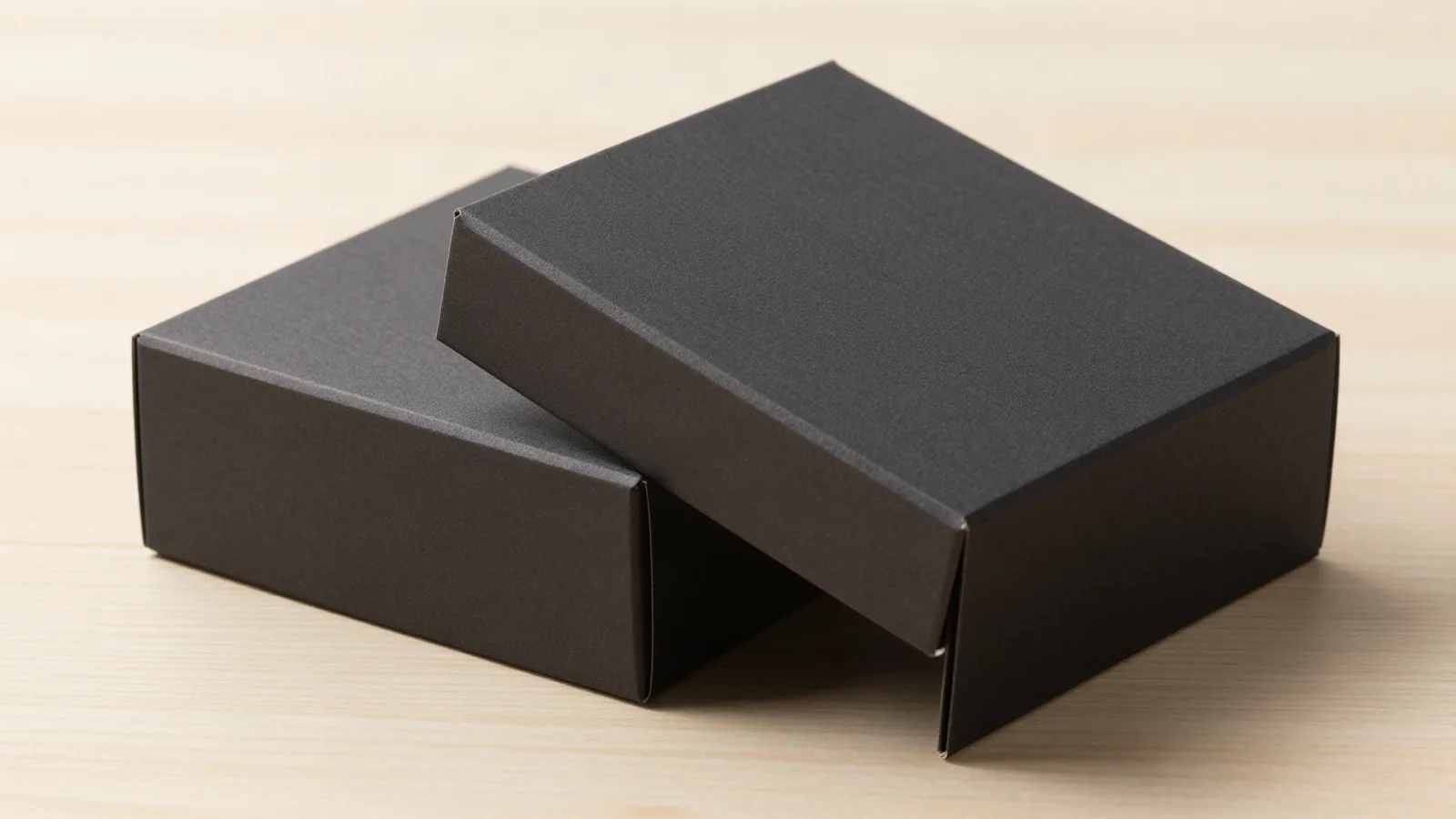




















































Rigid container product protection comes from controlling movement and contact inside a structured shell, not from board thickness alone. The shell is the outer rigid box; an insert is the fitted interior piece that supports or separates the product; the closure controls access and retention. A loose item can strike a wall during handling, while a tight insert can make removal awkward or mark a fragile surface. Start with fragile points, orientation, repeated opening, and storage.
Which rigid board construction should I compare?
Chipboard around 1.5 to 3 mm, wrapped in 100 to 157 gsm art paper, is a typical rigid reference. Chipboard is the board core that gives the set-up box its wall thickness, while the art paper is the printable outer wrap. A folding carton arrives flat; a rigid set-up box arrives formed, so the walls, corners, lid fit, and insert clearance need a physical check.
| Rigid structure | Main components | Protection question |
|---|---|---|
| Two-piece rigid box | Separate base and lid | Does the lid align while the product stays seated? |
| Magnetic flap box | Hinged body with flap closure | Does the opening pattern suit the item and insert? |
| Drawer or slide box | Inner tray and outer sleeve | Does the tray travel without shifting the product? |
| Rigid box with insert | Outer shell with formed interior support | Are contact points controlled around fragile areas? |
Thickness alone does not tell you how the product will behave. The box dimensions, wrap turns, closure, and insert contact points decide how much open space remains and where force reaches the product. The right comparison is the complete interior, not the caliper in isolation.
How should the insert and interior be specified?
Inside length x width x depth gives the starting record for the packed product. Keep the insert's contact points away from fragile faces, and leave a practical finger path or lift point for removal. A common planning tolerance is about 1/16 in, or 1.5 mm, but the actual fit still needs a check with the product, wrap, and insert material in place.
For several pieces, partitions or a fitted platform establish a repeatable layout. For one tall item, check the headspace under the lid and the exposed tray edge. If the product rattles, the insert is too loose or the cavity is too large. If it binds, the cavity, wall, or lid clearance needs another pass.
Which closure fits the handling pattern?
A magnetic flap opens on a hinge, while a lid and base separate completely. A drawer or slide sends an inner tray through an outer sleeve, and a sleeve can hold a rigid box closed without changing the base. Compare how the package opens, how it stacks, and how often the product is removed. Repeated inspection favors an access path that does not scrape the product or dislodge the insert.
Can a rigid container include a window?
A PET window, a clear plastic film patch, can create a viewing area and is commonly specified around 0.2 to 0.3 mm. The opening belongs in the same drawing as the wrap, board edge, insert, and product position. A window that lands over the seam or tray edge can make alignment harder, so keep the patch clear of those boundaries.
Matte or gloss lamination changes reflection, soft-touch changes surface feel, and spot UV, foil stamping, embossing, and debossing change selected areas of the wrap. Keep finishes away from window seals, magnets, tray edges, and surfaces that must fold or align.
How can I check protection without overstating performance?
A physical sample exposes loose fit, excess headspace, lid rub, and insert movement before the packed arrangement is fixed. Check the sample with the actual product, then record where it touches the insert, where the closure meets the box, and which orientation the package will use in storage. Board thickness is one input; it is not proof of a particular shipping result.
Ask for a structure check against the intended handling path. That brief should name fragile points, movement, closure strength, insert contact, storage orientation, and shipping conditions. The resulting decision stays tied to observable fit and construction.
Which CPL rigid formats should I compare?
The product links below split the protection problem by interior retention, closure, and sleeve travel. Rigid boxes with sleeve and tray separate the inner tray from the outer cover. Rigid boxes with magnetic closure give the hinged format a direct comparison. Custom rigid boxes with inserts focus the discussion on contact points and retention. Custom rigid boxes with lids show the base-and-lid route.
For a current quote, CPL works from a 100-unit minimum. Pricing is from $0.49 per unit at volume, quoted to spec. Production is typically 8 to 10 business days after proof approval, plus delivery. Free US shipping, free design support, and a free dieline are available. The $19.99 sample kit is credited to the first order. Compare the structures through custom packaging solutions before the dieline is drawn.
Frequently Asked Questions
What does rigid container product protection control?
Rigid container product protection controls movement, contact, and access inside the package. The box shell sets the outside structure, while the insert controls where the product touches and how it stays seated. A physical check should look for rattling, lid rub, excess headspace, difficult removal, and contact with fragile faces.
How thick is board in a rigid set-up box?
Rigid set-up boxes commonly use chipboard around 1.5 to 3 mm, wrapped in 100 to 157 gsm art paper. Chipboard creates the wall, and the art paper creates the printed exterior. Compare the complete box, closure, and insert because caliper alone does not define product movement.
How should a rigid box insert be measured?
A rigid box insert should be planned from the packed product's inside length x width x depth, then checked around contact points and removal access. About 1/16 in, or 1.5 mm, is a common planning tolerance. The actual product and insert material still need a physical fit check.
What PET window thickness is common in rigid packaging?
A PET window in rigid packaging is commonly specified around 0.2 to 0.3 mm. PET is a clear plastic film used for the viewing patch. Place the window with the wrap, seam, board edge, insert, and product position on one drawing so the patch does not interfere with alignment.
What should a physical protection sample check?
A physical protection sample should check loose fit, excess headspace, lid rub, insert movement, closure contact, and product removal. Use the actual product rather than an empty box. Record the storage orientation and intended handling path, then adjust the interior structure before the final artwork is fixed.












