




























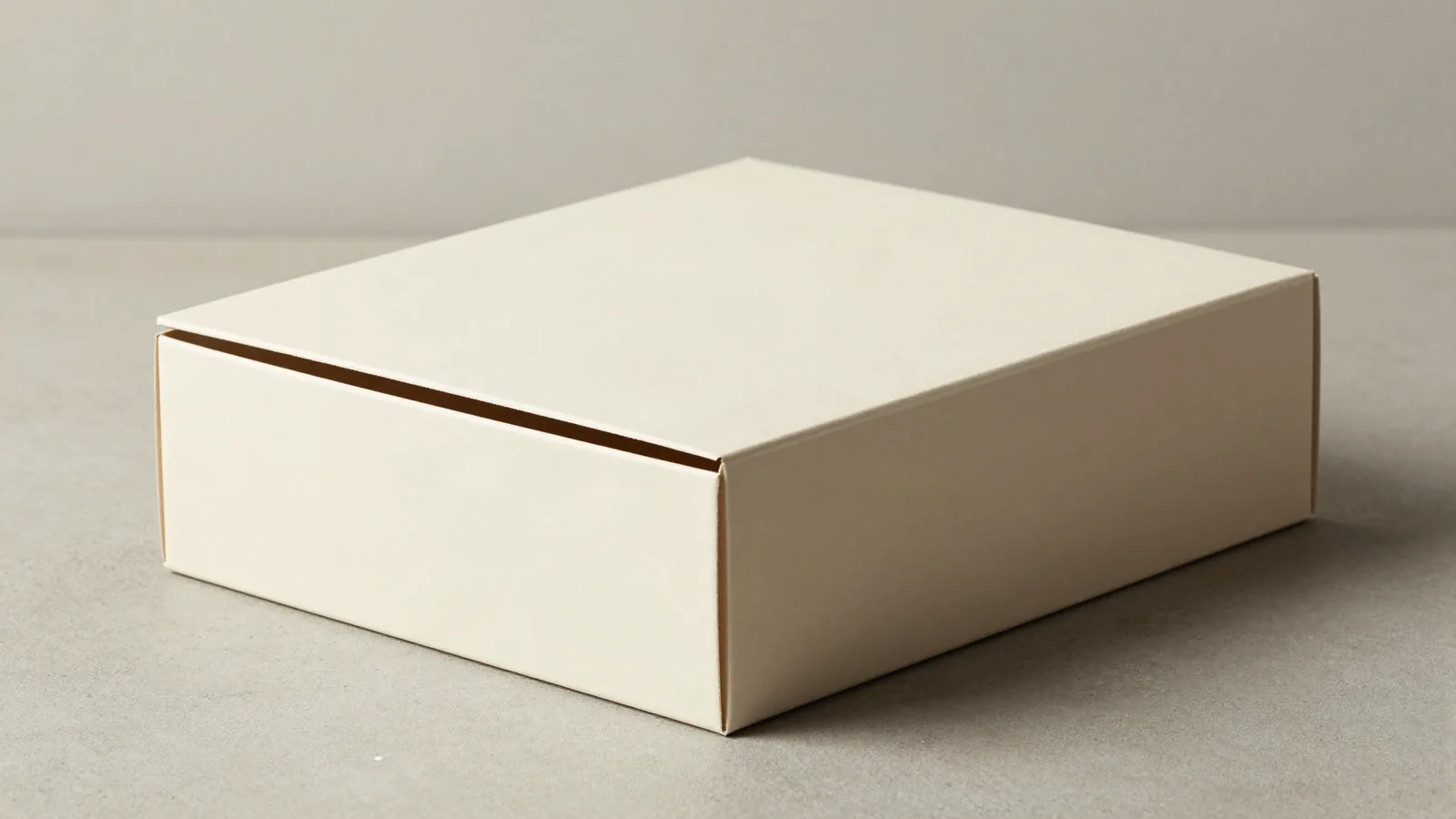




















































What should buyers compare among rigid box with magnetic flap manufacturers?
The opening panel is the first thing to check, because its hinge, flap depth, and magnet location control how the box closes over the product. A magnetic flap is a hinged closure panel with embedded magnets. The rigid box body gets its shape from a firm board shell, so the format differs from a folding carton and from a basic lift-off lid. Check the product, opening direction, interior support, and closure together before artwork is drawn.
Prepare product measurements, inside clearance, opening direction, insert requirements, artwork coverage, and delivery destination for a like-for-like discussion. The custom packaging design route is useful when those decisions need to be organized before the dieline is checked.
Which rigid materials and box structures are commonly used?
A rigid box gets its shape from chipboard, not from the printed wrap. A common construction uses 1.5 to 3 mm chipboard wrapped in 100 to 157 gsm art paper. The board supplies the shell, while the wrapped paper carries the graphics and selected finish. A magnetic flap can sit on a book-style or flap-open box, and the same product brief may compare a tray, sleeve, drawer, or insert.
| Structure | Common construction | Buyer decision |
|---|---|---|
| Magnetic flap | Rigid body with a hinged closure panel | Repeat opening and presentation |
| Two-piece rigid | Separate base and lid | Lift-off opening and stacked storage |
| Drawer or slide | Tray moving inside a sleeve | Forward product reveal |
| Sleeve and tray | Wrapped sleeve around an inner tray | Layered presentation and organization |
Compare rigid boxes with magnetic closure for the closest catalog match. Check the opening motion against flip-top boxes with magnetic closure. When several pieces need separation, custom rigid boxes with inserts can define the interior more precisely.
How do finishes change a magnetic flap box?
Matte and gloss lamination change glare before any foil or spot UV is added. Offset CMYK is commonly used when the wrapped box needs detailed graphics across several panels. Digital printing can suit short runs or variable artwork. Soft-touch changes the tactile response, spot UV marks a selected logo or pattern, foil stamping adds a reflective accent, and embossing or debossing alters the paper surface.
Keep small type and important marks away from the hinge, seam, closure edges, and insert contact points. We send a digital proof before anything prints. The proof should check front-panel orientation, artwork placement, magnet alignment, insert clearance, and whether the package opens without catching on the product. A finish that looks right on a flat sheet can land badly once the wrap turns around an edge.
What should the interior do when the flap opens?
The insert controls where the product sits during storage and where the hand can reach when the flap opens. The interior can hold one item, organize a set, or create a controlled reveal. Paperboard inserts suit lighter organization. Foam inserts can support shaped items, but the product and removal path should be measured before the insert is cut. A tray can lift the item toward the opening; a fitted cavity can limit movement.
Write the box dimensions as length x width x depth and use inside measurements for the product cavity. A common convention allows about 1/16 in, or 1.5 mm, tolerance when converting the product fit into a box specification. Include any sleeve, wrap, lid, accessory, or protective layer in the measurement so the insert is not cut around the wrong envelope.
What should buyers confirm before requesting a quote?
A useful request names the product cavity in inside dimensions and the opening direction. Include the product measurements, desired magnetic flap or alternate structure, chipboard and art paper direction, print coverage, lamination, soft-touch, spot UV, foil, embossing, or debossing requirements. Explain the packing sequence, product removal needs, shipping configuration, storage orientation, and insert contact points.
- Product length, width, depth, and interior clearance.
- Closure, hinge position, insert, sleeve, tray, or drawer structure.
- Board, wrap paper, print route, and finish coverage.
- Packing order, removal path, shipping form, and storage position.
- Proof checks for panel alignment, magnet position, closure, and fit.
Custom Packaging Lane quotes from a 100-unit minimum, with pricing from $0.49 per unit at volume. Production is typically 8 to 10 business days after proof approval, plus delivery. The quoted workflow includes free US shipping and free design support, including a free dieline. Order the $19.99 sample kit, credited toward the first order, to check the opening motion and interior fit before approving the run.
Frequently Asked Questions
How does a magnetic flap rigid box close?
A magnetic flap rigid box closes with a hinged panel that carries embedded magnets into alignment with magnets or a metal component in the box body. The flap depth, hinge position, wrap thickness, and product clearance all affect the closing motion. Test the box with the real insert and packed product before finalizing the panel layout.
What is the difference between a rigid box and a folding carton?
A rigid box uses a firm chipboard shell wrapped with printed paper, so the walls hold their shape before loading. A folding carton is cut and scored from paperboard, then assembled through its panels and tabs. The choice changes the opening motion, insert approach, storage behavior, surface wrap, and amount of structure needed around the product.
Which insert material should I compare for a presentation box?
Paperboard inserts suit lighter organization and can divide a set into repeatable positions. Foam inserts can support shaped products and control contact points, but they reduce usable interior space and need a measured removal path. Compare the product shape, accessory locations, cavity depth, and hand access before choosing an insert material.
Where should artwork stop near a magnetic hinge?
Keep small type, barcodes, logos, and important marks away from the hinge, seam, closure edge, and insert contact points. The front panel should be checked in its opened and closed positions because a mark that looks centered on a flat layout can move near the hinge after wrapping. Check the proof with the actual panel sequence.
What measurements make a rigid box quote useful?
A useful rigid box brief includes the product's inside length, width, and depth, plus clearance, insert thickness, opening direction, closure style, artwork coverage, finish, packing sequence, shipping form, and destination. Include sleeves, wraps, accessories, and protective layers in the fit envelope. Those details let the box structure and interior be discussed together.












