




























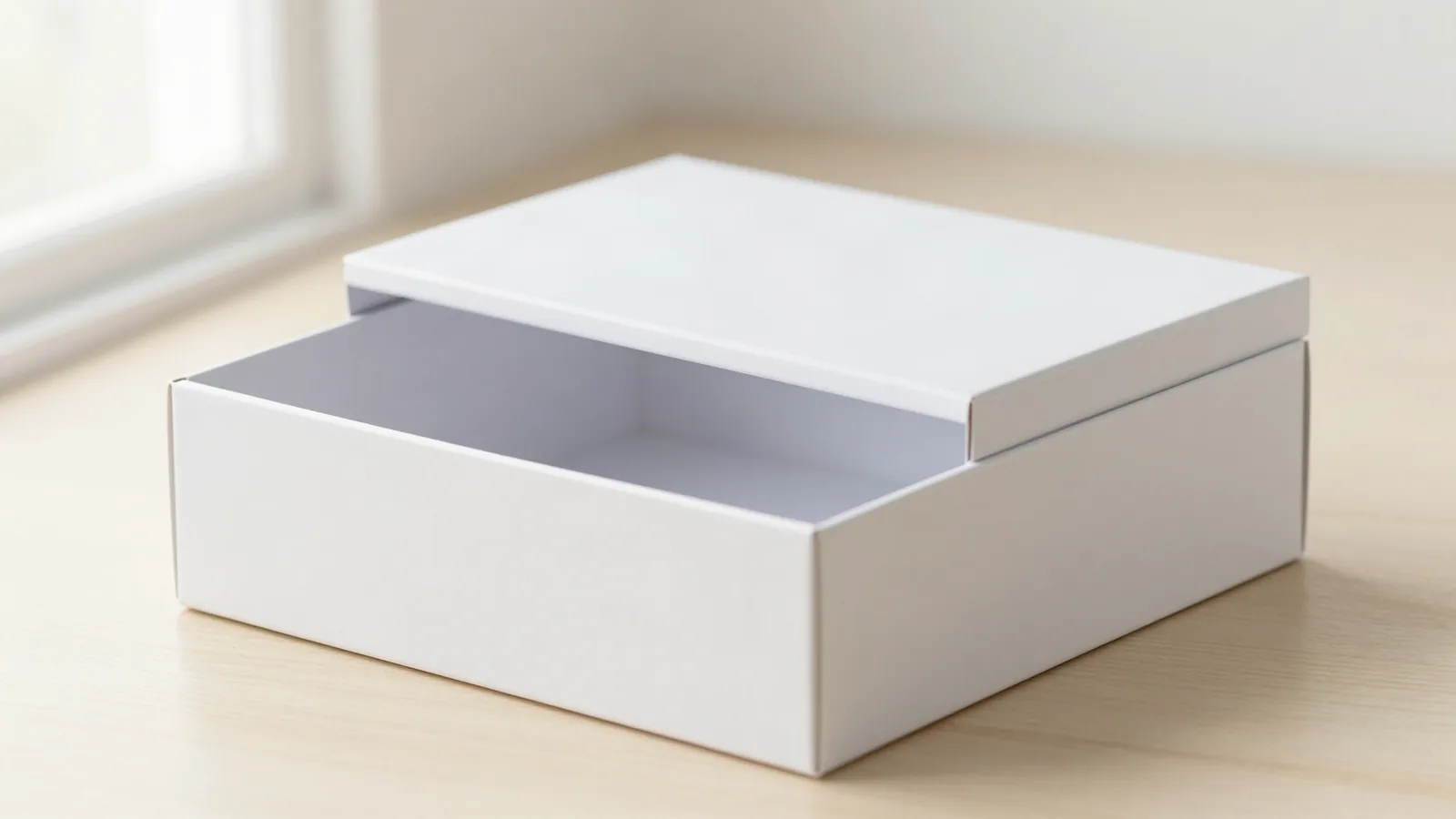




















































What should a rigid bulk container do?
The load plan comes before the lid: decide whether the container holds a product set, replenishment quantity, gift assortment, or multi-piece kit. A rigid bulk container groups several items inside a stable presentation package, but the interior still has to support access, counting, storage, and movement control. Rigid packaging commonly uses 1.5 to 3 mm chipboard wrapped in 100 to 157 gsm art paper. That construction creates a firm shell for a lid, tray, sleeve, or insert.
List the number of pieces, their orientation, total packed weight, and whether the user removes items one at a time or lifts the group. For a set with a structured reveal, compare custom rigid set-up boxes as a catalog reference.
Which rigid container structure is easiest to use?
A lift-off lid gives direct access, while a sleeve and tray controls the slide direction. A magnetic flap creates a hinged opening, and an insert separates products that should not collide or become hard to count. The right structure follows the loading sequence, access pattern, storage position, and amount of exterior surface that needs branding.
| Structure | Access pattern | Useful design priority |
|---|---|---|
| Rigid box with lid | Lift-off access | Simple loading and repeated opening |
| Sleeve and tray | Slide-out access | Layered presentation and guided handling |
| Magnetic closure | Flap opening | Secure closure with a presentation moment |
| Rigid box with inserts | Organized access | Separation, orientation, and movement control |
A lift-off lid needs enough clearance for smooth removal. A sleeve and tray can guide the opening path. A magnetic flap changes the hand motion, while inserts define where each piece belongs. Compare custom rigid boxes with lids and rigid boxes with sleeve and tray when comparing these formats.
How should the interior be organized?
Inside dimensions, product order, and insert thickness determine whether the package loads cleanly. Use a single cavity, grid, partition, or shaped support according to the product geometry. A partition creates repeatable locations. A tray can lift small items toward the opening. A shaped cavity can hold a product at a known angle, but it also reduces usable volume. For mixed-size assortments, plan the largest item first, then add dividers or secondary cavities for smaller pieces.
Specify inside measurements, rather than exterior dimensions alone. Packaging dimensions are commonly written as length x width x depth. A general convention is about 1/16 inch, or 1.5 mm, tolerance, but clearance should be adjusted for the actual product, wrap, insert, and loading method. If the container will be stacked, note the load direction and the surfaces that will carry pressure. Rigid boxes with magnetic closure show how closure hardware changes the structure and user experience.
Loading order matters when one container holds different items. The first item placed may need a lower cavity, while the last item placed may need the clearest access at opening. Repeated packing is easier when each location is obvious and the insert cannot shift during handling. A simple layout diagram with numbered positions can help production and fulfillment teams pack the same arrangement consistently.
What print and finish options suit bulk packaging?
The lid and opening panel usually carry the first visual read, so finish coverage should follow the way the container is opened. Offset CMYK is commonly used for detailed graphics on wrapped rigid board. Matte or gloss lamination changes surface response, while soft-touch lamination creates a smoother hand feel. Spot UV, foil stamping, embossing, and debossing should usually stay on logos, borders, or a small number of focal elements.
If the container is opened often, choose finishes that support handling and make scuffs less visually distracting. If it is primarily a gift or presentation kit, the lid and opening panel may carry the strongest brand treatment. Ask us about food-contact options for your product when the package will touch food. Child-resistant construction is a feature to scope and evaluate for the specific use.
What details should go into a bulk-container quote?
A quote needs the packed product list and inside fit before anyone can judge board or insert requirements. Provide the count per container, total weight, structure preference, insert requirements, artwork coverage, finish choices, shipping configuration, and delivery destination. Board caliper, print coverage, finishing, quantity breaks, tooling, and shipping zone can affect the quote discussion. A physical sample is useful when products must load consistently or when the opening force matters. We send a digital proof before anything prints.
- Define the number and arrangement of pieces.
- Choose lid, sleeve, flap, or insert construction.
- Confirm inside fit and stack orientation.
- Identify handling and repeat-use expectations.
Custom Packaging Lane supports a free dieline and free design support for this planning stage. The current quoting basis is a 100-unit minimum, with pricing from $0.49 per unit at volume. Production is typically 8 to 10 business days after proof approval, plus delivery. Free US shipping is available, and the $19.99 sample kit is credited toward the first order. Use wholesale custom packaging to send the packed dimensions and structure brief.
Frequently Asked Questions
What products fit a rigid bulk container?
A rigid bulk container can group a product set, replenishment quantity, gift assortment, or multi-piece kit. The interior should reflect the product count, orientation, packed weight, and access pattern. Choose a lid, sleeve and tray, magnetic flap, partition, or shaped insert according to whether users remove items individually or lift the group.
Do inserts reduce usable space in a bulk container?
Inserts reduce some usable space because partitions, trays, and shaped cavities occupy part of the interior. They can also stop products from colliding, keep positions repeatable, and make the arrangement easier to count. Measure the product, insert thickness, cavity depth, and removal path together before fixing the inside length, width, and depth.
Which rigid closure is easiest to reopen?
A lift-off lid gives direct access, a magnetic flap creates a hinged opening, and a drawer or sleeve and tray guides the product forward. Ease of reopening depends on clearance, closure friction, product access, and the insert layout. Test the chosen structure with the packed group, not an empty box, before approving it.
Can a bulk container include food-contact options?
A bulk container can be planned around a separate layer that touches the food, such as an inner pouch or liner. The outer rigid box does not answer that contact question by itself. Ask us about food-contact options for your product, and identify the contact layer, moisture conditions, temperature, and loading arrangement in the brief.
How do I specify a multi-piece packing layout?
Specify the product count, each item's orientation, the loading order, inside length, width, and depth, insert thickness, and the removal path. Mark the position of each piece in a simple diagram or numbered layout. Include packed weight and stack direction when the container will be stored or moved with several items inside.












