




























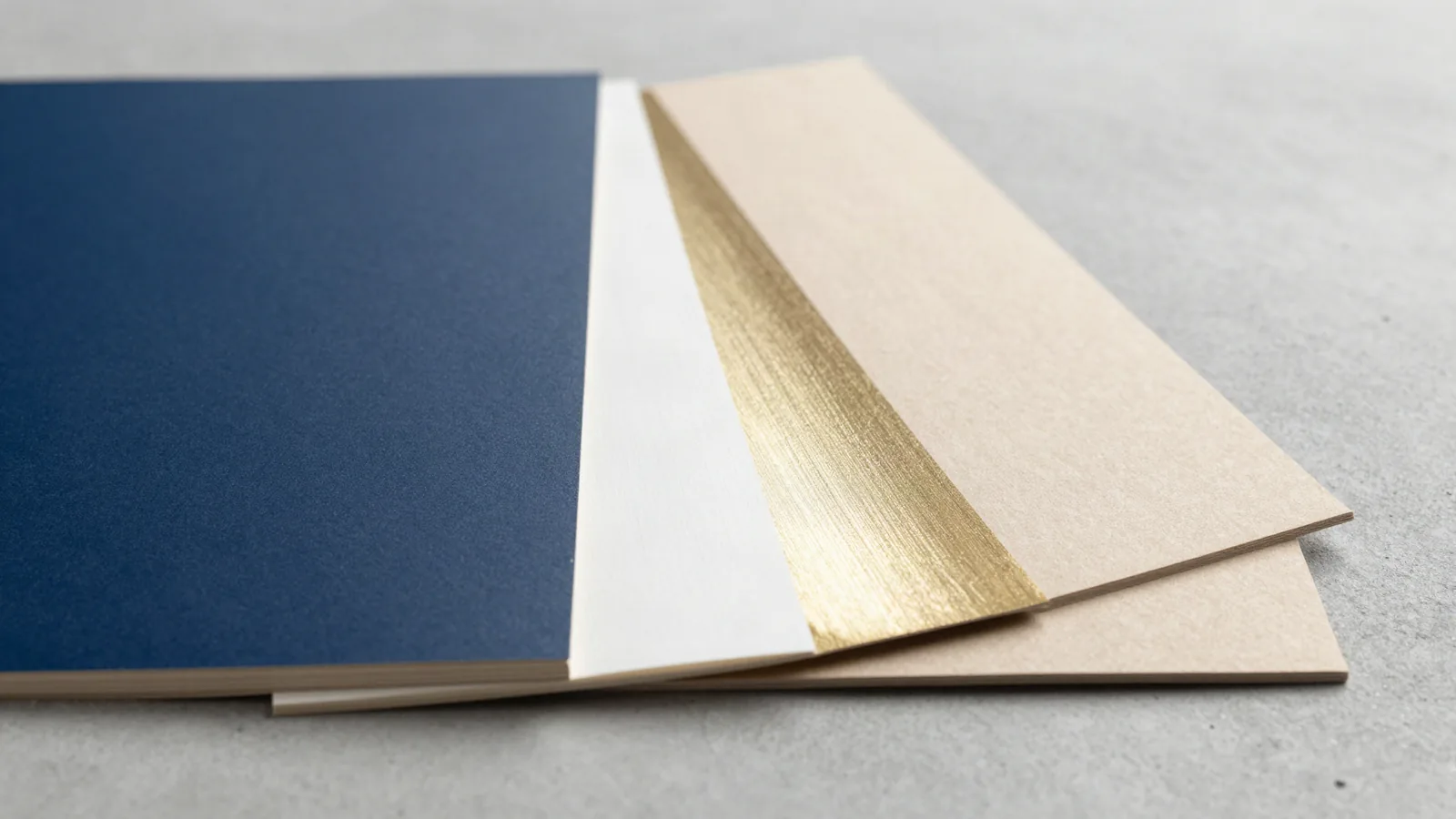




















































A litho laminated carton is a folding carton with a lithographic printed top sheet attached to paperboard or corrugated substrate. The top sheet carries detail across the carton panels; the substrate determines folding, stacking, and shipping behavior. A dieline is the flat cutting template for the carton, with panels, scores, cuts, glue areas, and bleed marked before artwork is placed. Use custom packaging design to organize the substrate, carton style, print coverage, and finish brief. If contents touch the package, ask about food-contact options.
What board and flute references should I compare?
SBS, C1S, and C2S paperboard commonly span 12 to 24 pt. Kraft board commonly falls in the 18 to 24 pt range. For corrugated structures, E, B, and C flutes are common trade references, and 32 ECT is a common edge crush test reference. These are typical industry starting points. The useful choice depends on the carton structure, product weight, stacking context, print face, and whether the carton ships inside another package.
| Substrate reference | Common range or convention | Planning question |
|---|---|---|
| SBS, C1S, or C2S | 12 to 24 pt paperboard | What fold and print surface does the carton need? |
| Kraft board | 18 to 24 pt | Should the natural board surface remain visible? |
| Corrugated flute | E, B, or C flute | Does the carton need a finer profile or more structure? |
| Board performance | 32 ECT edge crush test reference | What stacking and shipping context should be checked? |
How does the printed top sheet affect carton artwork?
Offset CMYK carries detailed graphics onto the top sheet, but the sheet still has to turn around folds, glue flaps, openings, and viewing panels. Matte or gloss lamination changes glare and sheen. Spot UV isolates a selected area, foil stamping adds a reflective accent, embossing raises paper, and debossing presses it inward. RGB artwork can shift during press conversion, low-resolution images stay soft, type too close to a score can break on the fold, and missing bleed can leave a white edge.
Which structures suit litho laminated carton work?
Straight tuck end and reverse tuck end are common folding-carton structures. Auto-lock bottom and crash-lock constructions change the base assembly and how the carton opens. A mailer format, including a roll end tuck top or FEFCO 0427 reference, can support a shipping-oriented presentation. Choose the structure from how the product enters, exits, stacks, and presents. Artwork area comes after that choice.
For a folding paperboard reference, review custom folding cartons. Use the same folding carton structure options to compare panel order and tuck direction, then return to the catalog folding carton when checking artwork flow. Keeping all three links on one catalog path makes the structural handoff easier to follow.
How should carton dimensions be written?
Write length x width x depth and identify whether the measurements are inside or outside. Inside measurements guide product fit, inserts, and closures. About 1/16 in, or 1.5 mm, is a common planning tolerance, subject to the structure and contents. Also state the opening style and substrate, because a tuck carton, mailer, and corrugated structure can share nominal dimensions while producing different usable interiors.
What should the proof check catch?
A digital proof should show the carton as a flat sheet and as an assembled reading order. Check panel sequence, folds, scores, glue flaps, cut lines, bleed, barcode placement, and artwork-safe zones. The proof is where a low-resolution image, RGB color shift, or type set across a score gets caught. If a pattern continues over an edge, inspect the registration at the fold instead of judging the front panel alone.
What changes if contents touch the carton?
Ask about food-contact options for the intended contents before finalizing the board, printed layers, and surface treatment. Share the contents, handling conditions, inner arrangement, and carton structure. A kraft appearance or lithographic top sheet does not answer the suitability question by itself. Keep that material discussion separate from the visual finish decision.
What belongs in a carton brief?
The brief should tell the supplier how the carton will be packed and handled.
- Give product dimensions, inside fit, insert details, and opening style.
- Name the substrate, flute reference if corrugated, board range, and print side.
- Mark folds, scores, seams, glue areas, cut lines, bleed, and panel order.
- List offset CMYK, digital, or flexo needs, plus lamination and selected finish areas.
- State shelf presentation, direct shipment, or an outer-shipper role, then share quantity, destination, and artwork status.
How do I request a quote for litho laminated cartons?
Send the completed carton brief so Custom Packaging Lane can quote the structure and printed face together. Quoted to spec from a 100-unit minimum, pricing is from $0.49 per unit at volume, quoted to spec. Production is typically 8 to 10 business days after proof approval, plus delivery. Free US shipping and free design support are available, and a free dieline can be requested before the digital proof. The $19.99 sample kit is credited to the first order. Send the product fit, substrate, carton style, and artwork status.
Frequently Asked Questions
What does litho laminated mean in packaging?
Litho laminated means a lithographic printed top sheet is attached to a paperboard or corrugated substrate. The printed sheet carries detailed artwork, while the substrate supplies folding, stacking, or shipping behavior. The carton brief should identify the substrate, panel order, folds, glue areas, openings, and finish locations before artwork is finalized.
Which flute should I discuss for a corrugated carton?
E, B, and C flutes are common corrugated references, and 32 ECT is a common edge crush test reference. Discuss the flute with the carton profile, stacking role, product weight, and shipping context. A litho top sheet changes the printed presentation, but the substrate still needs to fit the carton structure and handling route.
Can litho laminated cartons use surface finishes?
Matte or gloss lamination, spot UV, foil stamping, embossing, and debossing can be placed on selected artwork areas. Placement matters because folds, glue panels, openings, and corners interrupt the top sheet. Start with the structural dieline, then map the graphic hierarchy and finish locations around the carton breaks.
How should a carton measurement be written?
Write carton dimensions as length x width x depth and identify inside or outside measurements. Inside dimensions guide product fit, inserts, and closures; outside dimensions guide the assembled parcel. A common planning convention allows about 1/16 in, or 1.5 mm, tolerance, subject to the structure and contents.
What should I do if the carton touches the contents?
Ask about food-contact options for the intended contents before finalizing the substrate, printed layers, and surface treatment. Share the contents, handling conditions, carton structure, and inside arrangement. A kraft appearance or lithographic top sheet does not answer the suitability question alone, so keep the material request specific to the actual package use.












