




























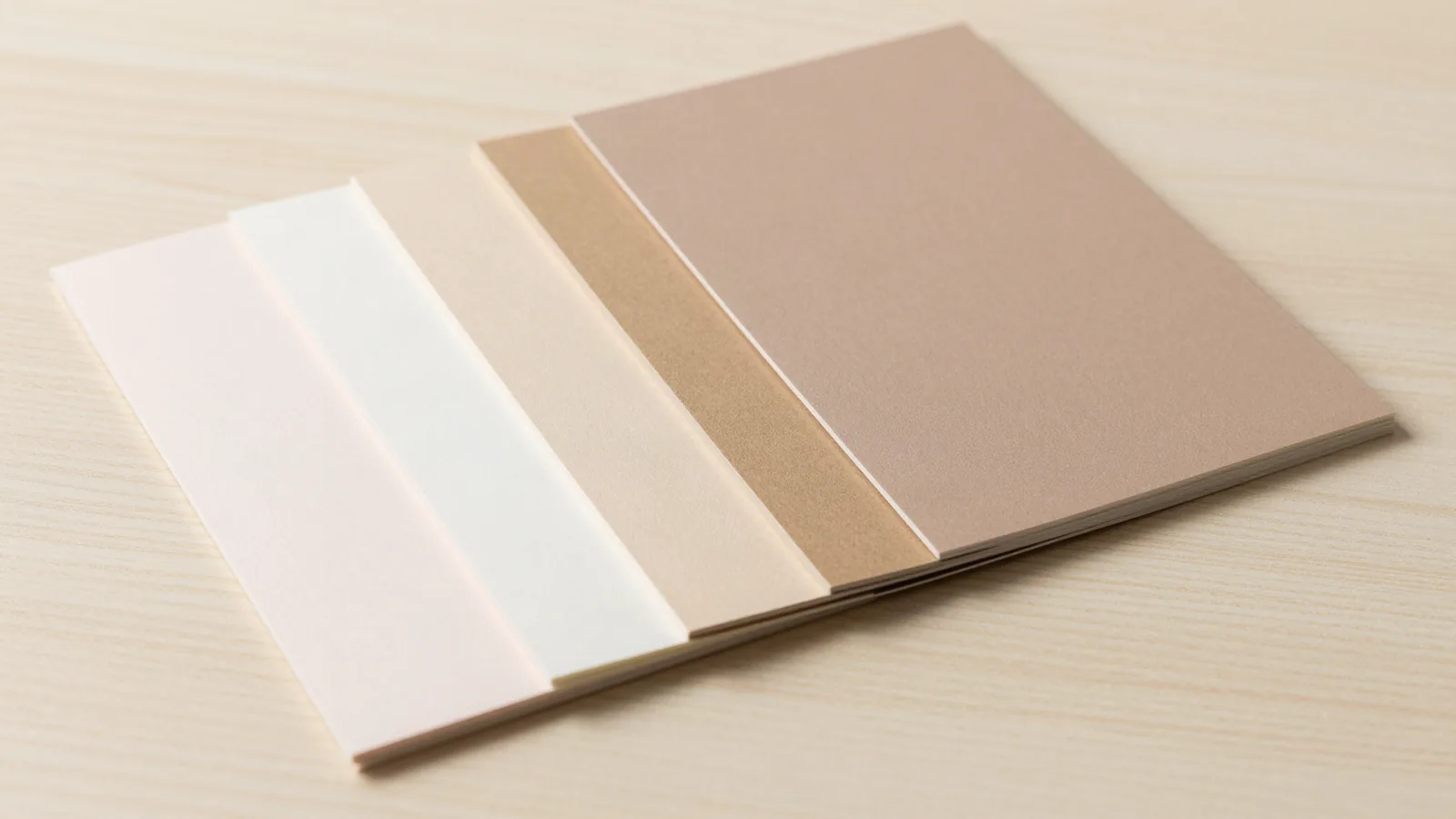




















































Litho laminated boxes are built in two parts: a printed lithographic sheet and a board or corrugated core. The sheet carries the graphic surface; the core establishes profile, walls, folds, and shipping behavior. A dieline is the flat cutting template used to map those parts before production. Compare window soap boxes, window display boxes, and window boxes when checking how a printed face and a visible product share one package. Wallet boxes give another folding-box reference. For artwork planning, see custom packaging design.
When should I compare litho laminated box formats?
Compare the format when detailed print and a shaped board need to work on the same package. A printed sheet can face a retail panel, wrap a core, or sit on a corrugated outer structure. The choice changes the crease pattern, seam, cutout, glue area, and inside fit. Decide whether the box will sit on a shelf, open as a display pack, or travel through delivery before comparing cores.
Which core reference fits the package?
E flute, B flute, C flute, paperboard, and rigid chipboard each change the finished box in a different way. The table uses typical industry references. It is a material comparison, not CPL order data.
| Core reference | Common role | Planning check |
|---|---|---|
| E flute | Lower-profile corrugated presentation | Printed surface, crease placement, and inside fit |
| B flute | Corrugated structure with a broader handling role | Stacking direction, closure, and graphics across panels |
| C flute | Corrugated outer package with more board depth | Outside size, protection plan, and shipping route |
| SBS, C1S, or C2S paperboard | Folding carton surface or inner package, 12 to 24 pt | Caliper, print side, folds, and finish areas |
| Rigid chipboard | Rigid presentation core, 1.5 to 3 mm, wrapped in 100 to 157 gsm art paper | Wrapped sheet alignment and corner coverage |
How does flute choice affect the package?
E flute keeps a lower profile and gives the printed face finer detail; B flute adds a different balance of board depth and handling; C flute gives a deeper corrugated wall for larger outer packages. Those profiles change the inside clearance and the space available for scores, windows, and closures. Use the packed product and the outside parcel as the measuring reference, not the flat printed sheet.
How should the printed sheet meet the core?
Registration can fail at a wrapped corner even when the flat artwork looks centered. Show the core, paper sheet, grain direction, folds, seams, glue areas, and cutouts on separate layers. A front panel that lands correctly on the sheet can move once it wraps an edge. Check the lid, tray, sleeve, and product view in the assembled order, then keep type away from scores and overlaps.
How do windows and cutouts alter the printed face?
PET window film commonly falls in the 0.2 to 0.3 mm range. The cutout needs its own shape, film placement, glue land, crease clearance, and protected copy area on the dieline. Keep enough board around the opening for the face to hold its shape. Check the closed box as well as the flat sheet, because the window changes what the buyer sees first.
Which print and finish route fits the artwork?
Offset CMYK is a common reference for detailed lithographic artwork. Digital printing suits a short-run version check, while flexo is commonly considered for corrugated surfaces. Matte or gloss lamination changes glare and sheen. Soft-touch changes the hand feel; spot UV isolates a selected area; foil stamping adds reflection; embossing raises paper; debossing recesses it. Mark each effect by panel and keep coverage separate from structural marks.
How should I measure the finished box?
State length x width x depth and use inside measurements for the packed contents. About 1/16 in, or 1.5 mm, is a common planning tolerance, subject to the structure and contents. If the box is also the shipping package, record the assembled outside dimensions. Carrier dimensional weight uses the outer parcel, not the flat sheet, so the fit check needs both views.
What drives a useful cost comparison?
Compare the same core, printed sheet coverage, board caliper, finish, quantity break, tooling plan, shipping zone, window patching, and structure. Full-coverage artwork creates a different print plan from a front-panel treatment. A cutout or wrapped corner adds a conversion decision. Keep the retail face, inner fit, and outer handling layer separate, or the quote will compare different packages under one label.
Which CPL product pages give useful references?
The catalog pages give product-shaped examples without deciding the construction for you. Window soap boxes show how a clear panel meets a folding face. Window display boxes and window boxes help check visible-product placement. Wallet boxes give a solid-face folding reference.
What should the quote package include?
Send the product and the way it sits inside the box.
- State the core: E, B, or C flute, paperboard, or rigid chipboard.
- Give inside fit, outside parcel size if relevant, insert details, and opening direction.
- Mark the printed sheet, coverage, seams, folds, cutouts, glue areas, and panel hierarchy.
- List the print process, lamination, soft-touch, spot UV, foil, embossing, and debossing.
- Share quantity, destination, and artwork status.
Custom Packaging Lane quotes litho laminated boxes to spec from a 100-unit minimum, with pricing from $0.49 per unit at volume, quoted to spec. Production is typically 8 to 10 business days after proof approval, plus delivery. Free US shipping and free design support are available, and a free dieline can be requested before the digital proof. The $19.99 sample kit is credited to the first order. Send the packed arrangement and the core reference.
Frequently Asked Questions
Are litho laminated boxes corrugated or paperboard?
Litho laminated boxes can use paperboard, corrugated board, or rigid chipboard. Paperboard supports folding cartons, E, B, and C flutes change corrugated profile and handling, and rigid chipboard creates a fixed presentation core. The printed sheet carries the graphics, but the core decides the folds, walls, and inside clearance.
Which flute has the lowest profile?
E flute is the lower-profile corrugated reference among E, B, and C flute. It is often checked for a refined printed face and smaller profile. B flute adds board depth and a different handling balance, while C flute gives a deeper wall for larger outer packages. Confirm the choice against product fit and outside size.
Does the printed sheet need to cover the full box?
No. The printed sheet can cover a front panel, several adjoining panels, a sleeve, or a wrapped core. Coverage changes the seam, glue areas, registration checks, and finish plan. Mark the exact printed area on the dieline, then keep copy away from scores, overlaps, cutouts, and concealed edges.
Can litho laminated boxes include windows?
Yes, a litho laminated box can use a cutout with PET window film. Film in the 0.2 to 0.3 mm range is a common reference. The assembled check must include the opening, glue land, crease clearance, product view, and protected copy area because the flat artwork does not show every alignment issue.
How do outside shipping dimensions differ from inside fit?
Inside dimensions describe the room available for the product, insert, and closure. Outside dimensions describe the assembled parcel, including the core and printed wrap. State length x width x depth for both where needed, because carrier dimensional weight uses the outer parcel while product clearance depends on the inside.












