




























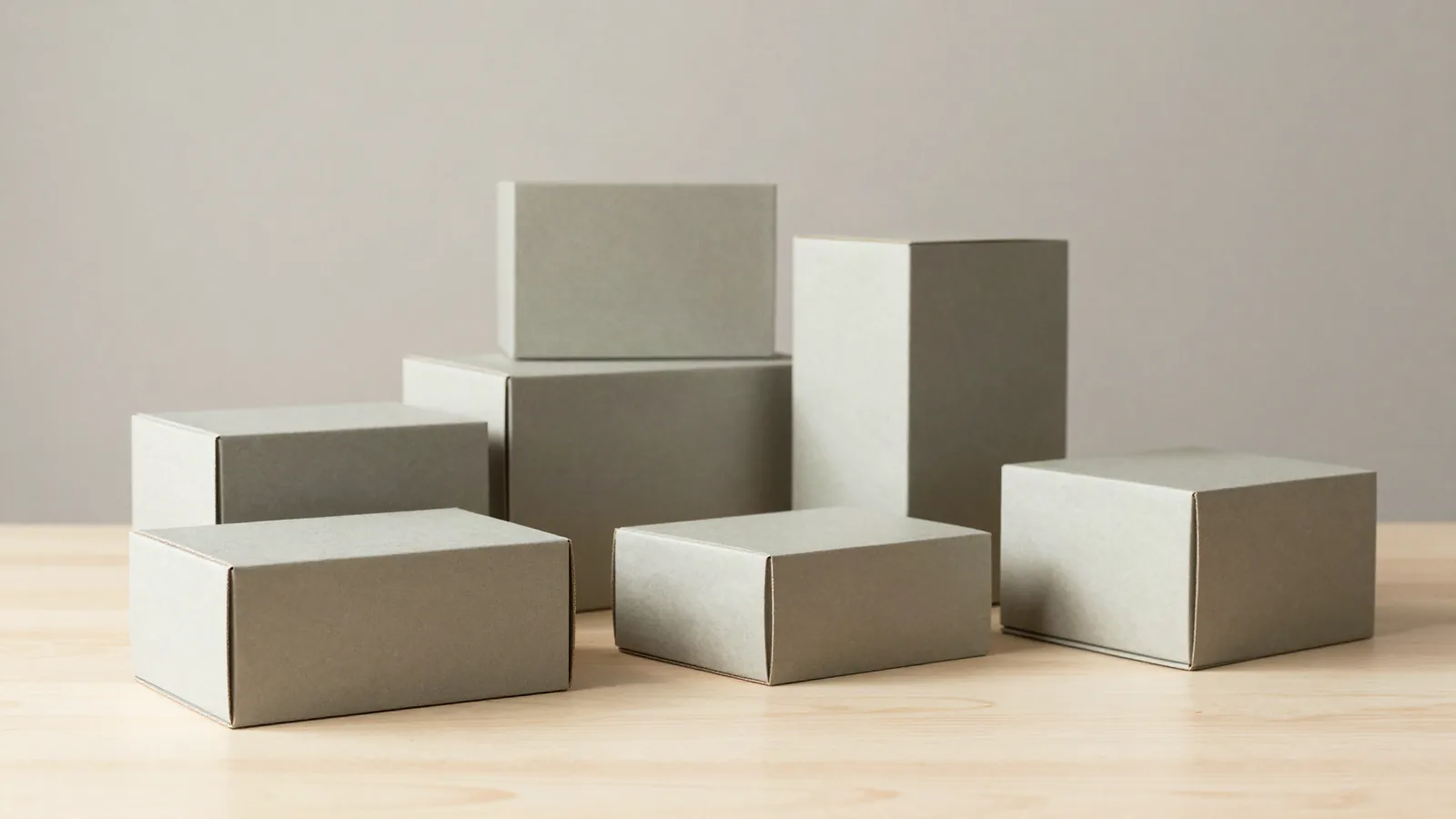




















































Litho boxes put detailed print on a paper sheet, then pair that sheet with a folding carton, rigid build, sleeve, or corrugated structure. The name describes the printed surface, not one fixed shape. A dieline is the flat cutting template that shows panels, scores, cuts, glue areas, and folds. Start with the product dimensions and the way the box will be packed, stacked, displayed, or shipped. That choice sets the board, opening, insert, and surface plan.
What does litho mean on a box?
The lithographic sheet carries the image; the box structure determines how the package folds, stacks, opens, and ships. A folding carton keeps the printed panels in the same paperboard piece. A litho-laminated corrugated box adds a printed sheet to E, B, or C flute board. A rigid box wraps printed paper over chipboard, so the walls keep a fixed form. Name the construction before choosing finishes or artwork coverage.
Which board and print combination should I compare?
Separate the graphic face from the board that gives the package its shape. These are typical industry references, not a promise that every order uses each option.
| Construction | Common material reference | Print or structure focus |
|---|---|---|
| Folding carton | SBS, C1S, or C2S paperboard, 12 to 24 pt | Offset CMYK, folds, seams, and panel order |
| Kraft carton | Kraft board, 18 to 24 pt | Natural surface, contrast, and ink coverage |
| Litho-laminated corrugated | Printed litho sheet with E, B, or C flute board | 32 ECT outer-board reference, flute direction, and stacking |
| Rigid presentation box | Chipboard, 1.5 to 3 mm, wrapped in 100 to 157 gsm art paper | Wrapped panels, edges, and lid or tray |
How is litho printing different from flexo or digital?
Offset CMYK is the usual comparison when a paper face must hold gradients, small type, or full coverage. Digital printing suits a short run or a version that may change; offset becomes more attractive when the same artwork repeats over a longer run. The crossover depends on sheet size, colors, setup, and quantity, so request both routes against the same construction. Flexo stays in the conversation for corrugated surfaces where print and board move through the same process. A press check looks at solid color areas, small type, panel sequence, and folds. RGB art can shift during press conversion, low-resolution art stays soft, type too close to a score can break on the fold, and missing bleed can leave a white edge.
Which box structure should carry the litho sheet?
Straight tuck end and reverse tuck end cartons keep the opening in a folding carton. An auto-lock bottom supports faster setup, while a crash-lock bottom changes how the base folds and holds. A mailer, including the FEFCO 0427 reference, can combine a lid with a shipping-oriented body. A sleeve, tray, or separate lid may fit a rigid or corrugated build. Decide where the product enters and exits before placing the logo, main image, or copy.
How much room should the product have?
Inside measurements are the starting point, written as length x width x depth. Give the packed product, insert, divider, tissue, and accessory as one arrangement. About 1/16 in, or 1.5 mm, is a common planning tolerance, but the closure and contents decide the final clearance. If the box travels as an outer US ground package, carrier dimensional weight commonly uses L x W x H / 139. Empty space can increase the billed size, while an insert pocket cut to the product footprint can keep movement down.
How should windows and finishes be mapped?
PET window film commonly falls in the 0.2 to 0.3 mm range, and its cutout must be planned with the glue land, folds, seams, and safe artwork area. Matte lamination reduces glare; gloss lamination gives a brighter sheen; soft-touch changes the hand feel. Spot UV isolates a logo or information panel. Foil stamping adds a reflective accent, while embossing raises paper and debossing recesses it. Put every treatment on the dieline so the press file and conversion file agree.
Which CPL products can I use as format references?
Use window soap boxes when a clear panel must sit inside a folding structure. Window display boxes and window boxes help compare product visibility, panel size, and closure placement. For a solid-face route, review waffle boxes. These catalog references keep the discussion on structure and fit, not on a generic box label.
What should I include in a litho box brief?
A workable brief starts with the packed item and ends with the delivery route.
- State the construction: folding paperboard, litho-laminated corrugated, rigid, or sleeve-based.
- Send product dimensions and the inside arrangement, including inserts, dividers, windows, and opening direction.
- Name the board or flute reference, printed face, artwork coverage, and ink areas.
- Mark folds, scores, seams, cut lines, window patching, and finish locations.
- Say whether the package is for a shelf, display, mailer, or outer shipping route.
Custom Packaging Lane quotes litho boxes to spec from a 100-unit minimum. Pricing is from $0.49 per unit at volume, quoted to spec. Production is typically 8 to 10 business days after proof approval, plus delivery. Free US shipping and free design support are available, and a free dieline can be requested before the digital proof. The $19.99 sample kit is credited to the first order. Start with custom packaging design and send the packed dimensions.
Frequently Asked Questions
What does the litho layer do?
A litho layer carries detailed printed artwork on paper, while the folding carton, corrugated board, sleeve, or rigid core gives the package its shape. The layer can cover a full panel or wrap a structure, but folds, seams, glue areas, and windows must appear on the dieline before artwork is placed.
Can litho boxes use corrugated board?
Yes, a litho-laminated corrugated box bonds a printed sheet to E, B, or C flute board. The printed sheet carries the graphics, while flute direction and board depth affect stacking, folds, and inside clearance. Tell the supplier whether the box is a display pack, mailer, or outer shipper before choosing the corrugated structure.
Does a printed sheet need offset printing?
No single print process fits every litho box. Offset CMYK suits detailed, repeated artwork on a printed sheet. Digital printing is useful for a short run or a version that may change, while flexo is commonly considered for corrugated surfaces. Compare the same structure, sheet coverage, finish, and quantity.
Can a litho box include a PET window?
Yes, PET window film commonly falls in the 0.2 to 0.3 mm range. The dieline should show the cutout, film, glue land, nearby folds, and the area kept clear for copy. Check the assembled box because a window can shift the front panel reading and expose a seam or crease.
What artwork problems should I catch before printing?
Four checks catch common rework: low-resolution images, RGB colors that change during press conversion, type set too close to a score, and missing bleed. Review the flat dieline and the folded view together. A digital proof is the point to catch a barcode, logo, or panel that lands across a fold, seam, or cut line.












