




























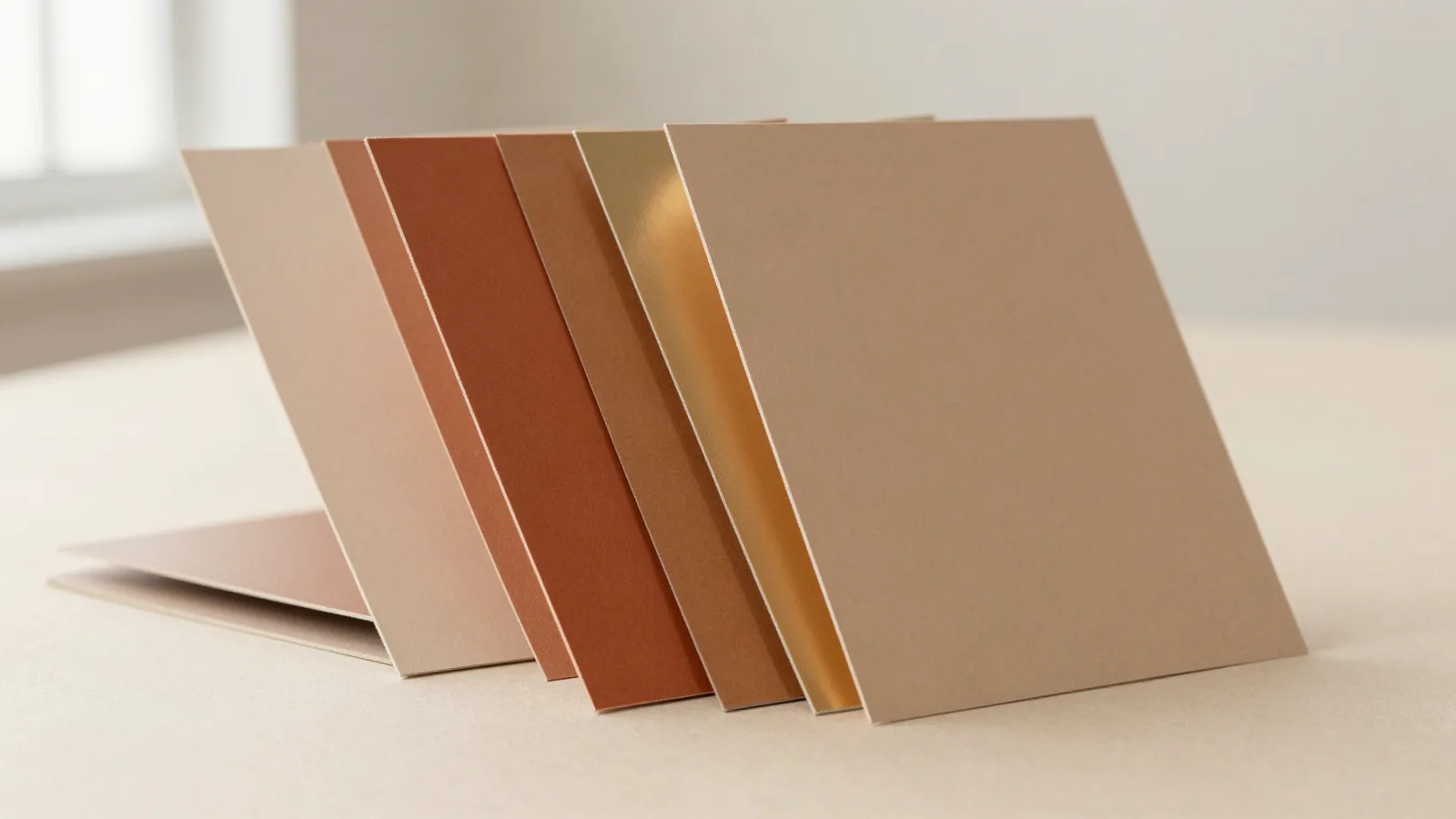




















































A litho laminated box joins a printed paper sheet to a board or corrugated core. The sheet carries the graphic face; the core determines the box's shape, opening, and handling. A dieline is the flat cutting template that maps panels, scores, cuts, glue areas, folds, and wrap edges. Buyers use the format for folding cartons, rigid presentation boxes, sleeves, trays, and fitted kits, but the build route changes the finished box. Compare wine box packaging, shoe box packaging, custom foam box inserts, and custom DNA test kit boxes when the package includes a bottle, shoe, fitted insert, or small kit.
What layers are in a litho laminated box?
A printed paper sheet sits on the outside of the structure, while the board beneath it supplies thickness, folds, or fixed walls. Folding cartons commonly use SBS, C1S, or C2S paperboard. A rigid presentation box uses chipboard with a paper wrap, so the lid and base keep their shape. The wrap edges, paper grain, fold direction, opening edge, and board thickness all belong in the first construction discussion.
| Build route | Common industry reference | Buyer decision |
|---|---|---|
| Folding paperboard carton | SBS, C1S, or C2S, 12 to 24 pt | Panel order, crease pattern, closure |
| Rigid presentation core | Chipboard, 1.5 to 3 mm, wrapped in 100 to 157 gsm art paper | Lid, base, edges, and wrap direction |
| Printed surface | Offset CMYK for detailed artwork | Coverage, color areas, and critical copy |
| Surface treatment | Matte or gloss lamination, soft-touch, spot UV, foil, embossing, debossing | Hand feel, contrast, and relief |
Which structure matches the opening motion?
A two-piece rigid box separates lid and base, while a drawer or slide box puts the graphic on a sleeve and pull-out tray. A magnetic flap keeps the opening on one hinged panel. Straight tuck end and reverse tuck end cartons organize panels around a crease pattern. A sleeve can wrap an inner carton without taking over the entire structure. Choose the opening motion before the paper wrap is drawn.
How do I keep the artwork in register?
Panel registration starts with the assembled form, not a flat rectangle that ignores corners. Mark the seam, wrap edge, crease, cut line, lid overlap, tray front, and every area that disappears under a sleeve. Keep essential copy clear of folds and closures, and map any pattern that continues across adjoining panels. Low-resolution art stays soft, RGB art can shift when converted for press, and missing bleed can leave a white edge. Separate structural marks from print layers, then review the digital proof before anything prints.
Which finish belongs on the wrapped face?
Matte lamination cuts glare, while gloss lamination gives the sheet more sheen. Soft-touch changes the hand feel. Spot UV isolates a logo, texture, or selected panel; foil stamping adds reflection; embossing raises paper; debossing presses it inward. Aqueous coating dries quickly and takes glue well on flaps. UV coating cures hard and glossy, but it can crack along scores and is harder to write on. Map each finish by panel instead of listing effects without a location.
What dimensions should the core use?
Write the box as length x width x depth and use inside measurements for the product, insert, card, or accessory. A common packaging convention allows about 1/16 in, or 1.5 mm, tolerance, subject to the structure and contents. Give the packed arrangement, not only the product name. Note which surfaces need clearance at the opening, since the core, paper wrap, insert, and closure must fit together.
When should I choose rigid over folding?
Rigid construction makes sense when the box needs a defined lid and base, a drawer reveal, or a magnetic opening. Folding construction fits a package that must ship flat, use tuck panels, or stay compact before assembly. Both routes can carry detailed print. If a foam insert is included, put the insert depth and outer board choice in the same structural brief.
Which CPL formats can I use as nearby references?
Catalog references are useful when each one answers a specific construction question. Wine box packaging gives a bottle-oriented opening reference. Shoe box packaging keeps the discussion on larger folding panels. Custom foam box inserts show why the inside fit needs its own drawing, while custom DNA test kit boxes point to a smaller fitted arrangement.
What should go into the quote brief?
A quote can miss the intended construction if the product is named without its packed arrangement.
- Describe the product, insert, tray, sleeve, closure, and opening motion.
- Identify the folding or rigid route, board reference, wrap direction, and panel order.
- Mark seams, creases, cut lines, glue areas, overlaps, and concealed surfaces.
- List the print process, coverage, color areas, lamination, and special finish locations.
- Share inside dimensions, quantity, destination, and artwork status.
Custom boxes with logo can organize the brand-panel handoff. Custom Packaging Lane quotes litho laminated boxes to spec from a 100-unit minimum, with pricing from $0.49 per unit at volume, quoted to spec. Production is typically 8 to 10 business days after proof approval, plus delivery. Free US shipping and free design support are available, and a free dieline can be requested before the digital proof. The $19.99 sample kit is credited to the first order. Send the packed dimensions and opening sketch.
Frequently Asked Questions
How is the paper face attached to the box?
A litho laminated box uses a printed paper sheet applied to a folding, rigid, or corrugated structure. The sheet carries the outside artwork, while the core controls folds, walls, seams, and opening. The brief should separate the paper wrap from the board, glue areas, and finished edges so the flat file matches the assembled box.
Is a litho laminated box rigid?
A litho laminated box can be rigid or folding. Rigid versions use chipboard with a wrapped paper face; folding versions use paperboard or corrugated structure with creases. A drawer, magnetic flap, sleeve, or tuck closure changes the opening, so name the structure before the artwork is drawn.
How can artwork cross a box corner cleanly?
Map the seam, fold, corner, overlap, and concealed area on the dieline before placing artwork. Patterns that cross panels need a registration check at the assembled edge. Keep small copy away from creases and glue flaps, then review the digital proof as a folded sequence rather than trusting a flat rectangle.
Which finish should go on a wrapped box?
Matte lamination reduces glare, gloss lamination gives more sheen, and soft-touch changes the surface feel. Spot UV, foil stamping, embossing, and debossing work on selected areas when the panel and fold plan allow them. Aqueous coating accepts glue well; UV coating is harder and glossier but can crack at scores.
What measurements does a litho laminated box need?
Give length x width x depth with inside measurements for the product, insert, card, or accessory. A common planning convention allows about 1/16 in, or 1.5 mm, tolerance, subject to the structure and contents. Include the opening, clearance, wrap, and board thickness so the core is not sized against an incomplete pack.












