


















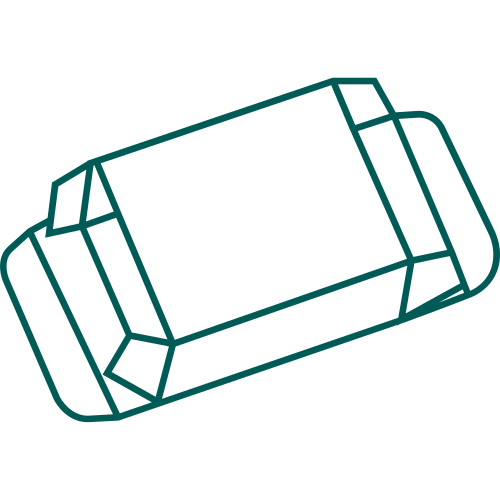





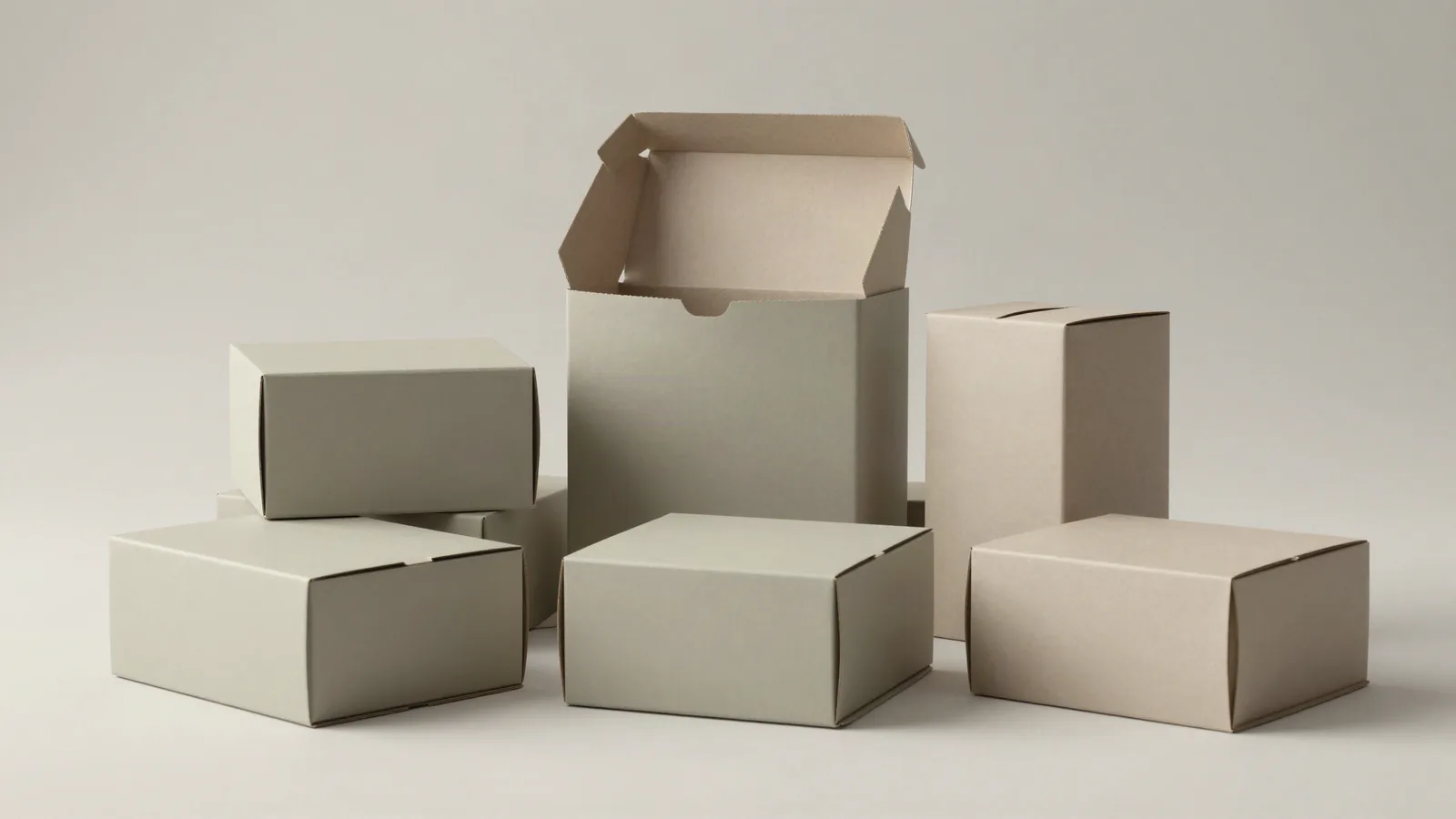



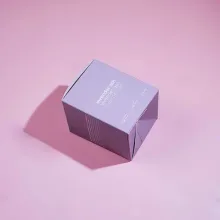
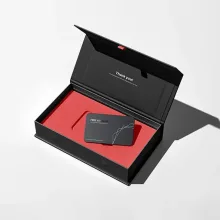
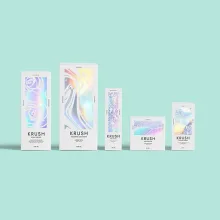





































Perforation packaging uses a planned line of cuts and ties to guide a hand toward a controlled opening in a box. A dieline is the flat template used to map the box before printing and cutting. The package may have a tear strip, removable panel, peel-open section, or another access path. CPL's finish information can describe perforation and tear-strip directions on custom boxes. Put the opening motion into the construction note and the dieline, not in a vague finish label.
How does a perforated box open?
A perforated box opens along a cut-and-tie path that leaves enough board attached to guide the tear and keep the intended panel relationship. The opening may travel across a lid, front face, or removable section. Name the entry point, pull direction, exposed area, and portion that stays attached. Those details describe the handoff more accurately than a generic perforation icon.
What does a tear strip do?
A tear strip gives the hand a defined strip or pull end to follow across the package. It can separate an access panel or open a carton along a planned route, but the strip still needs a clear start, direction, retained edge, and end point. State whether the strip stays attached, comes away, or exposes a panel after the pull.
| Finish element | Physical role | Dieline detail |
|---|---|---|
| Cut-and-tie path | Guides a tear across a defined panel or edge | Entry point, exit point, and pull direction |
| Tear strip | Gives the hand a removable strip to follow | Strip location, visible end, and retained edge |
| Access panel | Separates or lifts to expose the product | Panel boundary and attached portion |
| Fold crossing | Shows where the tear meets a crease | Fold relationship and clear print area |
| Opening instruction | Explains the intended customer motion | Copy position, arrow direction, and panel face |
Where should a perforation line run?
A perforation line should follow the box geometry that carries the intended opening. Keep folds, shoulders, closures, glue tabs, and printed instructions visible when the path is drawn. A line that cuts through a required label or turns around the wrong corner makes the opening harder to understand. The finish note should identify the box face, start point, exit point, and direction.
How do folds and scores change the tear?
Folds and scores change the tear because they change how the board bends before the customer reaches the perforation. A score is a planned crease that helps the box fold; a perforation is a cut-and-tie path that guides separation. Show both on the same dieline, then mark where the tear crosses or stops at each fold. Board direction and panel shape still matter.
What should the digital proof show before printing?
The digital proof should show the perforation path, tear direction, pull tab, folds, scores, access panel, retained edge, and printed instructions before anything prints. Keep product information on the portion that stays with the package if the buyer needs it after opening. Free design support can help separate artwork marks from physical finish notes before proof approval.
When does a tear strip fit the box?
A tear strip fits the box when the package needs a defined pull point and a planned path to the product. Describe whether the box opens from the lid, front, side, or around a corner, then specify what remains attached. The board, fold lines, printed surface, and closure all influence the finished handoff, so the strip should be reviewed with the whole box.
Which CPL product pages can frame a perforation brief?
The perforated packaging page is the direct catalog reference for this finish. Wine box packaging gives you a box context where the opening face and retained panel need clear planning. Wax packaging and towel packaging provide other product-led box references. The selected format controls the tear path, panel, and print placement.
Can a physical sample clarify the opening?
A physical sample can clarify the board feel, opening direction, panel separation, and hand position you want the package to invite. The $19.99 sample kit gives you a way to discuss those points before the final proof. It does not set the final cut pattern, so describe the desired motion in plain language when you request the quote.
What are CPL's quantity and production terms?
The MOQ is 100 units. Pricing is from $0.49 per unit at volume, quoted to spec, with the quote shaped by the box style, board direction, finish placement, artwork, and quantity. Production is typically 8 to 10 business days after proof approval, plus delivery. Free design support and free US shipping are available. Use custom packaging design when the tear path and branded artwork need to be planned in one file.
Frequently Asked Questions
What does a perforated package mean?
A perforated package has a planned line of cuts and ties that guides an opening through a box or other package. The feature may create a tear strip, removable panel, or controlled access path. CPL can discuss the finish against the selected box construction, artwork, quantity, and opening direction.
Can a tear strip be added to a custom box?
A tear-strip direction can be discussed as a standard finishing feature on a custom box. The brief should define the pull direction, strip placement, opening panel, retained edge, box construction, and artwork clearances. The selected structure and desired handoff determine how the feature fits the package.
Should perforation marks be on the dieline?
Perforation marks should be on the dieline with folds, scores, tear direction, pull tab, access panel, and retained edge. Keep essential product information away from a removable section when it must stay with the package. CPL's free design support can help organize the artwork and finish notes before proof approval.
Which box formats can use perforation packaging?
Perforation packaging can be discussed for custom box formats that need a defined opening action. CPL's catalog includes perforated packaging plus wine, wax, and towel packaging references. The product profile, box geometry, finish placement, artwork, quantity, and opening direction should control the final construction.
What order minimum and timing apply to perforated boxes?
Perforated box projects use an MOQ of 100 units, with pricing from $0.49 per unit at volume, quoted to spec. Production is typically 8 to 10 business days after proof approval, plus delivery. Free design support and free US shipping are available for the project.