




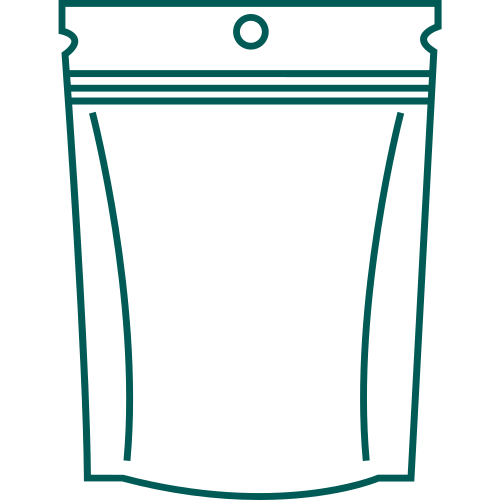




















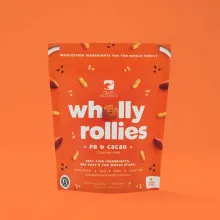



































What is a Mylar bag? A Mylar bag is a flexible multilayer pouch built from film layers that perform different jobs, such as carrying print, blocking light, and sealing the contents inside. In packaging language, "Mylar" usually points to a polyester film direction, but the finished bag still needs a layer order, thickness, closure, shape, and seal specification. Two bags can share the same name and behave differently when filled, folded, or sealed.
What is a Mylar bag made from?
A Mylar bag is usually a laminate, which means two or more film layers are joined into one flexible structure. A polyester film layer can carry print and keep the package dimensionally stable. A metallized or aluminum layer can block light and reduce moisture and odor transfer. An inner PE layer can provide a heat-sealable surface. The exact construction controls the result, so a product name should start the quote, not finish it.
What do the layers in a Mylar bag do?
Each layer earns its place through a physical job. The outside film takes the artwork and handles scuffing from ordinary contact. The barrier layer limits the path for light, moisture, and odor. The inner sealant layer closes against itself or a matching sealant. A zipper adds repeat access, but it does not replace the film construction or the seal below it.
| Layer or feature | What it does | What the quote should identify |
|---|---|---|
| Polyester film | Carries print and adds dimensional stability | Layer position, print side, and selected thickness |
| Aluminum or metallized barrier | Blocks light and limits moisture and odor transfer | Barrier type and its place in the laminate |
| PE sealant layer | Creates the heat-sealable inner surface | Inner surface, seal area, and finished dimensions |
| Zip closure | Gives the user repeat access after opening | Opening width, zipper position, and top seal plan |
What does mil thickness mean on a Mylar bag?
Mil thickness measures film thickness, and 1 mil equals one-thousandth of an inch. It is a gauge of the material, not a complete strength measure. A bag with more film can still fail at a weak seal, a sharp product edge, or a poorly planned cut. When CPL records thickness, read it beside the layer order, bag size, closure, and intended handling rather than treating one mil number as the whole specification.
What separates a durable Mylar bag from a flimsy one?
The difference is the complete construction: film layers, total gauge, seal width, cut shape, and how the filled bag will be handled. A pouch that lies flat on a shelf has different stresses from one that gets opened, resealed, and pushed into a shipping carton. Type set too close to a score can crack or disappear at the edge, and a narrow seal area leaves less room for a clean closure. Those details belong in the dieline and proof.
Which Mylar bag format fits the job?
Choose the format from the way the contents enter, leave, and sit inside the bag. Custom plastic Mylar bags are a starting point for a flexible construction discussion. Custom printed Mylar bags put artwork, ink coverage, and finish into the same review. Irregular shape Mylar bags need the cut line and usable interior mapped together. Large Mylar bags need filled dimensions and handling details. Mylar bags for freeze drying give buyers a storage-oriented format to compare, but the selected construction still needs its own quote.
What should go into a custom Mylar bag quote?
Send the filled product dimensions, empty bag dimensions if known, layer direction, mil thickness, opening, closure, seal area, shape, print coverage, finish, quantity, and destination. A dieline is the flat cutting template used to place artwork and cut the bag, so it should show scores, seals, bleed, and safe areas before anything prints. CPL provides free design support and a digital proof before printing. Custom work uses a 100-unit MOQ, with pricing from $0.49 per unit at volume, quoted to spec. Production is typically 8 to 10 business days after proof approval, plus delivery. $19.99 sample kit helps compare physical materials before approval, and custom packaging for small business gives smaller teams a place to start the request. If the bag will touch food, ask us about food-contact options.
Frequently Asked Questions
What does the word Mylar mean on a bag listing?
The word Mylar on a bag listing usually points to a polyester film direction, not one universal finished construction. A Mylar bag can also include an aluminum or metallized barrier layer, a PE sealant layer, a zipper, or a heat seal. Confirm the layer order, thickness, dimensions, and closure before approving the quote.
Does a thicker Mylar bag always protect better?
A thicker Mylar bag does not automatically protect better because seal width, laminate layers, cut shape, and handling also affect performance. Mil measures film thickness, with 1 mil equal to one-thousandth of an inch. Ask CPL to state the selected thickness beside the barrier layer, seal plan, dimensions, and intended use.
What is the difference between an aluminum layer and a PE layer?
An aluminum layer in a Mylar bag helps block light and limit moisture and odor transfer, while a PE layer commonly forms the heat-sealable inner surface. They do different jobs. The selected layer order should match the product, closure, seal area, artwork, and handling conditions in the quote.
Can a Mylar bag be used for food-contact packaging?
A Mylar bag intended for food contact should be discussed with CPL before the film, finish, and closure are selected. Ask us about food-contact options for your product, and share the contents, filling method, storage conditions, and contact surface. Do not infer suitability from the word Mylar alone.
What does a custom Mylar bag order require from CPL?
A custom Mylar bag order uses a 100-unit MOQ, with pricing from $0.49 per unit at volume, quoted to spec. Production is typically 8 to 10 business days after proof approval, plus delivery. Free US shipping and free design support are available, and the $19.99 sample kit can help compare materials before approval.