




























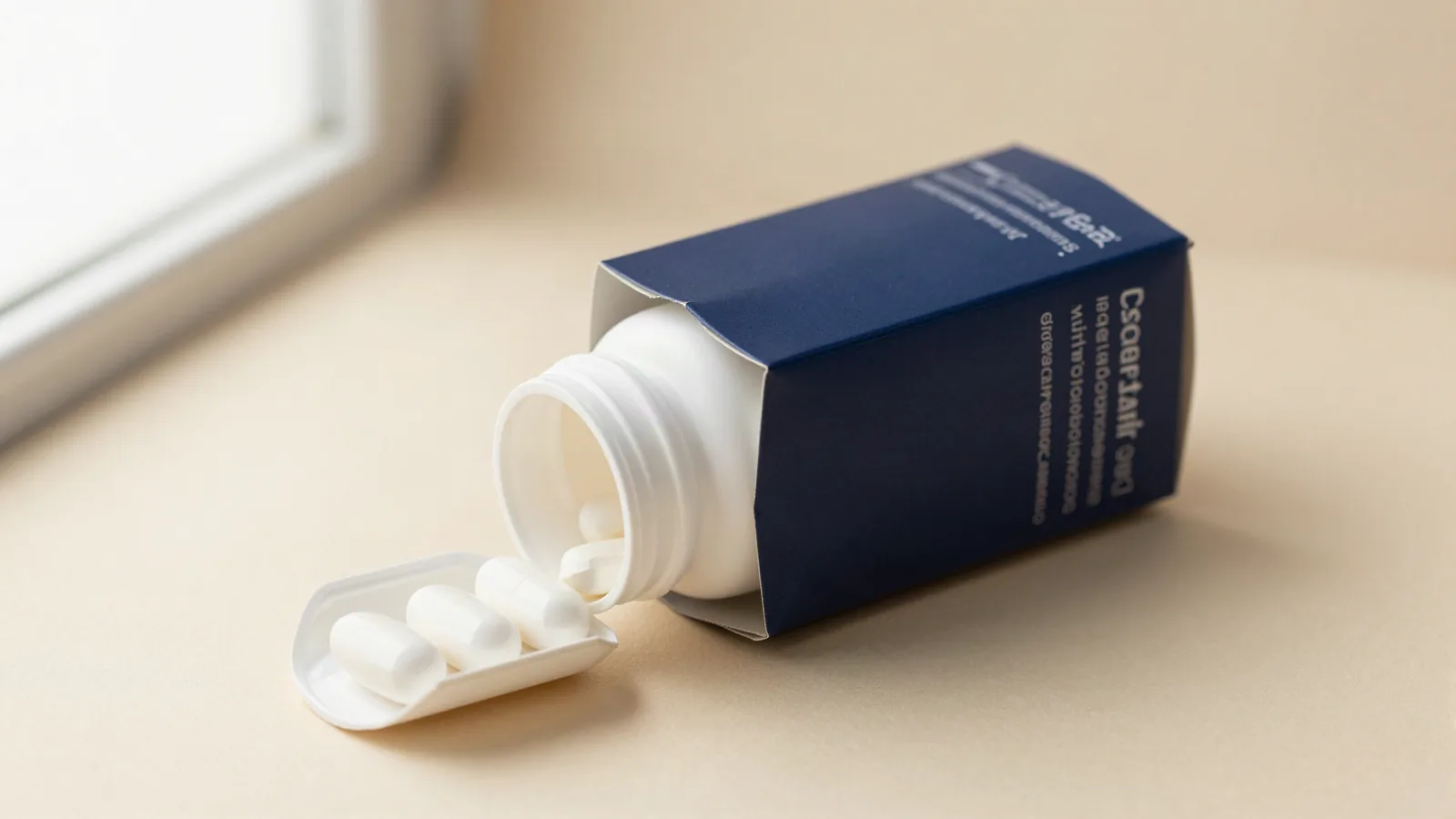




















































Pharmacy packaging starts with approved copy and a physical fit, then builds the carton around the dispensing action. The brief should separate information panels from structure, material, print, and special features. A package can organize information, but the pharmacy or brand team must review the final copy. Use private label packaging, perforated packaging, and wax packaging as catalog references for panel, access, and compact-package questions.
What information needs space on pharmacy packaging?
Product name and identifier belong on a readable primary panel, while directions, storage, contact details, and variable fields need separate zones. The pharmacy or brand team supplies the exact copy. The packaging brief reserves space for strength, lot or date fields, handling text, and a barcode without letting folds, seams, glue tabs, or decorative effects interrupt the reading order.
| Panel area | Information to plan | Physical check |
|---|---|---|
| Primary front | Product name, identifier, and brand mark | Recognition with the carton closed |
| Side or back panel | Directions, storage, contact, or handling copy | Reading order across folds |
| Bottom or side field | Lot, date, barcode, or variable information | Access for printing and inspection |
| Opening area | Closure, access instruction, or controlled-opening direction | Opening path for the intended use |
Which carton structure fits the dispensing workflow?
Straight tuck end and reverse tuck end cartons create different opening paths, so the dispensing workflow should decide which one enters the brief. Auto-lock bottom and crash-lock structures change base setup. A sleeve can wrap an inner container. A mailer, drawer or slide, two-piece rigid box, or magnetic flap can support a different access and presentation plan.
If a child-resistant feature is needed, describe it as a structural feature for review with the specific product, opening behavior, and responsible approval team. Put controlled-opening directions in the structure and artwork notes. Keep the request concrete, because the closure, scores, tabs, and product fit all affect how the finished package opens.
What board thickness is common for pharmacy cartons?
SBS, C1S, and C2S paperboard commonly fall in the 12 to 24 pt range for printed folding cartons. Kraft board commonly falls in the 18 to 24 pt range. Caliper means board thickness. Rigid chipboard commonly falls in the 1.5 to 3 mm range and can be wrapped in 100 to 157 gsm art paper. Corrugated E, B, and C flutes, with 32 ECT as a general strength reference, belong in the discussion when an outer pack must travel. These are trade references, not pharmacy performance claims.
| Material reference | Typical value | Physical direction |
|---|---|---|
| SBS, C1S, or C2S paperboard | 12 to 24 pt | Smooth surface for printed folding cartons |
| Kraft board | 18 to 24 pt | Natural paper surface |
| Rigid chipboard with art paper | 1.5 to 3 mm chipboard, 100 to 157 gsm wrap | Box that holds its shape without a fold |
| E, B, or C flute corrugated board | 32 ECT strength reference | Outer pack with a corrugated profile |
How should variable information be handled in the artwork?
Lot, date, barcode, and other variable fields need a flat, accessible area with enough contrast. A dieline is the flat cutting template that shows panels, cuts, scores, glue zones, and closure flaps. Reserve the variable field on that template before placing decorative copy. Keep type away from scores, seams, and glue, and leave bleed on the file.
Low-resolution art and RGB files can create problems after conversion for press. A digital proof should show panel orientation, field location, copy size, and barcode placement before printing. At a press check, inspect ink coverage, registration, small type, and any finish that crosses a fold or makes required copy harder to read.
Which print and finish choices support readable copy?
Offset CMYK is a common direction for detailed folding-carton artwork. Digital printing suits short runs or artwork testing, while flexo is common for corrugated board. Matte or gloss lamination changes reflection. Soft-touch changes the hand feel. Spot UV, foil stamping, embossing, and debossing can mark a brand element, but directions, identifiers, and variable fields should remain on clear, readable surfaces.
Can a window work on pharmacy packaging?
A PET window can show an inner container when visibility belongs in the package plan. PET window material in the 0.2 to 0.3 mm range is a common window-patching reference. Set the window after product orientation, information hierarchy, and internal fit are understood. Keep the visible area from removing needed copy space or exposing a product area that should stay covered.
What should I send before the pharmacy packaging proof?
The first handoff should contain the product dimensions, container arrangement, approved copy, variable fields, required panels, opening direction, and material preferences. List the barcode, lot or date field, contact area, insert, window, or child-resistant feature separately. Add the delivery location and the team responsible for final artwork review.
Custom Packaging Lane quotes pharmacy packaging from a 100-unit minimum, with pricing from $0.49 per unit at volume, quoted to spec. Production is typically 8 to 10 business days after proof approval, plus delivery. Free US shipping, free design support, and a free dieline support the project. The $19.99 sample kit is credited toward the first order. Begin with custom packaging solutions once the brief has the product, copy, structure, and review owner.
Frequently Asked Questions
Which details should appear on a pharmacy carton?
A pharmacy carton may need space for an approved product name, identifier, strength, directions, storage notes, contact information, and lot or date fields. The pharmacy or brand team supplies the exact content. The packaging brief should keep required copy away from folds, seams, glue areas, and decorative effects.
Which carton structures can support pharmacy access?
Straight tuck end and reverse tuck end cartons are common folding-carton starting points, but auto-lock bottom, crash-lock, sleeve, mailer, drawer or slide, two-piece rigid, and magnetic-flap structures can suit different access paths. Choose after the product fit, opening behavior, dispensing routine, and panel hierarchy are written down.
Can a pharmacy package include a child-resistant feature?
A pharmacy package can include a child-resistant feature as a structural direction for review. The brief should name the product, intended opening behavior, closure, and responsible approval team. The feature needs review against the specific package build, because scores, tabs, material thickness, and product fit affect how the finished package opens.
Which print methods suit pharmacy cartons?
Offset CMYK suits detailed folding-carton artwork, while digital printing can support short runs or artwork testing. Flexo is common for corrugated board. Matte or gloss lamination, soft-touch, spot UV, foil stamping, embossing, and debossing can be considered after the copy hierarchy is set, with required information kept clear.
Can pharmacy packaging include a PET window?
Pharmacy packaging can include a PET window when visibility supports the package plan and does not remove needed copy space. PET window material in the 0.2 to 0.3 mm range is a common window-patching reference. Decide the opening after product orientation, internal fit, information panels, and coverage needs are understood.












