




























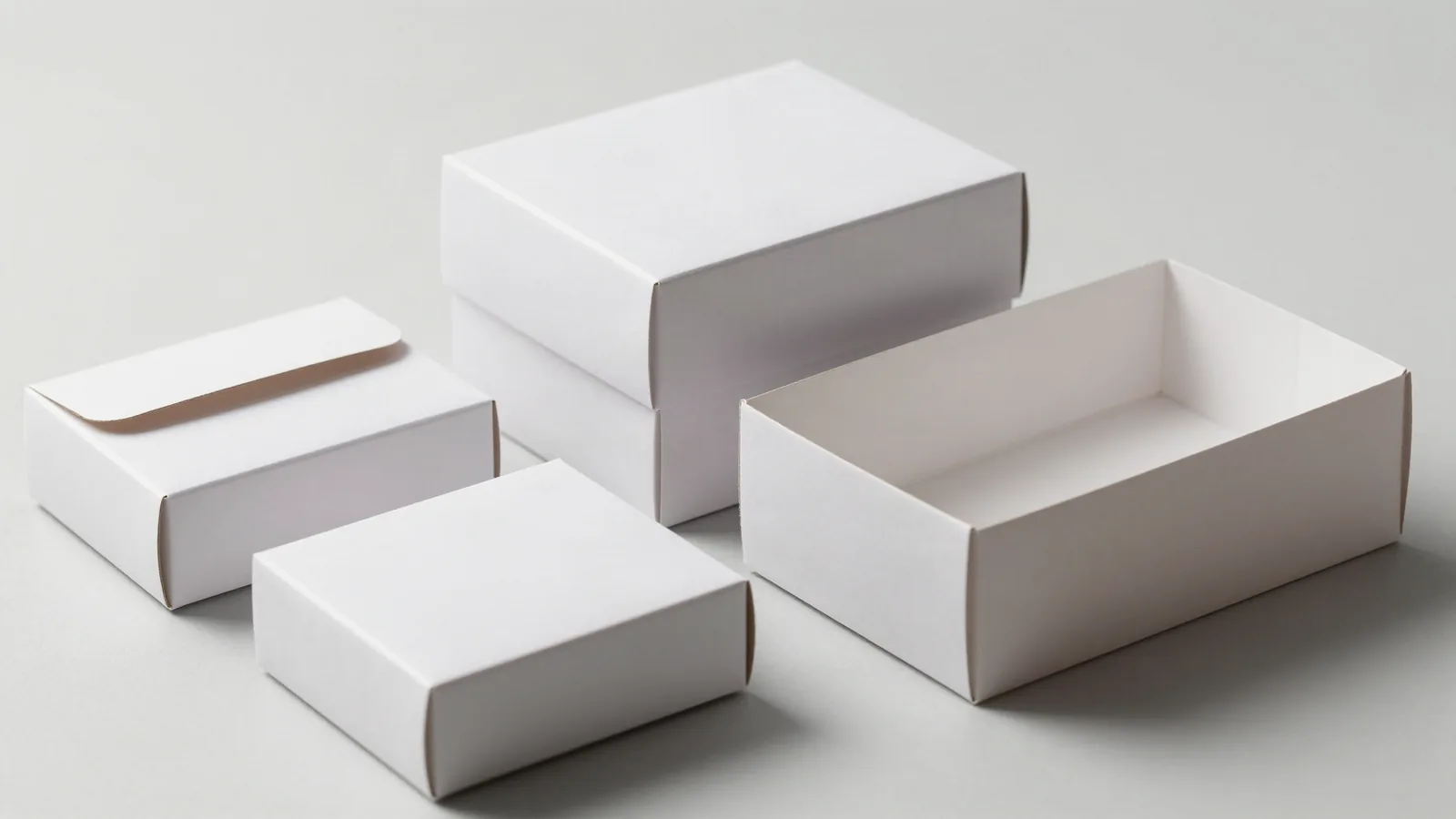




















































What does a custom miller box need to define?
A custom miller box is a made-to-spec package whose name matters less than its dieline, board, opening, and handling route. A dieline is the flat cutting template used to print, cut, and score the box. Start with the packed product, the opening action, inside length by width by depth, and whether the box travels as the shipping carton or sits inside one.
Write down the product orientation, insert, closure, print coverage, finish, quantity, and destination. A custom packaging option for small businesses still needs production language that a printer can use. The brief should identify the finished outside footprint too, because a box can fit the product and still cost more to ship when its panels waste space.
| Specification area | Common reference | What to confirm |
|---|---|---|
| Mailer structure | Roll end tuck top, often identified with FEFCO 0427 | Tuck direction, side walls, dust flaps, and opening sequence |
| Fine corrugated profile | E flute | Interior depth and finer print surface |
| Medium corrugated profile | B flute | Board thickness with the product, insert, and outer footprint |
| Shipping corrugated profile | C flute with 32 ECT as a common board-test reference | Packed dimensions and handling needs |
| Folding-carton alternative | SBS, C1S, or C2S paperboard at 12 to 24 pt | Printed carton needs and fold behavior |
| Rigid alternative | Chipboard at 1.5 to 3 mm wrapped in 100 to 157 gsm art paper | Wrapped presentation and rigid opening |
How should dimensions be written for a miller box quote?
Use inside length by width by depth for the product cavity, then list the outside footprint separately. A common packaging tolerance reference is about 1/16 in, or 1.5 mm, but the insert, score placement, and closure still need a physical fit check.
Measure the product in its packed orientation, including a sleeve, cap, lid, or protective wrap. For a shipping-led package, note the outside size because US ground dimensional weight commonly uses length times width times height divided by 139. That formula is a screening convention, not a replacement for the carrier's shipment calculation.
Which flute should I compare for the box?
E flute has a finer corrugated profile and a relatively smooth print surface, B flute gives more board thickness for a different balance of handling and space, and C flute has a larger profile used often for shipping cartons. A 32 ECT reference describes a common edge-crush board test, but it does not choose the box by itself.
Compare the flute against product weight, insert depth, stacking, and the outside footprint. A custom shoe box is a useful printed-carton reference, while wine box packaging shows how a taller presentation package can organize a product and insert.
Which print route fits the box surface?
Flexo is a common print route for corrugated board, offset CMYK suits detailed folding-carton artwork, and digital printing can suit short runs or artwork tests. Match the route to the substrate. The same logo will sit differently on corrugated linerboard, coated paperboard, and art paper wrapped around chipboard.
Matte or gloss lamination changes reflection and scuff behavior. Soft-touch, spot UV, foil stamping, embossing, and debossing need clear areas around scores, glue tabs, seams, and closure movement. A window patch can add a clear PET area, commonly around 0.2 to 0.3 mm. If the item needs a shaped nest, compare custom foam box inserts before the outside dimensions are locked.
What should I check before approving the miller box proof?
Check the dieline at full size, then place the product and insert in the intended orientation. Confirm the board and flute, inside and outside dimensions, score direction, glue tabs, bleed, artwork resolution, and finish boundaries. RGB artwork can shift when converted for press, and type set too close to a score can become hard to read after folding.
Use the $19.99 sample kit to compare material and finish directions before the production proof. Custom Packaging Lane quotes from a 100-unit minimum, with pricing from $0.49 per unit at volume. Production is typically 8 to 10 business days after proof approval, plus delivery, with free US shipping and free design support.
Frequently Asked Questions
Is a custom miller box one fixed box style?
A custom miller box is not one fixed construction. The quote should identify the dieline, board, dimensions, closure, print route, and handling path. A roll end tuck top mailer may fit a shipping job, while a folding carton or rigid setup may fit a display-led package. The approved dieline settles the actual construction.
Which flute is suitable for a shipping-oriented miller box?
E, B, and C flutes are common corrugated choices for a shipping-oriented miller box. E flute has a finer profile, B flute gives a different thickness and handling balance, and C flute has a larger profile used often for shipping cartons. A 32 ECT board test is a common reference, while product weight, insert fit, and stacking still need review.
How should miller box dimensions be measured?
Miller box dimensions should start with inside length by width by depth for the product cavity. List the outside footprint separately because board thickness and folded panels add space. About 1/16 in, or 1.5 mm, is a common tolerance reference, but the product, insert, closure, and final dieline still need a physical fit check.
Can a custom miller box use detailed printing and finishes?
A custom miller box can use flexo on corrugated board, offset CMYK on detailed folding-carton artwork, or digital printing for short runs and artwork tests. Matte or gloss lamination, soft-touch, spot UV, foil stamping, embossing, and debossing should be mapped away from scores, glue tabs, seams, and closure movement.
What belongs in a miller box quote request?
A miller box quote request should include the packed product, inside length by width by depth, outside footprint, opening style, insert plan, flute, board test, print coverage, finish, quantity, destination, and artwork status. State whether the package travels by itself or inside an outer shipper, because that changes the structure discussion.












