




























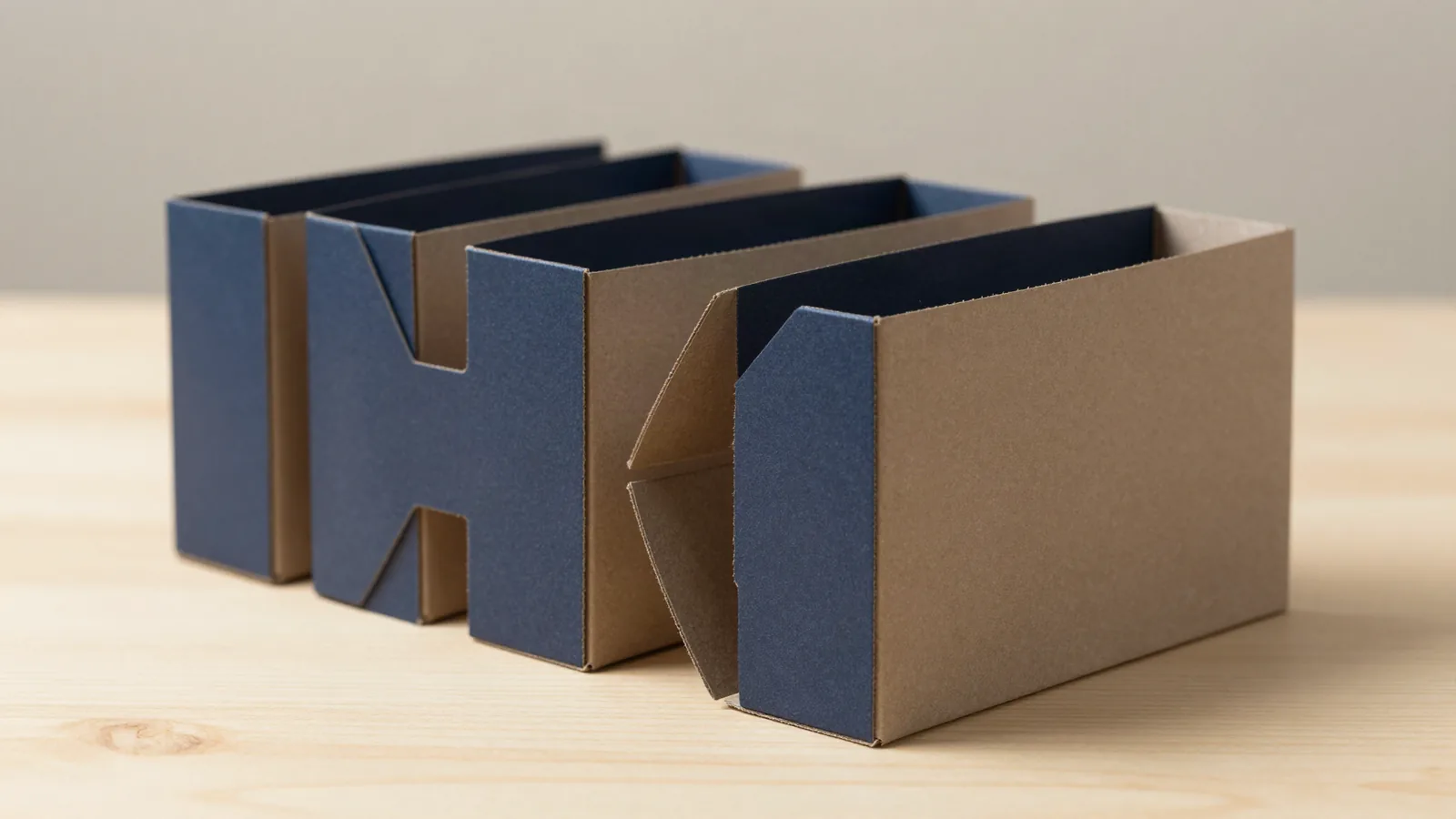




















































Pillow box packaging is a folding paperboard format with curved end panels and a broad center panel. A dieline is the flat cutting template that shows the panels, scores, glue tabs, and cut edges before the box is made. The product controls the blank: measure the packed item, then decide how much room the closure and any insert need.
What pillow box dimensions fit the packed product?
Pillow box dimensions should follow the packed product, including any wrap, insert, or grouped item that stays inside.
Measure the longest span, widest point, and packed thickness. Note anything that changes the load, such as a sleeve, label, or folded set. The curved ends need enough clearance for loading and closing, while an insert cut to the product profile can stop the item from shifting. A stock shape that leaves a large empty pocket is harder to load and can make the package look undersized for what it holds.
Also record how the box will move. A counter handoff, an inner mailer, and a master carton put different pressure on the curved panels. The brief should say where the package is displayed and whether the product goes in loose, wrapped, or held by an insert.
Is 81 x 113 x 30 mm a standard pillow box size?
No, 81 x 113 x 30 mm is a recorded pillow box reference, not a universal stock size. It is useful as a starting point for a compact package, but the packed product still controls the final blank.
| Specification field | Recorded reference | Production use |
|---|---|---|
| Finished size | 81 x 113 x 30 mm | Compact reference, not a universal stock size |
| Print side | Outside | Map visible artwork to the exterior |
| Color space | CMYK | Prepare process print artwork |
| Material color | White | Use as the recorded paperboard surface |
| Finish | Gloss, matt, or soft-touch lamination | Choose the surface treatment with the art |
| Add-ons | Gold or silver hot stamping, or UV partial gloss | Mark special areas separately |
The recorded fields show how a pillow box specification is built: finished size, print side, color space, stock color, surface treatment, and add-ons. CMYK means cyan, magenta, yellow, and black process ink. Treat each field as a proof item. A finish mark that is missing from the file will not appear by accident on the finished box.
Is cardboard or kraft better for a pillow box?
White paperboard gives outside print a clean base, while kraft paperboard leaves more of the paper's natural tone in the finished package.
For a cardboard pillow box, the broad face can carry detailed artwork, product naming, or a solid color field. Kraft changes the way ink sits against the substrate, so the material color belongs in the color discussion from the first proof. The choice also depends on the opening, any window or insert, and how the box travels to the handoff point. Ask us about food-contact options for your product when that use is relevant.
How should artwork follow a pillow box's curved shape?
Keep the main type and brand mark on the central panel, away from scores, glue tabs, and closure edges.
Extend background color past the cut line as bleed, a standard print allowance that prevents a thin unprinted edge after cutting. Do not leave important copy on a curve just because the flat file has space there. Low-resolution art can print soft, and RGB art can shift when converted to CMYK. A digital proof before anything prints gives you a chance to catch those problems, along with a logo that lands too close to a score.
Check the assembled view, not only the flat artboard. A pattern can look centered on screen and feel off once the ends fold in. If you want hot stamping or UV partial gloss, mark each area separately from the CMYK artwork.
Which catalog products help compare the pillow box format?
Soft goods, compact products, and small sets give useful comparison points for pillow box planning.
Wax packaging gives a compact product reference. Towel packaging and sock packaging show how a folded item changes the fit conversation. Seed packaging is another small printed format with limited surface area. These catalog pages help frame the product discussion; they do not turn one product's dieline into another's.
What should I send for a pillow box quote?
Send the packed product dimensions, material direction, print side, artwork status, finish, quantity, and delivery destination.
Custom Packaging Lane uses a 100-unit MOQ. Pricing is from $0.49 per unit at volume, quoted to spec. Production is typically 8 to 10 business days after proof approval, plus delivery. Free US shipping and free design support are available.
Use custom packaging design for help organizing the artwork and dieline. The $19.99 sample kit gives you a physical reference for paper, print, and surface before approval. The clock starts at proof approval, so the proof needs the actual product dimensions and final finish marks.
Frequently Asked Questions
What size should a pillow box be?
A pillow box should be sized around the packed product, including any wrap, insert, or grouped item that stays inside. Measure the longest span, widest point, and thickness, then check the closure clearance. A recorded reference measures 81 x 113 x 30 mm, but it is not a universal stock size. The final dieline should follow the actual pack-out.
Does the 81 x 113 x 30 mm reference fit every product?
No. The 81 x 113 x 30 mm pillow box reference is a recorded compact format, not a size that fits every product. Product dimensions, wrap, insert, closure clearance, and handling route determine the final blank. Send the packed dimensions so the dieline reflects what the box must hold.
What can be printed on a cardboard pillow box?
A cardboard pillow box can use white stock with CMYK outside print, then gloss, matt, or soft-touch lamination. The recorded options also include gold or silver hot stamping and UV partial gloss. Keep the finish marks separate from the base artwork and away from folds, scores, and closing panels.
Can CPL help draw a pillow box dieline?
Yes. Free design support is available for organizing the pillow box dieline, print side, artwork panels, and finish marks. Custom Packaging Lane sends a digital proof before anything prints, so the assembled shape, logo placement, and product fit can be checked before production.
What are the order terms for a custom pillow box?
Custom Packaging Lane's minimum order quantity, or MOQ, is 100 units. Pricing is from $0.49 per unit at volume, quoted to spec. Production is typically 8 to 10 business days after proof approval, plus delivery. Free US shipping, free design support, and a $19.99 sample kit are available.












