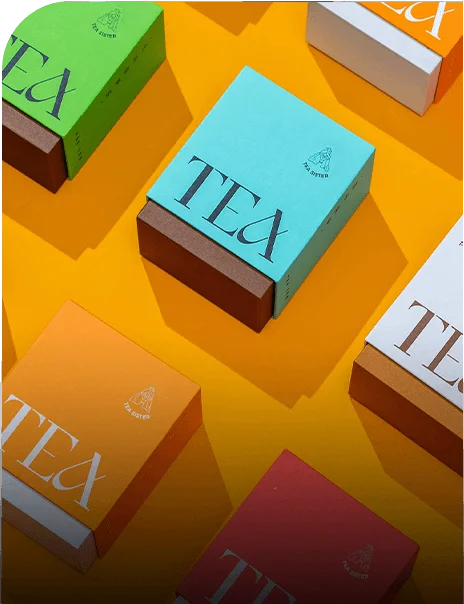
















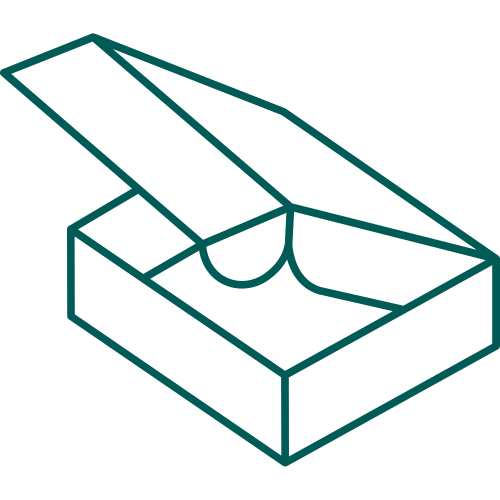
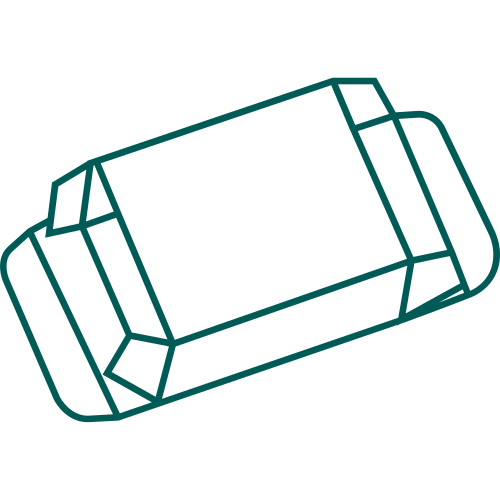




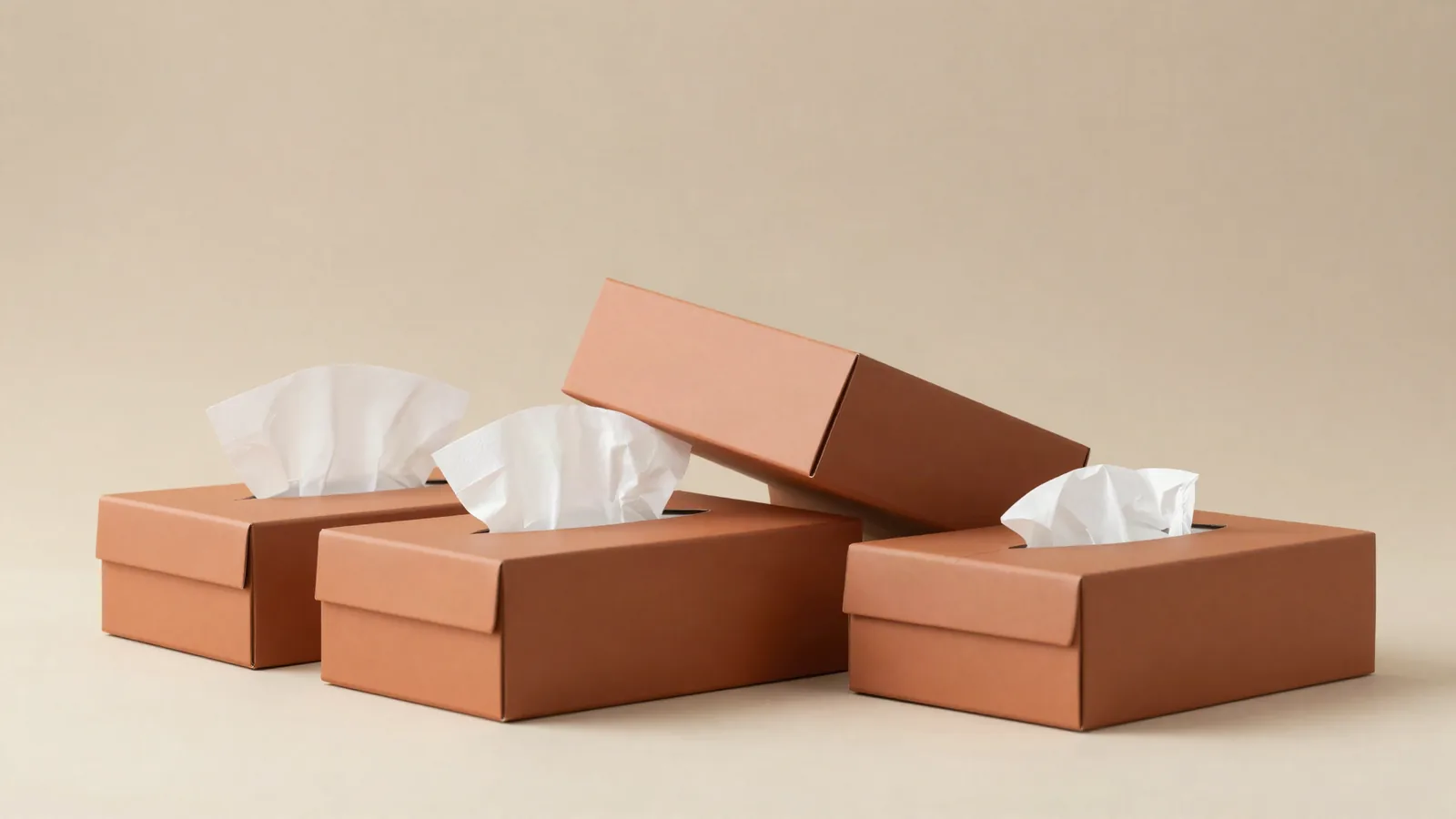



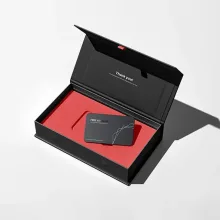
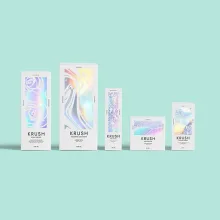
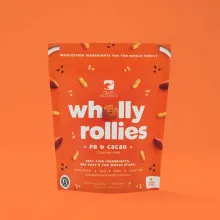
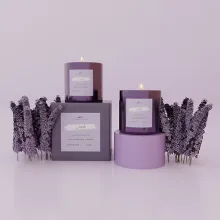
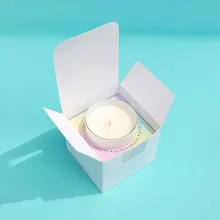
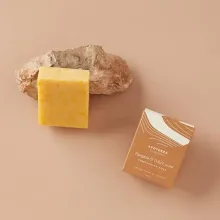













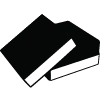



















Pillow packaging is a folding box style with curved end panels and a central body. Those panels give the assembled package its rounded profile, while the central body carries much of the printed presentation. The style describes the construction shape, not one fixed size or one product category.
A pillow box brief becomes useful when it adds the product, opening direction, visible face, material, finish, quantity, and delivery destination. Without those fields, pillow packaging is only a shape name.
What is pillow packaging in plain language?
Pillow packaging is a folding package whose curved or arched ends frame a central body.
When assembled, the end panels close around the body and create the silhouette that gives the style its name. A conventional square carton gets much of its identity from straight walls; a pillow box uses its closing panels to shape the object. That is why the closure and the visible face need review together.
Which parts make a box a pillow box?
A box reads as a pillow box when the curved ends, central body, and closing panels form one continuous assembled profile.
| Visual cue | What it tells a buyer | What to check in a sample |
|---|---|---|
| Curved ends | Creates the signature pillow-like profile | Confirm the ends read evenly when assembled |
| Central body | Provides the main area for the brand and product message | Check which face appears first in the hand |
| Closing panels | Shape the opening and contribute to the final outline | Check the opening motion and panel alignment |
| Assembled silhouette | Connects the front, sides, and ends into one object | Inspect the package from several viewing angles |
Why choose a pillow box for a compact product?
Choose a pillow box when the handoff benefits from a rounded outline and a clear central face.
The format can fit compact retail products, favors, gifts, samples, and small product sets. A counter handoff can put the brand name on the central body. A gift can put a message near the opening. A sample can keep the product name on the first visible panel. The shape should serve the moment in which the package is seen and opened.
Say whether the box will sit on a counter, move inside another package, or open immediately after handoff. That detail changes what the proof needs to show.
How should artwork follow the curved geometry?
Map the artwork to the faces the buyer sees, then keep critical copy away from scores, glue tabs, and closure edges.
A dieline is the flat cutting template for the blank. Use it to mark the central panel, end panels, folds, cut lines, and glue areas before placing the artwork. Extend background color as bleed beyond the cut edge. Low-resolution images print soft, and RGB artwork can shift when converted to CMYK, so check the file and digital proof before anything prints.
Read the assembled proof from the natural holding position. A logo that looks centered on a flat file can feel offset after the ends fold inward. If the design uses a special finish, mark the treatment separately from the base print.
What can a physical pillow-box sample tell me?
A physical sample shows whether the assembled silhouette, closure motion, panel alignment, and first-view artwork work together.
Hold the box as a recipient would, then open it. Check the curved ends from the front and side, see whether the product sits in the intended position, and look for type that lands too close to a score. A sample can expose a fit or handling issue that a flat screen hides.
The catalog pages for pillow boxes, wax packaging, towel packaging, and sock packaging give product-specific reference points. They do not make every product share one construction.
How should I write a pillow packaging brief?
Write pillow box as the style, then add the product, packed dimensions, opening direction, visible brand panel, artwork status, material, finish, quantity, and destination.
The style name tells a packaging person which construction to discuss. The product and handoff details tell them how to draw it. Include any wrap, insert, grouped set, or secondary package that will remain with the item. That prevents a proof built around the wrong pack-out.
What are the order terms after the style is chosen?
After the style is chosen, Custom Packaging Lane starts with a 100-unit MOQ and a digital proof before anything prints.
Pricing is from $0.49 per unit at volume, quoted to spec. Production is typically 8 to 10 business days after proof approval, plus delivery. Free US shipping and free design support are available.
Use custom packaging design to organize the dieline and artwork brief. The $19.99 sample kit gives you a physical starting point for the assembled style. Share the product, approved copy, quantity, and destination before proof approval.
Frequently Asked Questions
What gives a box its pillow shape?
A pillow box gets its shape from curved or arched end panels that close around a central body. Those panels create the rounded profile, while the central body carries much of the printed presentation. The shape name does not set a universal size, material, or product use.
Is pillow packaging only for gifts?
Pillow packaging can fit compact retail products, gifts, favors, samples, and small product sets. The right use depends on the packed item, opening direction, display setting, and the face the recipient sees first. State that setting in the brief so the proof shows the correct view.
Does the pillow box shape determine the size?
No. Pillow packaging is a construction style, not one fixed dimension. Size the blank around the packed product, including its wrap, insert, or grouped set, then check the curved ends and closure clearance. The final dieline should reflect the actual pack-out.
What should I check before approving pillow box artwork?
Before approving pillow box artwork, check the assembled silhouette, central panel, curved ends, closure alignment, scores, product position, and any special finish marks. Low-resolution images can print soft, and RGB artwork can shift during conversion to CMYK. Review the digital proof before anything prints.
What is CPL's minimum order for pillow packaging?
Custom Packaging Lane's minimum order quantity for pillow packaging is 100 units. Pricing is from $0.49 per unit at volume, quoted to spec. Production is typically 8 to 10 business days after proof approval, plus delivery. Free US shipping and free design support are available, and the sample kit is $19.99.