




























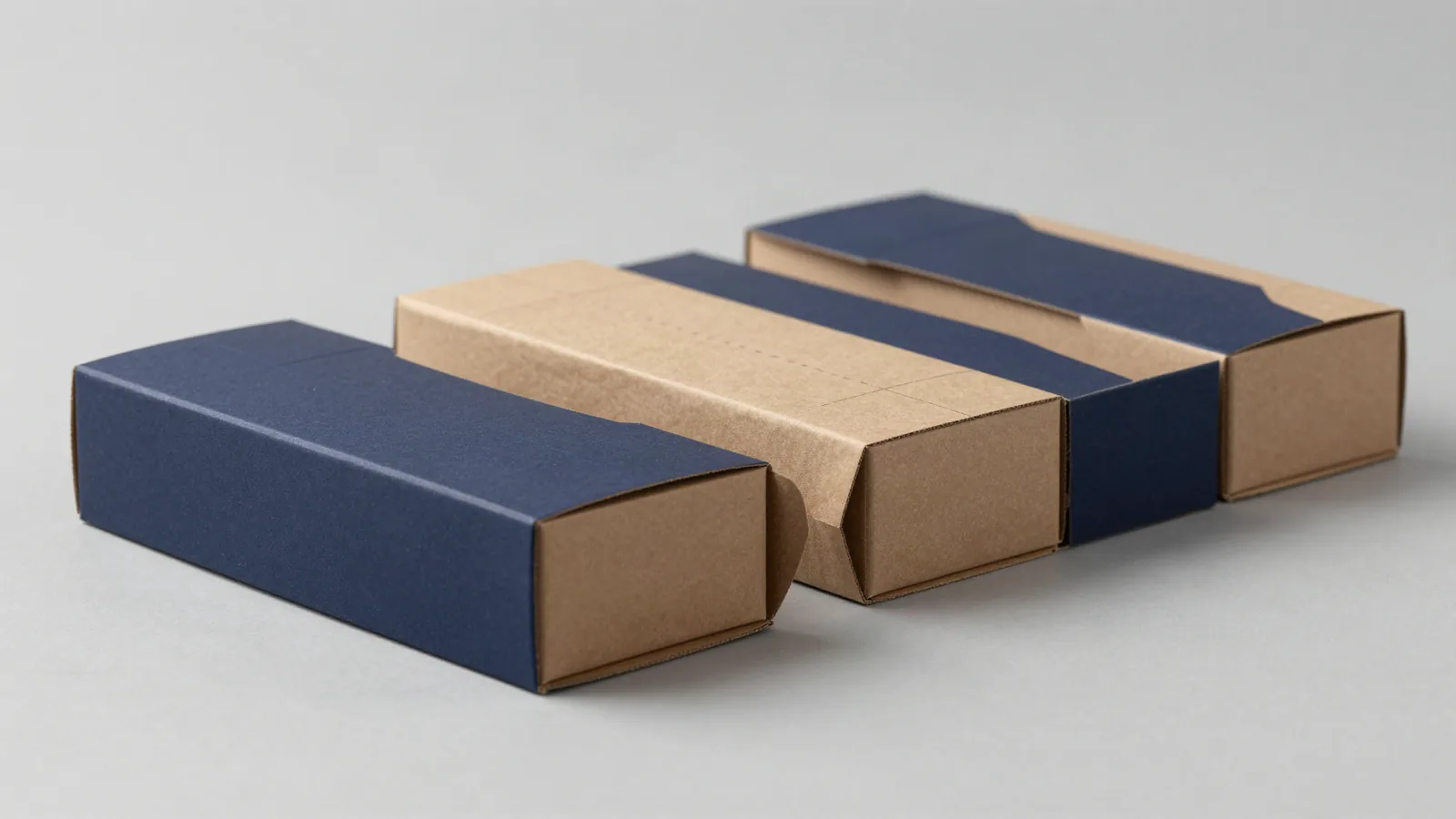




















































What does plastic cup sleeve packaging need to do?
Fit comes first: the opening has to clear the cup wall, lid area, and any seam or overlap. A cup sleeve is a printed paperboard wrap around a separate plastic cup. It gives the hand a layer between the cold cup and the fingers, creates a visible brand panel, and has to stay in position during service. The opening should slide on without binding, then hold its position while the cup is carried.
Use the actual cup, not a generic paperboard blank. Use custom packaging design when the cup and artwork need to be resolved together. Taper, rim shape, seam, texture, and condensation all change the fit discussion. The cardboard coffee cup sleeve is the closest catalog reference for the wrap format. If you need a box-like outer presentation, compare sleeve boxes and shoe box packaging.
Which paperboard and finish work for a printed sleeve?
Paperboard controls stiffness, fold behavior, and how ink sits on the face. SBS means solid bleached sulfate, while C1S and C2S describe board coated on one side or both sides. Those stocks are commonly specified in the 12 to 24 pt range for printed packaging. Kraft board is commonly specified around 18 to 24 pt when the natural fiber tone belongs in the visual direction. A coated face takes detailed color more cleanly; an uncoated or kraft face keeps more tooth in the surface.
| Packaging decision | Common industry direction | Why buyers consider it |
|---|---|---|
| Board | SBS, C1S, or C2S, commonly 12 to 24 pt | Balances print surface and sleeve rigidity |
| Offset CMYK | Supports detailed branded artwork | |
| Surface | Matte or gloss lamination | Changes sheen and surface protection |
| Detail | Spot UV, foil stamping, embossing, or debossing | Creates a focused tactile or reflective accent |
Matte or gloss lamination changes sheen and surface feel. Spot UV, foil stamping, embossing, and debossing make sense as targeted details around a logo or message, but folds and overlap still need room. These are general industry references. A physical sample settles questions about friction, fold memory, and how the sleeve looks around the cup.
What measurements should I send for a cup sleeve?
A circumference taken at the sleeve position gives the flat wrap length; measure it on the cup you will actually use. Add sleeve height, overlap, and clearance for the cup wall, rim, lid area, seam, and any raised texture. If the package has three relevant axes, state them as length x width x depth. Write inside and outside measurements separately.
A common packaging convention allows about 1/16 in, or 1.5 mm, tolerance for fit-related dimensions, subject to the product and converting method. Note the cup diameter or circumference at the wrap point and any taper. If condensation will be present, say so in the brief so the sleeve opening and overlap are checked against that condition.
What should I check in the dieline and artwork?
A dieline is the flat cutting template used to print, score, and cut the sleeve. We send a digital proof before anything prints. Check its trim edge, score or fold marks, glue or overlap zone, barcode placement, and reading direction before artwork is approved. Keep type, barcodes, and small marks away from the seam and scores. Leave bleed beyond the trim line, and keep the front panel where it will be visible after wrapping.
Low-resolution art can soften small type. RGB artwork can shift when it is converted for press, so check the proof in the intended color space. The proof is the point to catch a barcode that is too close to the overlap or a logo that rotates out of view, not after the sleeve has been printed.
Should I choose digital or offset printing?
Digital printing is commonly considered for short runs or variable artwork, while offset CMYK is a common route for detailed branded packaging. The choice also changes how you plan color coverage, proofing, and version control. Ask for a proof that shows the actual panel sequence, rather than a flat front image. Check solid color areas, fine type, the overlap, and the finish after wrapping.
How do I order plastic cup sleeve packaging?
A useful request includes the cup, wrap position, sleeve height, overlap, artwork status, and board or finish direction. Custom Packaging Lane quotes from a 100-unit minimum, with pricing from $0.49 per unit at volume. Production is typically 8 to 10 business days after proof approval, plus delivery. The quoted workflow includes free US shipping and free design support, including a free dieline. Order the $19.99 sample kit, credited toward the first order, to compare fit, print, and finish before approving the run.
Frequently Asked Questions
Does a cup sleeve replace the plastic cup?
A cup sleeve does not replace the plastic cup, lid, or closure. It is a printed paperboard wrap that sits around the separate cup. The fit depends on the cup's circumference, taper, rim, seam, texture, and condensation. Measure the cup at the sleeve position so the opening and overlap match the real service setup.
Which paperboard thickness fits a printed cup sleeve?
Printed cup sleeves commonly use SBS, C1S, or C2S paperboard in the 12 to 24 pt range. Kraft board is commonly around 18 to 24 pt when the natural surface is part of the design. Choose the caliper after checking the cup diameter, wrap length, fold behavior, print coverage, overlap, and hand feel.
How should I measure a sleeve around a tapered cup?
Measure the cup circumference where the sleeve will sit, then record the sleeve height, taper, overlap, and clearance. Note the rim, seam, texture, and condensation because each can change how the sleeve slides and holds. State inside and outside measurements separately, and use the real cup as the fit reference.
Can a cup sleeve include foil or spot UV?
A cup sleeve can use spot UV, foil stamping, embossing, or debossing as focused artwork details, along with matte or gloss lamination. Keep those effects away from scores, folds, and the overlap. On a curved wrap, check how the logo lands after the sleeve is applied, rather than how it looks on the flat artwork.
What should I check in a cup sleeve proof?
A cup sleeve proof should show trim, scores, bleed, the overlap zone, barcode placement, reading direction, and the artwork after wrapping. Check small type, solid color areas, seam clearance, and fit on the actual cup. A proof can reveal a logo that turns out of view or a barcode that sits too close to a fold.












