




























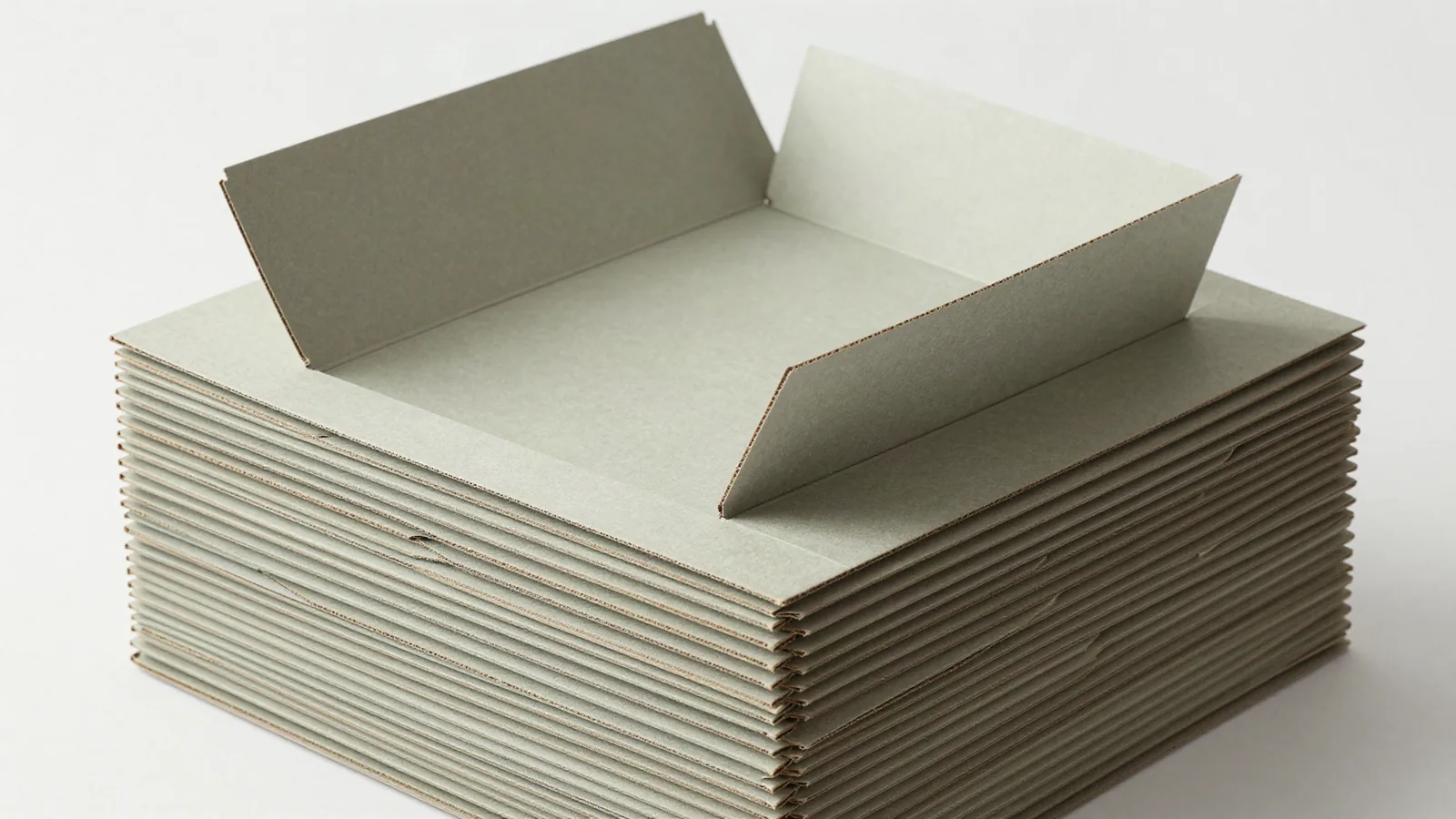




















































Plastic corrugate inserts are internal parts cut from fluted or twin-wall plastic sheet. Twin-wall polypropylene is a plastic sheet with two flat skins joined by internal ribs. The insert can become a divider, partition, pad, layer separator, or fold-up support. Its job is set by the product arrangement and outer box clearance, not by the word corrugate alone.
A flat divider may be enough for a simple layout. A folded partition can create repeated cells, and a die-cut profile can follow a product outline or make slots for small parts. Put the assembly motion in the brief: flat, folded during packing, slid into the box, or lifted out with the product. Compare cardboard inserts when a printed paperboard part is the better fit.
What are plastic corrugate inserts used for?
The insert has four common jobs: keep parts apart, protect edges, divide layers, and hold a product in a repeatable position. A flat divider fits a simple arrangement. A folded partition creates multiple compartments. A die-cut profile can follow a product outline or provide slots for smaller components. State whether the insert stays flat, folds during assembly, slides into the box, or lifts out with the packed product.
How do plastic corrugate inserts compare with other materials?
Plastic corrugate is a sheet and fold system. Foam, paperboard, and rigid inserts solve the same packing problem with different handling. The outer box, product surface, assembly motion, and desired removal path should decide the material.
| Insert direction | Common role | Primary specification |
|---|---|---|
| Plastic corrugate sheet | Dividers, partitions, pads, and fold-up supports | Sheet material, flute direction, cuts, folds, and surface |
| Foam insert | Shaped cavities and cushioning around a product | Foam type, cavity depth, retention, and product clearance |
| Paperboard insert | Printed compartments, sleeves, and lightweight supports | Board caliper, print coverage, folds, and structure |
| Rigid insert | Structured presentation and base support | Chipboard construction, wrap, fit, and outer box clearance |
How should a plastic corrugate insert fit the outer box?
Inside measurements of the outer package control insert length, width, height, slots, and fold points. Write the box as length x width x depth, then label the insert dimensions separately. A common packaging reference allows about 1/16 in, or 1.5 mm, tolerance, but the useful allowance depends on sheet construction, cut method, product variation, and assembly. Mark contact points, corner relief, and any area that must stay free for closure.
Check the insert with the actual product arrangement. A cavity with too little clearance can catch during loading. Too much clearance lets the product move. If the outer box goes into a master carton, check the folded insert, flat sheet, case orientation, and closure path together.
Which box formats work with plastic corrugate inserts?
Folding cartons, mailers, rigid boxes, sleeves, and drawer formats can all hold inserts when the insert follows closure or slide movement. A folding carton may need slots that lock during assembly. A mailer may need an insert that follows the roll end and opening movement. A rigid or drawer box may need a clean fit against the base or tray. Compare jewelry boxes with inserts for compartment planning and custom rigid boxes with inserts for a structured outer package.
What material details belong on the request?
Write the plastic family, sheet direction, surface, cut method, fold method, and assembly state on the request. Twin-wall polypropylene is a common plastic corrugate reference. State whether the component must remain flat, fold during assembly, or arrive ready to place in the box.
E flute, B flute, C flute, and 32 ECT are common paper corrugated references, not automatic descriptions of a plastic insert. ECT means edge crush test. Do not carry those paper conventions into a plastic specification without checking the sheet material. A flexible alternative is a different package format, such as custom plastic mylar bags.
Should print go on the insert or the outer box?
Brand print usually belongs on the outer package. The insert stays focused on separation, fit, and assembly. Offset CMYK is commonly used for detailed paperboard artwork, flexo is common for corrugated graphics, and digital printing can suit short runs or testing. Matte or gloss lamination changes the surface. Soft-touch changes tactile feel. Spot UV, foil stamping, embossing, and debossing can mark selected panels.
Keep the insert footprint visible in the artwork and dieline. That prevents a graphic panel, glue area, score, or closure from taking space the insert needs. Low-resolution art softens small type, and RGB art can shift when it is converted for press. We send a digital proof before anything prints.
Which related insert products are worth comparing?
Choose a comparison page by the job the insert must do. Custom foam box inserts suit shaped cushioning. Custom candle boxes with inserts show how a product and compartment can be planned together. Cosmetics boxes with inserts provide another compartment layout. The cardboard, rigid, and flexible formats above should remain separate in the request because their materials and assembly motions are different.
What should a plastic corrugate insert brief include?
Quote requests go faster when dimensions, contact points, and assembly state arrive together.
- Provide the outer box inside length x width x depth, product arrangement, and closure clearance.
- Identify plastic family, sheet direction, surface, cut method, fold method, and whether the insert is flat or assembled.
- Mark dividers, partitions, slots, tabs, pads, fold lines, contact points, and removable areas.
- Describe the outer box structure, board, print coverage, finish, and any master carton requirement.
- Share artwork or dieline files, quantity, delivery location, and the product version being packed.
Custom Packaging Lane quotes plastic corrugate inserts to spec from a 100-unit minimum. Pricing is from $0.49 per unit at volume, quoted to spec. Production is typically 8 to 10 business days after proof approval, plus delivery. The quote includes free US shipping, free design support, and a free dieline. Order the $19.99 sample kit, credited to the first order, then send the insert dimensions and product arrangement. Request a branded insert review through custom boxes with logo.
Frequently Asked Questions
What are plastic corrugate inserts?
Plastic corrugate inserts are internal packaging parts cut from fluted or twin-wall plastic sheet. Common uses include dividers, partitions, pads, layer separators, and fold-up supports. Twin-wall polypropylene is a common material reference. The specification should also identify cut lines, fold points, product contact, outer box fit, and whether the insert is removable.
How are plastic corrugate inserts different from paper corrugated inserts?
Plastic corrugate and paper corrugated use different material conventions and should not be specified interchangeably. E flute, B flute, C flute, and 32 ECT are common paper corrugated references. A plastic insert request should identify its plastic family, sheet direction, surface, cut method, fold pattern, and intended use inside the outer package.
Can plastic corrugate inserts fit rigid boxes?
Plastic corrugate inserts can fit folding cartons, mailers, rigid boxes, sleeves, and drawer formats when the insert dimensions and structure are coordinated. A rigid base may need a fitted divider or partition, while a drawer may need clearance for sliding movement. Start with box inside measurements, product arrangement, slots, folds, and closure path.
How should I specify plastic insert dimensions?
Write the outer box as length x width x depth and label inside measurements separately from exterior dimensions. Provide insert length, width, height, slots, tabs, folds, and product-contact areas. A common packaging reference allows about 1/16 in, or 1.5 mm, tolerance, but the working allowance depends on sheet construction, cut method, assembly, and product variation.
Should the insert or outer box be printed?
Brand print usually belongs on a compatible outer carton while the plastic insert focuses on separation and fit. Offset CMYK, flexo, or digital printing may be considered according to the outer material and run. Matte or gloss lamination, soft-touch, spot UV, foil stamping, embossing, and debossing should be marked on the outer-package artwork and dieline.












