




























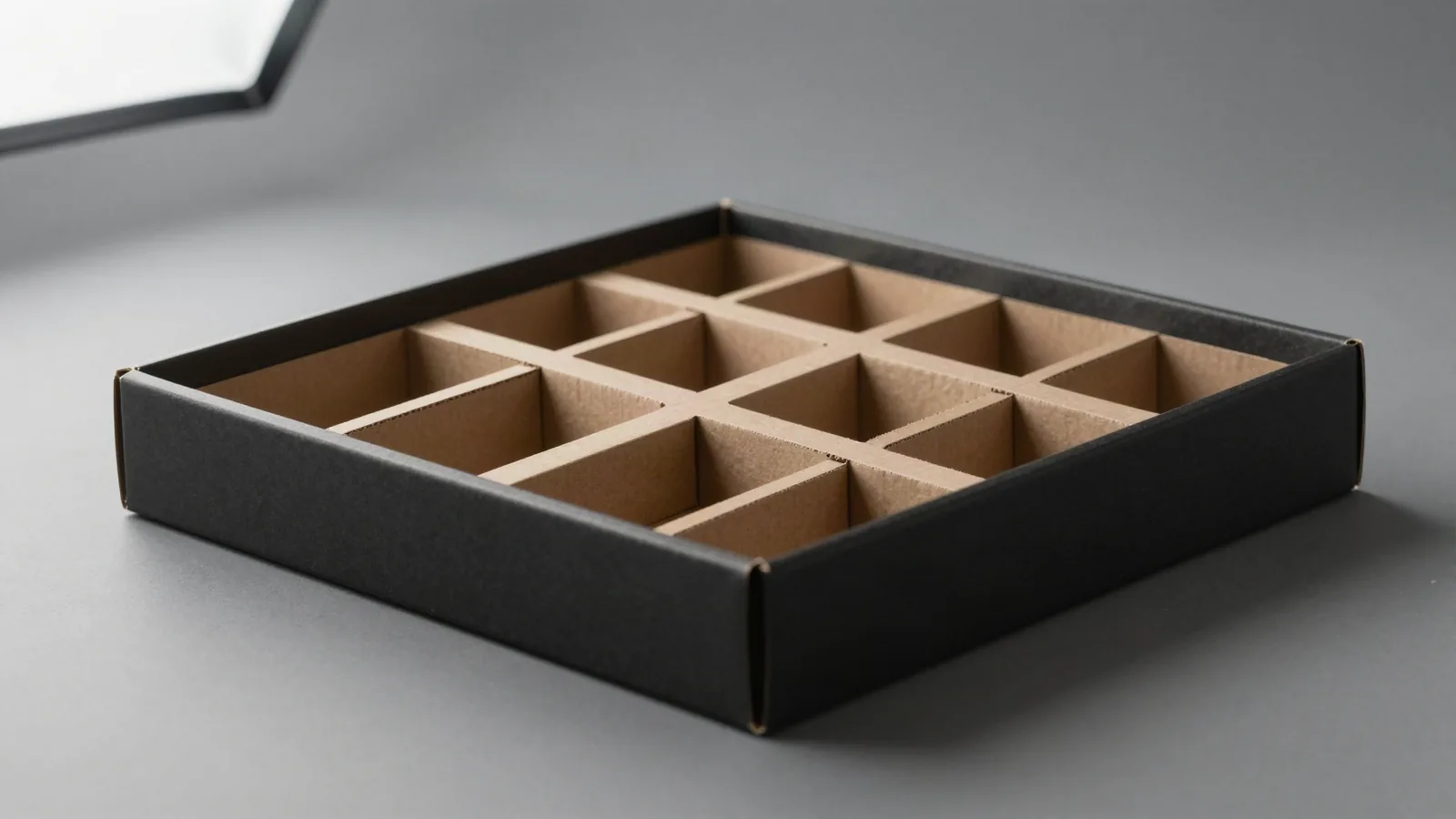




















































Chipboard is dense paperboard, and a custom chipboard insert is cut, folded, or layered to hold products inside a package. The insert can separate items, raise a product toward the opening, create individual cavities, or support a presentation layer. It belongs in the same fit discussion as the outer box, because lid clearance, wall thickness, wrap turns, and closure movement reduce the usable interior.
For an outer package, see custom rigid boxes with inserts. Folding-carton work can point to custom cardboard boxes with inserts, while a set of small items may fit jewelry boxes with inserts or custom candle boxes with inserts.
What is a custom chipboard insert?
A chipboard insert is an interior paperboard structure that holds a product in a planned position instead of leaving the contents loose in the box. One cavity can center a single item. Dividers can separate several pieces. A raised platform can bring the product closer to the opening, and a removable insert can make replenishment easier.
The product should be measured in the position it will occupy. A cavity that matches a front view may still fail when a cap, handle, corner, or accessory reaches farther than expected.
Which products fit a chipboard insert?
Rigid gift boxes, jewelry sets, candle assortments, cosmetics, promotional kits, small electronics accessories, and coordinated collections can use chipboard organization when the package needs defined compartments or a visible board-based interior.
A single product may need a centered cavity and hand access. A set may need separate cavities, a shared compartment, or a raised platform. The insert should match the packing order and the way the recipient removes each item. If the cushioning requirement is different, compare the layout with custom foam box inserts.
How should I lay out cavities and dividers?
The widest and tallest points control cavity openings, not the product's front-facing view. Mark handles, caps, protrusions, removable parts, fragile edges, and surfaces that should not receive pressure before drawing the openings.
A flat board with die-cut openings keeps the build shallow. Layered chipboard creates depth. Dividers form compartments. A lift platform improves visibility but uses lid clearance. For several items, decide whether each piece needs its own cavity or whether a shared compartment leaves enough control during packing and opening.
What chipboard thickness and wrap should I specify?
A common rigid-packaging reference is chipboard around 1.5 to 3 mm thick wrapped in approximately 100 to 157 gsm art paper. The chipboard supplies structure, while the art-paper wrap supplies the visible surface. Thicker board changes cavity depth, edge definition, and the space left below the lid.
| Insert approach | Typical use | Fit question |
|---|---|---|
| Single cavity | One centered product | Where should the product sit relative to the lid and walls? |
| Divider layout | Several products or components | Which items need separation during packing? |
| Raised platform | Improved visibility at opening | Does the lifted item still clear the lid? |
| Layered chipboard | Depth and shaped support | How do board layers affect usable space? |
Wrap direction, adhesive, exposed edges, and visible contact points should be reviewed before the proof is approved. A neat outer wrap does not fix a cavity that is too tight.
How do I measure insert dimensions?
Use the usable inside length x width x depth when drawing cavity positions, then record the outer package size separately. A common planning tolerance is about 1/16 in, or 1.5 mm. Measure the product in its packed position, including closures, caps, sleeves, and accessories.
For a multi-item package, list each item's position and orientation. An accurate product drawing or physical sample can resolve irregular shapes before the dieline is prepared. The dieline is the flat cutting template used to lay out cuts, scores, folds, and glue areas.
When should I compare foam with chipboard?
Foam is the better comparison when cushioning, compression, or a shaped cavity is the main requirement. Chipboard suits organized compartments, visible structure, a wrapped presentation, and a board-based interior that matches the package.
Compare the removal motion as well as the material. A tight foam cavity and a layered chipboard cavity can hold the same shape but feel different when a customer lifts the product out. The choice should follow product shape, handling, finish expectations, and available interior space.
What belongs in an insert quote?
The request should name the product, outer package style, usable inside length x width x depth, cavity layout, board preference, wrap, finish, artwork, quantity, and destination. State whether the insert is flat, layered, divided, raised, removable, or combined with another material.
Use custom packaging design to review the structure, then use the sample kit to compare board, wraps, and insert approaches before approving the proof.
CPL quotes to spec from a 100-unit minimum. Pricing is from $0.49 per unit at volume, quoted to spec. Production is typically 8 to 10 business days after proof approval, plus delivery. Free US shipping, free design support, and a free dieline are available. The $19.99 sample kit is credited to the first order.
Frequently Asked Questions
What is the difference between a chipboard insert and a divider?
A chipboard insert is the broader interior support category, while a divider is one layout that separates products or components. One insert can combine cavities, layers, platforms, and dividers. The arrangement depends on product shape, item count, packing order, lid clearance, and the way the contents should appear when the box opens.
How thick is chipboard commonly used in rigid inserts?
A common rigid-packaging reference is chipboard around 1.5 to 3 mm thick, sometimes wrapped in approximately 100 to 157 gsm art paper. The final build depends on cavity depth, edge visibility, product weight, lid clearance, and how the insert is assembled. Thickness should be selected with the outer package, not in isolation.
How should I measure products for an insert?
Measure each product in the position it will occupy inside the package, including caps, handles, closures, sleeves, and removable accessories. Record the widest and tallest points, then mark surfaces that need clearance. Separate usable inside package measurements from outside dimensions so cavity positions and lid clearance can be checked accurately.
Can chipboard inserts be used in a rigid gift box?
Chipboard inserts can organize one item or a coordinated set inside a rigid gift box. Options include a centered cavity, multiple dividers, layered support, or a raised platform. The insert should leave room for the lid, walls, wrap turns, and hand access while keeping the contents positioned during packing and opening.
When should I compare foam with chipboard?
Compare foam when cushioning, compression, or a shaped cavity is the main requirement. Compare chipboard when the priority is organized compartments, visible structure, a wrapped presentation, or a board-based interior that matches the package. Product shape, handling, finish expectations, and removal motion should determine which material suits the insert.












