




























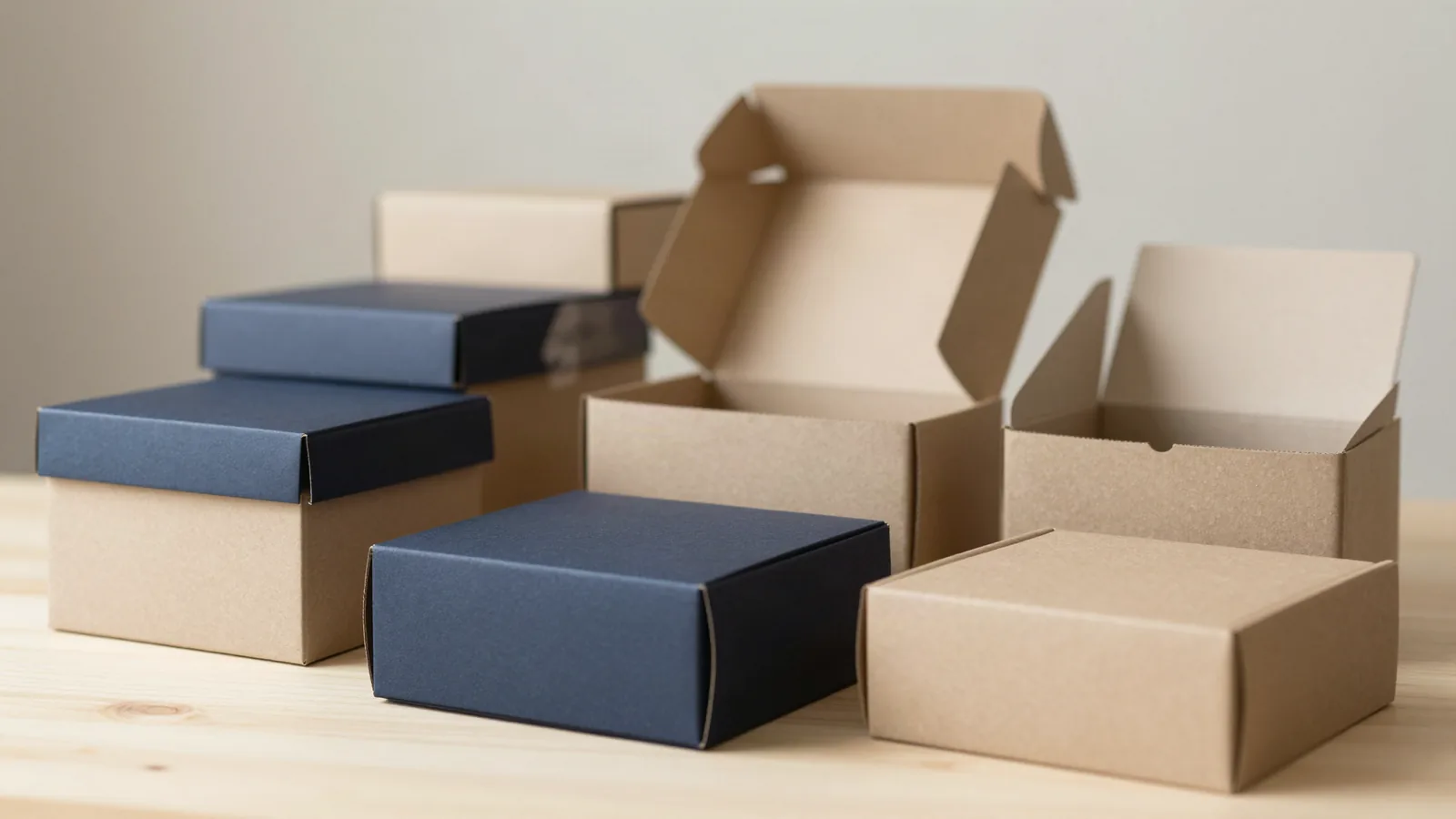




















































Pop up event themed packaging is planned for a temporary display or event handoff. A visitor may see the package on a counter, open it while standing, and carry it with other items. Define that handoff first. Then connect the opening motion, product visibility, closure, printed message, and packed transport to one structure. Use pop-up display boxes when the package also has a display job.
How should event packaging work at the handoff?
A handoff package needs one clear front, a simple opening motion, and a closure staff can repeat. Decide whether the pack holds one product, a small set, a giveaway, or an information piece before choosing the silhouette. The answer changes the panel that faces the visitor and the way staff load the unit.
| Event role | Common structure | Planning question |
|---|---|---|
| Counter display | Pop-up display box or sleeve | Which panel faces the visitor? |
| Takeaway product | Straight tuck end or pillow box | How quickly can staff load and close it? |
| Small gift set | Gable, two-piece rigid, or drawer box | How should the recipient discover the contents? |
| Event mailer | Roll-end tuck-top mailer, commonly linked with FEFCO 0427 | What must stay protected after the event? |
FEFCO 0427 is a common code for a roll-end tuck-top mailer. Record it beside length, width, depth, closure, and packed state so the code does not replace the product brief.
Which structure fits a pop up activation?
Straight tuck end and reverse tuck end cartons suit compact handouts. Auto-lock bottom and crash-lock bases change setup. A pillow or gable shape changes the silhouette. A sleeve fits an inner container. A mailer or rigid box can hold a larger set, and a drawer format creates a defined opening.
Use the product footprint to narrow the choice. Wine box packaging shows a presentation format around one item. Towel packaging and seed packaging give other catalog references for soft, flat, or small event items. The filled product decides the actual fit.
Which board material handles display and transport?
SBS, C1S, and C2S paperboard commonly fall in the 12 to 24 pt range. Kraft board commonly falls in the 18 to 24 pt range. Rigid chipboard commonly falls in the 1.5 to 3 mm range and can be wrapped in 100 to 157 gsm art paper. Corrugated E, B, or C flutes are common when the package travels as an outer pack, with 32 ECT used as a general board-strength reference.
| Material reference | Typical value | Event use |
|---|---|---|
| SBS, C1S, or C2S paperboard | 12 to 24 pt | Printed folding cartons and inserts |
| Kraft board | 18 to 24 pt | Natural paper surface for a carton or mailer |
| Rigid chipboard with art paper | 1.5 to 3 mm chipboard, 100 to 157 gsm wrap | Gift formats that hold shape without a fold |
| E, B, or C flute corrugated board | 32 ECT strength reference | Outer pack for event transport |
Material choice follows the setting. A tabletop pack may need a stable base and clean front panel. A handout may need a lighter fold and a closure that does not catch. A shipped kit needs room for the product, inserts, and packed arrangement. Fill the structure before the final choice.
How should event graphics stay readable on a busy table?
Put the event message on the closed panel facing the visitor, then keep type, folds, seams, and finish zones apart. Offset CMYK suits detailed folding-carton graphics. Digital printing suits a short campaign run or changing artwork. Flexo is common for corrugated applications. Mark every score, glue zone, tuck flap, seam, and window before placing small copy or a logo.
Matte or gloss lamination changes surface reflection. Soft-touch changes the tactile feel. Spot UV can highlight a selected mark. Foil stamping, embossing, and debossing need room in the artwork plan and should follow the panel geometry. At a press check, inspect ink coverage, registration, small type, and finish placement.
How should dimensions be recorded for shipping?
Record length x width x depth and label each value as an inside or outside measurement. A common planning tolerance is about 1/16 in, or 1.5 mm. Check the filled sample for product clearance, insert position, closure effort, loading, opening, removal, and stackability. If the insert is part of the pack, measure the product with the insert in place.
For US ground planning, dimensional weight is commonly discussed as L x W x H / 139 using the outside packed configuration. Record whether the units ship flat, nested, or assembled. The arrangement changes the shipping footprint, so the quote, sample, and delivery plan should describe the same packed state.
What belongs in an event packaging brief?
The brief should state the setting, product list, handoff, packed state, and destination before artwork is placed.
- Describe the display position and visitor-facing panel.
- List every product, insert, card, or accessory in the pack.
- Provide product measurements, inside clearance, closure, and packed configuration.
- Mark artwork-safe areas, folds, seams, windows, and finishes.
- State whether units ship flat, nested, or assembled.
How do I move from an event theme to a quote?
A quote can start once the structure, dimensions, print, finish, and packed arrangement are written down. Custom Packaging Lane quotes pop up event themed packaging from a 100-unit minimum, with pricing from $0.49 per unit at volume, quoted to spec. Production is typically 8 to 10 business days after proof approval, plus delivery. Free US shipping, free design support, and a free dieline are available. The $19.99 sample kit is credited toward the first order. Use custom packaging design to organize the structure and artwork, then order the sample kit before approving the final event package.
Frequently Asked Questions
What makes pop up event packaging different from standard packaging?
Pop up event packaging is handled in a public setting, so the display angle, handoff, opening motion, and carrying experience need one plan. The package may work on a counter and in a visitor's hand. Define the event setting, product footprint, message panel, closure, and packed transport before choosing the structure.
Which structure works for event handouts?
A straight tuck end carton, pillow box, sleeve, or gable structure can suit a compact handout, depending on the product and opening. An auto-lock bottom or crash-lock construction changes the base setup. Compare loading speed, product visibility, closure effort, and how the finished pack is carried.
How should event artwork be placed on a dieline?
Place the main message on the closed panel that faces the visitor, then mark folds, seams, glue zones, tuck flaps, and windows before adding small text or finish areas. Offset CMYK, digital printing, and flexo can be planned around the final panel geometry. Keep structural movement clear of essential artwork.
What should I test before using themed packaging at an event?
Fill the themed package with the actual product and inserts, then check loading, closing, opening, carrying, stacking, and removal. Inspect whether the message faces the visitor when displayed and whether the surface handles ordinary contact. If the package ships, test the filled unit in its actual flat, nested, or assembled state.
How should an event package be prepared for shipping?
Record outside dimensions, packed quantity, destination, and whether units ship flat, nested, or assembled. Check the closure, product clearance, insert position, and outer carton space together. For US ground planning, dimensional weight is commonly discussed as L x W x H / 139. The packed arrangement should match the configuration used for quoting.












