




























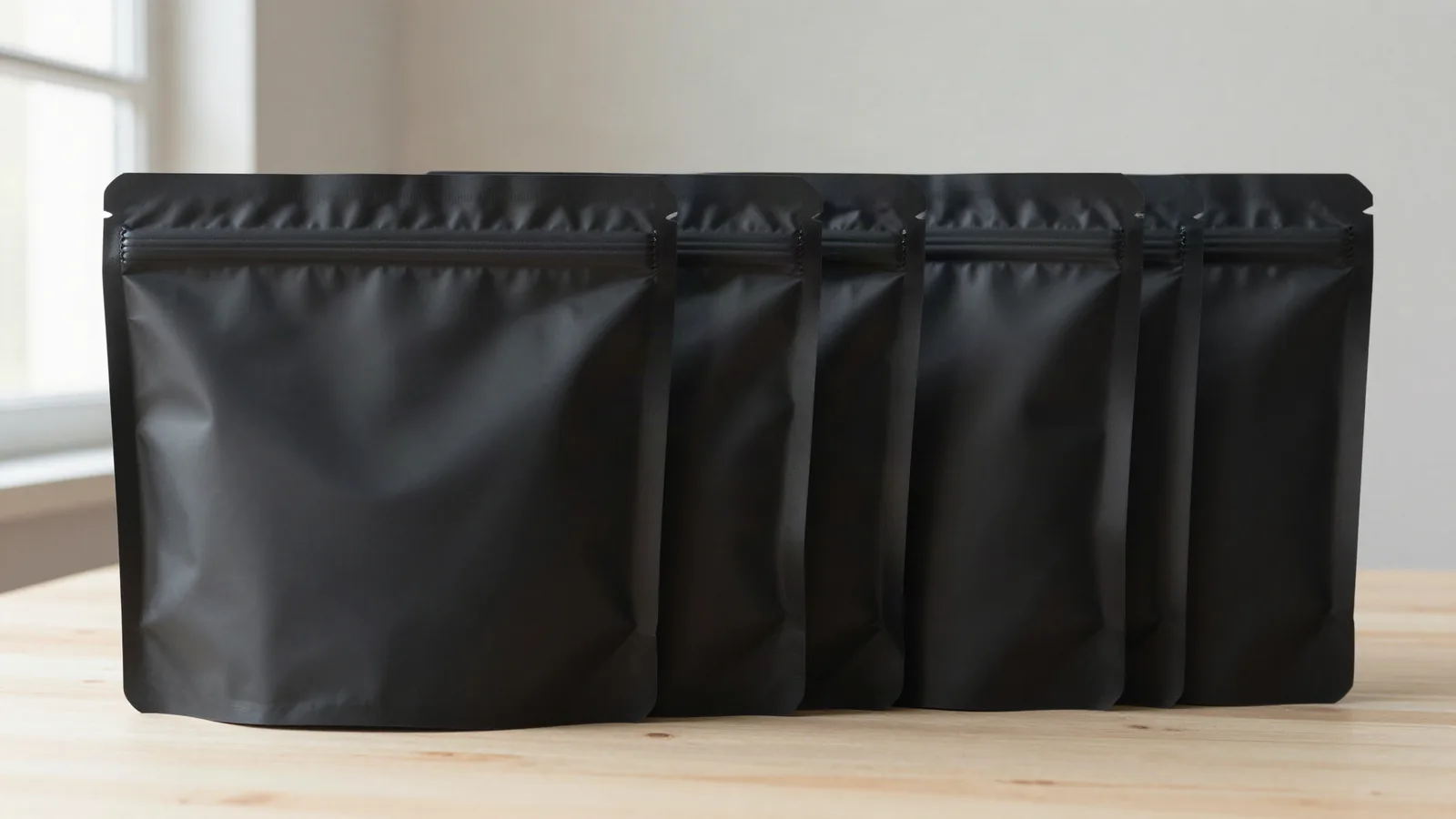




















































Stand-up pouch digital printing puts artwork into a flexible pouch production workflow, so short runs and multiple versions can be reviewed without treating the artwork as the whole package decision. The pouch still needs a workable width, height, gusset, closure, seal area, and laminate. Begin with the product, fill weight, fill level, headspace, opening method, and handling conditions. A pouch that looks correct on screen can still lean, wrinkle at the seal, or lose readable type after filling.
When does digital printing fit a stand-up pouch?
Short runs and multiple artwork versions are the clearest case for digital printing. Digital printing can reduce the need for separate plate preparation, but the choice still depends on print coverage, color control, laminate, closure, and quantity. Offset CMYK is commonly used for detailed paperboard graphics, while flexo is commonly used for corrugated outer packaging. Those processes are not interchangeable with the pouch construction.
For edible products, ask us about food-contact options for your product. Use the intended product or a representative fill during the review because the filled shape changes the standing base and usable print panel.
What pouch dimensions and structures should I compare?
Width is one measurement; the filled shape supplies the rest of the answer. A typical stand-up pouch width is about 3 to 7.5 inches, or roughly 7.6 to 19.1 cm, as a general market reference. Measure the filled product before selecting the finished outside width. Height, bottom gusset, seal margin, product density, and headspace decide whether the pouch stands evenly and how much front-panel space remains.
| Format detail | Common convention | Buyer check point |
|---|---|---|
| Width | About 3 to 7.5 in is common for stand-up pouches | Front-panel readability and shelf footprint |
| Bottom gusset | Expanded base supports standing presentation | Stability after filling and sealing |
| Zipper closure | Common for repeated access | Seal placement, tear notch, reclose feel |
| Spout | Used where controlled dispensing matters | Cap fit, fill path, panel clearance |
A zipper pouch fits a repeat-access brief, while a spouted pouch fits liquids, gels, or other products that need controlled dispensing. A window can show the product but uses space that could otherwise carry artwork or barrier material. PET windows are commonly around 0.2 to 0.3 mm where that construction is appropriate. Compare the kraft paper zipper pouch, granola pouch, and cosmetic spout pouch as real format references.
Which laminate and finish details change the printed result?
The print surface and sealant are usually different layers. PET, AL, and PE are common layers in flexible pouch laminates. PET can support print reception and stiffness, AL can support opacity and barrier performance, and PE can support heat sealing. Mylar and foil can describe some laminate constructions, but the exact layer order matters. Ask which layer receives the print, which layer seals, and how the finished pouch will be handled and stored.
Matte or gloss lamination changes surface sheen and how fine type reads. Soft-touch, spot UV, foil stamping, embossing, debossing, and window patching are separate finish or construction choices. Inspect ink coverage across the front, back, gusset, and seal margins. Keep critical text away from the zipper, tear notch, spout, bottom seal, and window edge.
How should I prepare artwork for digital pouch printing?
A supplied dieline gives the file its panel boundaries. A dieline is the flat cutting template used to print and cut the pouch. Mark the front panel, back panel, gussets, seal zones, zipper, tear notch, spout, and window before building final artwork. Include bleed and safe areas from the supplied template. Confirm mirrored treatment, white ink, opacity control, or a designated knockout where the construction calls for it.
RGB art can shift when converted for press, low-resolution images can soften, missing bleed can expose an unprinted edge, and type too close to a score can become hard to read after forming. Check the digital proof at actual panel scale, then inspect a physical sample for color, registration, legibility, zipper alignment, seal width, gusset formation, and standing balance after filling. The sample kit can help compare flexible structures, surface feel, and closure ideas before the final direction is chosen.
What should a digital pouch quote include?
The print count and package construction need to appear in the same brief. Include the product type, fill level, pouch width and height, gusset preference, closure, artwork count, finish, window or spout need, quantity, and destination. Compare the delivered quote because laminate, print coverage, closure components, tooling or setup, finishing, quantity, and shipping zone all affect the job. Use custom packaging design for the dieline and artwork planning stage, and compare the biodegradable spout pouch when material direction is part of the brief.
Custom Packaging Lane quotes stand-up pouch digital printing from a 100-unit minimum. Pricing is from $0.49 per unit at volume, quoted to spec. Production is typically 8 to 10 business days after proof approval, plus delivery. The quote includes free US shipping, free design support, and a free dieline. The $19.99 sample kit is credited toward the first order. Confirm the film, closure, dimensions, artwork, and intended use before production.
Frequently Asked Questions
Is digital printing suitable for a small pouch launch?
Digital printing is commonly considered for short runs, multiple artwork versions, and market testing because it can reduce separate plate preparation. Suitability still depends on the laminate, pouch dimensions, closure, artwork coverage, and required color control. Review the full delivered quote and inspect a physical sample before approving the production proof.
What is a typical stand-up pouch width?
A typical stand-up pouch width is about 3 to 7.5 inches, or roughly 7.6 to 19.1 cm. That range is a market reference, not a finished size for every product. Measure the filled item and check the height, gusset, headspace, seal area, and closure before fixing the artwork panel.
What do PET, AL, and PE do in a pouch laminate?
PET commonly supports the print surface and adds stiffness, AL supports opacity and barrier performance, and PE commonly provides the heat-sealing surface. Flexible pouches can use all three in a laminate, but the exact order matters. Match the structure to the product, exposure, closure, storage, and handling conditions before selecting the print surface.
Should I choose a zipper pouch or a spouted pouch?
Choose a zipper pouch when the user needs repeated access and reclosure. Choose a spouted pouch when controlled pouring, squeezing, or dosing matters. Check the fill path, cap fit, seal placement, gusset stability, panel clearance, and artwork-safe area. The product's flow and user motion should decide the structure.
Can edible products use digitally printed pouches?
Edible products need a review of the film layers, seal system, intended use, and applicable packaging requirements. Ask us about food-contact options for your product before finalizing a digitally printed pouch. Inspect the finished pouch with the actual product or a representative fill so the seals, fit, artwork, and handling can be reviewed together.












