




























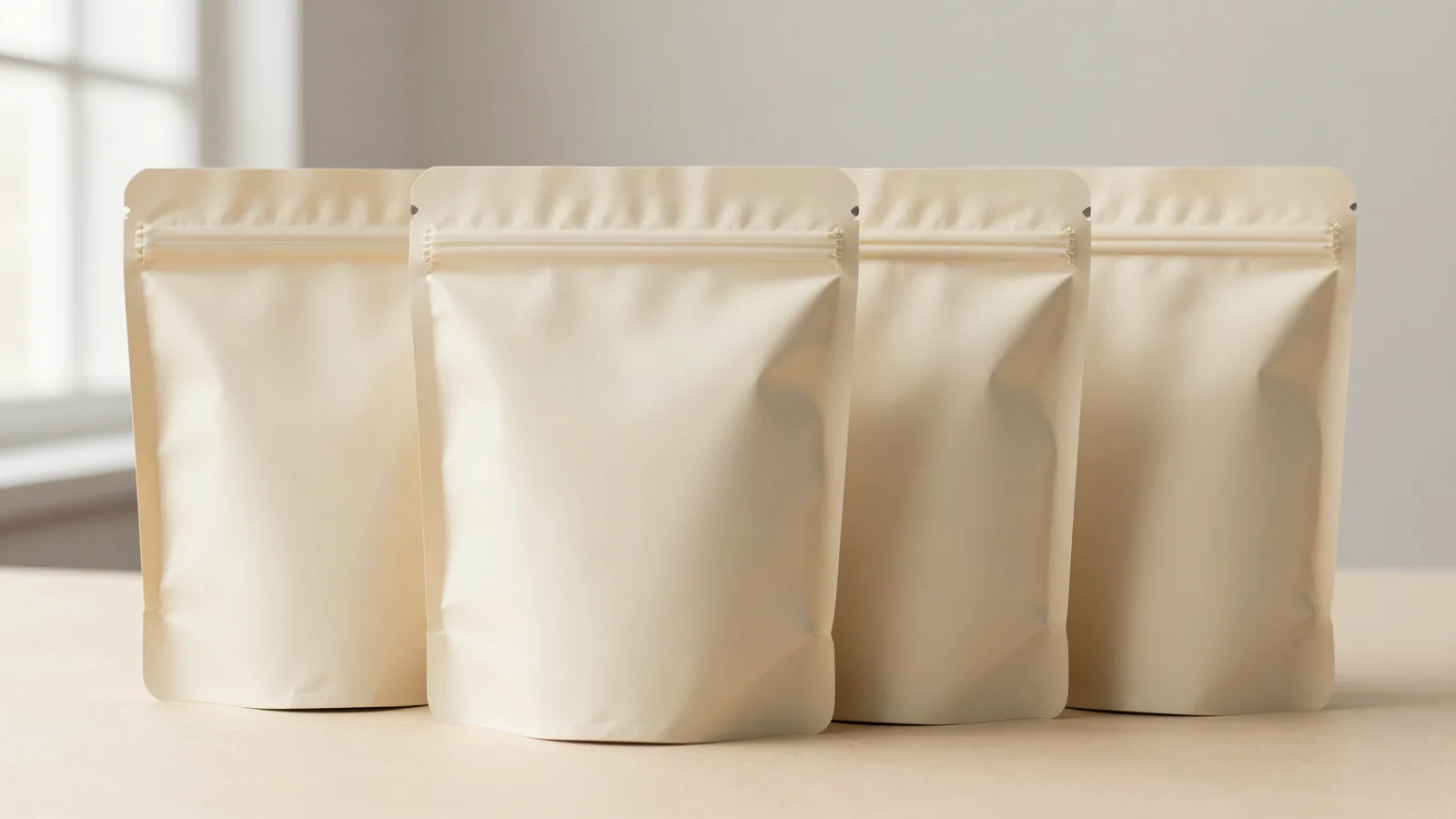




















































A pre made pouch is a flexible package formed before it reaches the filling step. The team fills it, labels it, seals it, and moves it into storage or shipment. The opening, closure, seal area, and filled footprint have to match that handoff.
The name covers several constructions. A zipper pouch adds a resealable closure. A stand-up pouch uses a bottom gusset so it can sit upright when filled. A flat pouch keeps the footprint compact. Mylar or foil laminate adds a material-layer decision for surface, barrier, and sealing.
How do pre made pouches fit into a packing line?
The first line-side question is where the pouch opens and how the filled pouch closes. A hand-filled job may need a wide mouth and a clear seal area. Equipment may need a repeatable opening and a defined presentation position. Mark whether the top receives a heat seal, whether the customer reopens it, and where labels or variable copy will sit.
Use zipper pouches when repeated access is part of the use pattern. Compare kraft standup pouches for a paper-like visual direction. Herbal tea pouches are a useful category reference when the package carries product information across several panels. The format should follow the filling and handling steps.
Which pouch format fits the way customers use the product?
Repeat access points toward a zipper, while upright display points toward a stand-up body with a bottom gusset. These choices can coexist, so closure and body format should be recorded separately. A flat pouch may suit a compact fill and a tight storage footprint, but it does not stand on its own.
What should a pouch SKU brief record?
A usable SKU brief separates the filled package from the printable panel. Record the product family, filling method, closure, display position, and artwork system before the layout is drawn.
| SKU planning role | Common pouch direction | Decision to record |
|---|---|---|
| Repeat-access product | Zipper pouch | Closure position, opening size, and reseal use |
| Upright display product | Stand-up pouch | Filled footprint, base behavior, and front panel |
| Barrier-sensitive product | Mylar or foil laminate | PET, AL, and PE layer direction |
| Paper-like visual system | Kraft-look pouch | Surface appearance, print coverage, and finish |
A typical industry planning range for stand-up pouch width is 3 to 7.5 in. Filled volume, gusset depth, seal area, zipper placement, and front-panel space change the finished layout. Record whether the width describes the filled outside package or the printable panel.
How do PET, AL, and PE layers affect a pouch?
PET usually carries the print surface, AL contributes a metal barrier layer, and PE supplies the heat-sealable side. This is why a Mylar or foil laminate needs a documented layer direction, not only a visual description. Light exposure, moisture, odor transfer, closure, fill process, and sealing method all belong in the request.
If the product will touch food, ask us about food-contact options for your product. State the product and filling method in the brief so the material discussion starts with the actual use.
What pouch width should I start with?
For a stand-up pouch, 3 to 7.5 in is a typical industry planning range. It is a starting reference, not the finished specification. Measure the filled product, then check the gusset, top seal, zipper position, and space needed for readable front-panel copy.
How should artwork and finishes be prepared?
The front, back, gusset, closure, and any transparent area need separate artwork zones before print is approved. Offset CMYK suits detailed artwork, while digital printing can suit short runs or a limited seasonal version. Matte or gloss lamination changes sheen. Soft-touch changes feel. Spot UV or foil stamping marks selected details. Window patching adds visibility when the pouch structure and product support it.
Low-resolution art stays rough on press, and RGB art can shift when converted for press. Keep type away from scores and seal areas, include bleed beyond the cut line, and check the proof from every planned face. The proof should show the front, back, gusset, closure, and any transparent area in one record.
What belongs in a quote request for pre made pouches?
The request should begin with filled dimensions and the handling sequence, not the pouch name. State the product category, pouch direction, opening, closure, laminate, artwork status, finish, quantity, and delivery point.
- Mark whether filling is by hand or equipment and whether the top receives a heat seal.
- Record filled width, height, gusset behavior, storage position, and the customer opening sequence.
- Identify opacity, window, laminate, surface, and print coverage preferences.
- Show the artwork-safe zones, variable copy areas, and any tear feature.
- Describe how the pouch moves from filling to finished storage or shipment.
Custom Packaging Lane quotes pre made pouches from a 100-unit minimum, with pricing from $0.49 per unit at volume, quoted to spec. Production is typically 8 to 10 business days after proof approval, plus delivery. Free US shipping, free design support, and a free dieline are available. Start with wholesale custom packaging and order the $19.99 sample kit, credited to the first order.
Frequently Asked Questions
Can pre made pouches work with hand filling or equipment?
Pre made pouches can work with hand filling or equipment when the opening, fill path, seal area, and handling steps match the selected format. A wide mouth may suit hand filling, while equipment may need a repeatable opening position. Confirm how the pouch will be filled, labeled, sealed, stored, and moved before approving the artwork.
Can a pouch have both a zipper and a stand-up base?
A pouch can combine a zipper closure with a stand-up body and bottom gusset. The zipper controls repeated access, while the gusset controls how the filled package sits. Specify the closure position, opening size, fill level, seal area, and front-panel space as separate decisions because each affects packing and use.
What do PET, AL, and PE do in a pouch laminate?
PET commonly provides the print surface, AL contributes a metal barrier layer, and PE provides the heat-sealable side in a laminate structure. The layer order affects surface appearance, light exposure, moisture protection, odor transfer, and sealing. Record the agreed PET, AL, and PE direction in the packaging brief.
When should a pre made pouch include a window?
A pre made pouch can include a window when product visibility belongs in the presentation. Window patching adds a clear area, a sealing boundary, and another artwork edge. Place the window with the gusset, seal, closure, product position, and logo panel on the same layout so the opening does not weaken the package.
What information should a pouch supplier receive first?
A pouch supplier should receive the product category, filled dimensions, pouch direction, opening, closure, laminate preference, artwork status, finish, quantity, and delivery point. The brief should also state whether the pouch is filled by hand or equipment and whether the customer needs repeated access after the top seal is applied.












