

























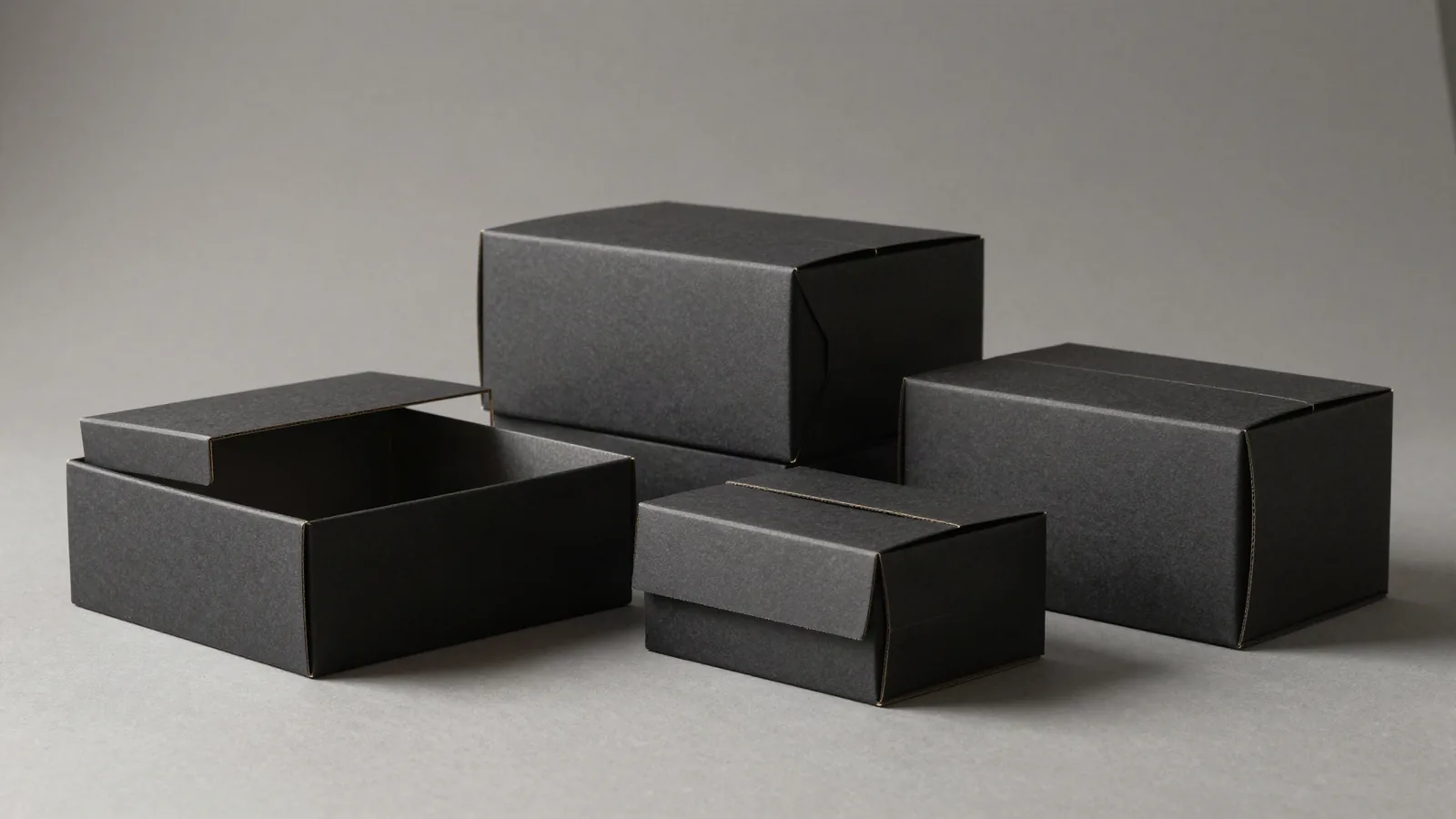



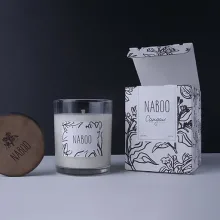
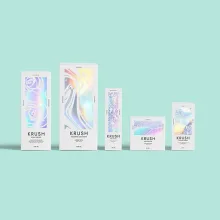
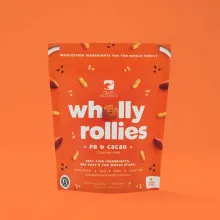
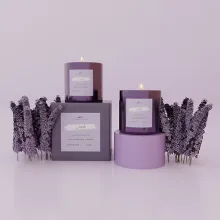
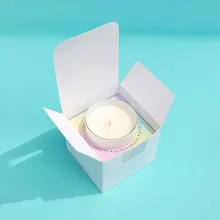
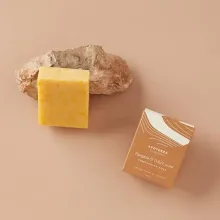



































What should promotional packaging do at the handoff?
The first decision is the recipient's action: take the item, open a tear panel, unpack a set, or carry it away. Promotional packaging is a printed package built around that moment, whether the setting is an event, shipment, retail add-on, or branded kit. Write down what the recipient sees first, what opens first, and whether the product needs an insert, pouch, sleeve, or carrier.
| Promotion format | Common structure | Design focus |
|---|---|---|
| Single giveaway | Pillow, sleeve, or tuck carton | Fast handoff and clear front panel |
| Branded product set | Two-piece rigid or drawer box | Component order and opening sequence |
| Wearable or carry item | Non-woven bag, cotton canvas bag, or folding carton | Handle, print area, and packed shape |
| Retail promotion | Perforated carton, mailer, or sleeve | Easy access without losing the message panel |
Which structure fits a promotional handoff?
A sleeve wraps campaign artwork around an inner pack. Straight tuck end and reverse tuck end cartons create compact printed shells, while auto-lock bottom and crash-lock structures change how the base holds during packing. A perforated package adds a tear-away panel or opening path. Put the perforation where the recipient can use it without releasing the product too early.
For a set, a drawer or slide box separates the outer message from the contents. A gable or pillow structure changes the silhouette without the wall construction of a rigid box. Private label packaging is a useful direction when brand hierarchy leads the brief. Perforated packaging fits a planned tear or access panel. Sock packaging and wax packaging show how the product itself can set the promotional format.
Which materials suit the promotion?
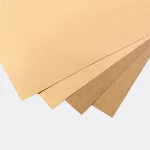
SBS means solid bleached sulfate paperboard, while C1S and C2S describe coated paperboard on one side and two sides. A common folding-carton reference is 12 to 24 pt. Kraft board around 18 to 24 pt gives the artwork a different paper surface. For carry formats, non-woven polypropylene around 80 to 120 gsm and cotton canvas around 8 to 12 oz are typical industry references.
If the promotion travels inside a secondary shipper, corrugated E, B, or C flute may be considered. Flute is the corrugated layer that adds thickness and cushioning, and 32 ECT is a common board-strength designation. The filled product should decide the board, because a handout, handled bag, and shipped kit do not put the same load on the package.
Which print finish keeps the campaign message readable?
Offset CMYK suits detailed folding-carton artwork. Digital printing can suit short runs or a campaign version that needs a visual check, while flexo is commonly used for corrugated graphics. Put the main message on the panel seen during the handoff, then move instructions, product details, and the call to action to supporting panels.
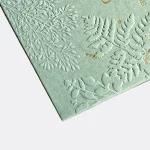
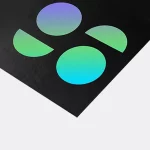
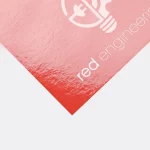
Matte and gloss lamination change the surface sheen. Soft-touch changes the feel. Spot UV isolates a logo or pattern, while foil stamping, embossing, and debossing add emphasis to a selected mark. Keep type, barcodes, and instructions away from folds, seams, glue tabs, handles, and perforations. Low-resolution art and RGB files converted for press can shift the result, so review the digital proof before print.
How should a promotional package be sized for distribution?
The outside packed shape affects stacking and carrier charges. Give dimensions as length x width x depth, and label each measurement as inside or outside. About 1/16 in, or 1.5 mm, is a common planning tolerance. Measure the product, insert, and package as a filled system, then check whether units can be picked up, stacked, placed in a larger carton, or shipped without bending the message panel.
For US ground planning, carrier dimensional weight is commonly calculated as L x W x H / 139 from the outside packed configuration. Record how many boxes nest in a master carton, the quantity per outer carton, and whether units ship flat, nested, or assembled. Those details describe the shipment you will actually receive.
What should I send for a promotional packaging quote?
A useful brief has the campaign purpose, distribution setting, product handoff, customer action, product measurements, insert list, closure, print coverage, finish areas, and destination. Mark safe areas around scores, glue tabs, handles, and perforations. If the package is a kit, write the loading order and show the packed shape.
Custom Packaging Lane quotes promotional packaging from a 100-unit minimum, with pricing from $0.49 per unit at volume, quoted to spec. Production is typically 8 to 10 business days after proof approval, plus delivery. Free US shipping, free design support, and a free dieline are available. The $19.99 sample kit is credited toward the first order. Start with custom packaging solutions after the product and campaign handoff are defined.
Frequently Asked Questions
What is promotional packaging used for?
Promotional packaging puts a campaign message around a product, giveaway, retail add-on, event item, or branded set. The package should match the recipient's action and the distribution setting. A sleeve, carton, bag, mailer, pillow box, or rigid format can work when its opening path, product retention, and message panel fit the handoff.
When is perforated packaging useful?
Perforated packaging is useful when a recipient needs a planned tear-away panel, opening strip, or access point. The perforation should follow the intended handling sequence and stay clear of essential artwork and product retention points. Review the tear path, containment, panel alignment, and opened appearance before the construction is approved.
What material works for a promotional carry item?
Non-woven polypropylene around 80 to 120 gsm and cotton canvas around 8 to 12 oz are typical industry references for promotional carry formats. Select between them after checking handle design, packed weight, print area, fold behavior, and surface. A folding carton can fit a smaller handoff, while a bag gives a larger visible panel.
How do I choose a print process for promotional packaging?
Offset CMYK is common for detailed folding-carton artwork, digital printing can suit short runs or changing campaign versions, and flexo is common for corrugated graphics. Choose the process after the substrate, ink coverage, artwork detail, and finish zones are set. Keep the main message on the panel visible during the handoff.
How should a multi-item promotional kit be organized?
A multi-item promotional kit should have a written loading order and a defined first-open moment. A drawer or slide, two-piece rigid box, compartmented carton, or sleeve can separate the outer message from the contents. Measure the filled set, allow clearance around each item, and check removal without disturbing the message panel or structure.