





















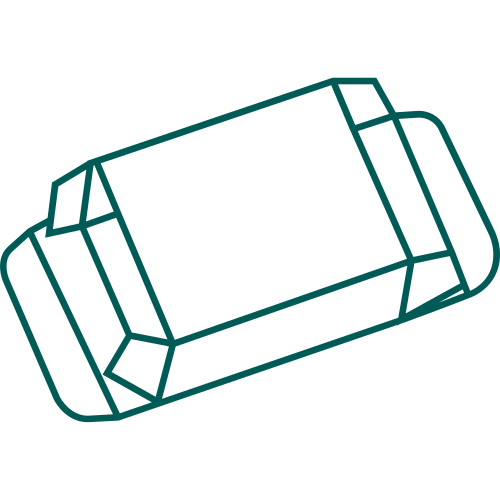





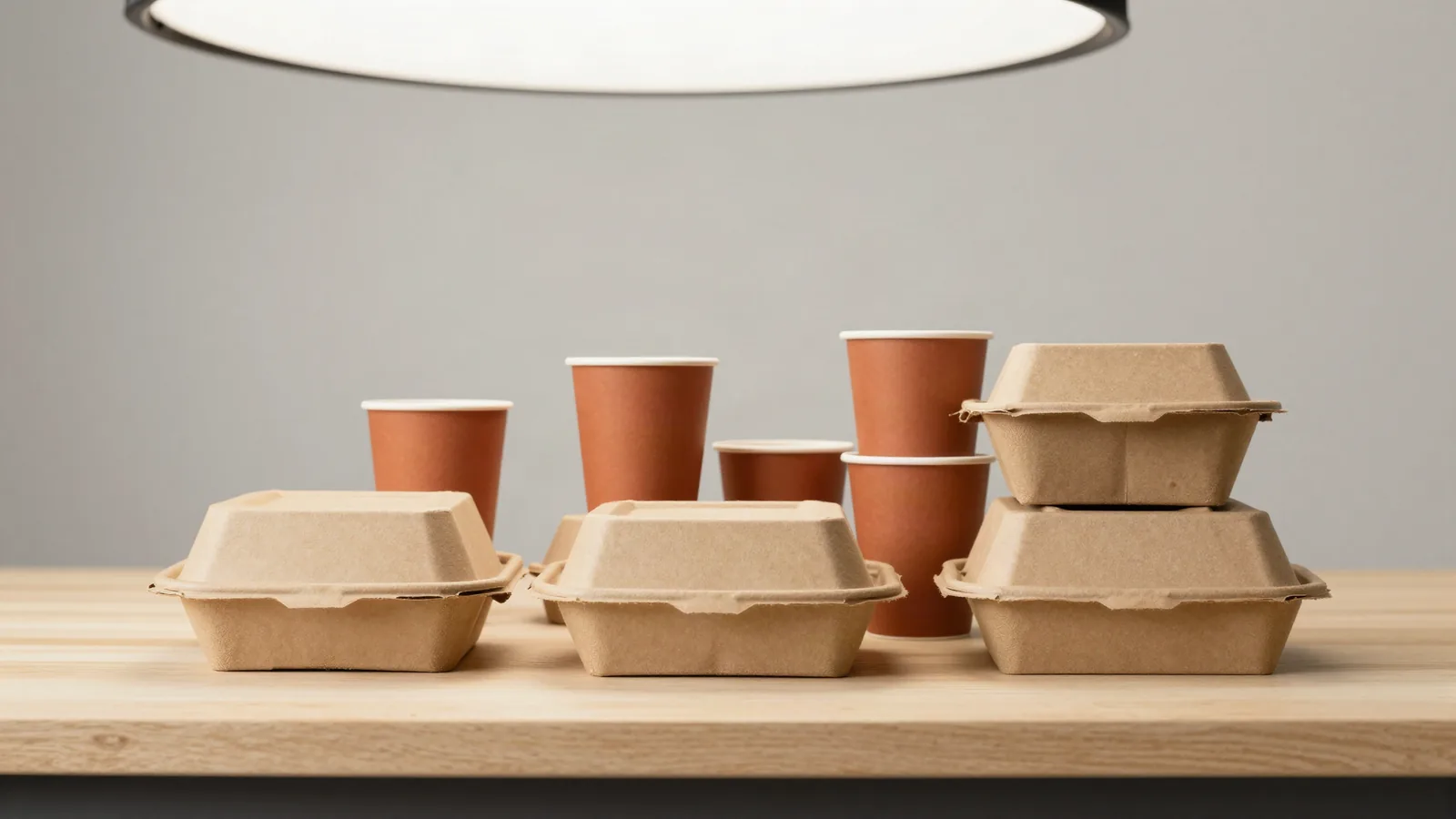



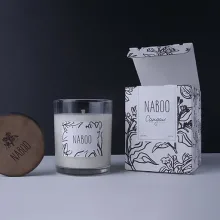

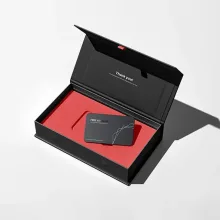
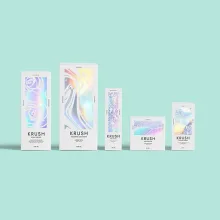
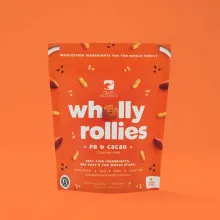
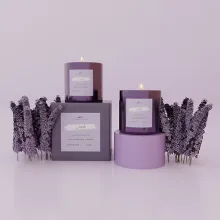







































Restaurantware custom packaging should be drawn around the item and the way it is stocked, opened, and handled. Start with the packed length, width, and depth, then record handles, rims, tabs, corners, nesting, and any protruding part that changes the internal footprint. A dieline is the flat cutting template used to print and cut the package. For a wider format comparison, the custom packaging solutions hub is a useful catalog starting point.
What should you define before choosing restaurantware packaging?
The opening scene changes the package. A staff-handled service kit, a counter display, a shelf pack, and a parcel shipment do not need the same panel order or closure. State whether the item sits flat, stands upright, nests with another item, or needs a divider. Box dimensions are normally length x width x depth, and about 1/16 inch, or 1.5 mm, is a common tolerance reference. Check the assembled fit with the actual item or a matching dummy.
Also mark the first panel a buyer or staff member sees. A window, insert, sleeve, or strong front panel may help one format, while a clean opening instruction may matter more in another. Type too close to a score can fold into the crease, and an insert cut to the exact product size can let the item rattle once real tolerances enter the pack.
Which material standards are common for restaurantware packaging?
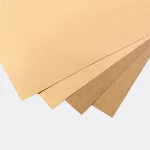
The material affects print, fold behavior, feel, and handling. SBS, C1S, and C2S paperboard are common folding-carton references in the 12 to 24 pt range. Kraft board is commonly around 18 to 24 pt, and its natural fiber color changes how inks read. A rigid box may use 1.5 to 3 mm chipboard wrapped in 100 to 157 gsm art paper. Corrugated outer layers commonly use E, B, or C flute, with 32 ECT as a common strength reference.
| Package need | Typical industry reference | Practical consequence |
|---|---|---|
| Printed folding carton | SBS, C1S, or C2S, 12 to 24 pt | Broad offset CMYK surface, with matte or gloss changing sheen |
| Kraft presentation carton | Kraft board, 18 to 24 pt | Fiber color affects the palette; foil or embossing adds contrast |
| Outer parcel layer | E, B, or C flute; 32 ECT reference | Flexo graphics and flute choice follow size and handling |
| Visible product area | PET window film, 0.2 to 0.3 mm | Window patching must leave room for copy and the viewing angle |
These are general packaging standards, not claims about CPL order history. If the package may touch food, ask us about food-contact options for your product.
Which structures make restaurantware packs easier to open and stock?
Straight tuck end and reverse tuck end cartons give a familiar top opening. Auto-lock bottom and crash-lock construction are commonly considered when the base should assemble without a separate manual tuck. A sleeve wraps a tray or inner pack when the reveal matters more than a fully enclosed carton. A roll end tuck top mailer, commonly identified as FEFCO 0427, uses a different lid and side-wall build.
Use real catalog formats as visual references. Custom printed macaron packaging boxes show a presentation-led carton direction. Custom tin packaging changes the opening and storage conversation, while custom stevia packaging is a compact printed format to compare. Custom greeting card packaging adds another example of a broad printed presentation surface. The item dimensions still decide the actual restaurantware structure.
How should artwork and finishing support the package?
Offset CMYK is common for detailed paperboard artwork, digital printing can suit a short run or versioned artwork, and flexo is common on corrugated surfaces. Put the brand, item name, variant, quantity, opening cue, and supplied handling language in a clear order. Keep copy away from scores, glue tabs, window edges, and heavy folds. RGB artwork can shift during press conversion, so the digital proof is the place to check color, small type, barcode size, bleed, and panel position.
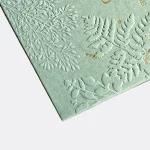
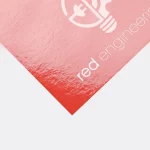
Matte lamination reduces glare compared with gloss, while gloss gives the surface a brighter reflection. Soft-touch changes the tactile finish. Spot UV isolates a small area, and foil stamping, embossing, or debossing changes the physical register of an identity panel. Choose the finish after the structure and readable artwork are settled.
What should you send for a restaurantware packaging quote?
The quote turns on the item dimensions, opening motion, and surface that needs emphasis.
- Item dimensions, including handles, rims, tabs, and orientation.
- Opening, closure, insert, sleeve, window, or divider requirements.
- Shelf-facing or staff-facing panels and the information each must carry.
- Artwork status, print coverage, finish preferences, quantity, and destination.
CPL quotes restaurantware packaging from a 100-unit minimum, with pricing from $0.49 per unit at volume, quoted to spec. Production is typically 8 to 10 business days after proof approval, plus delivery. Free US shipping, free design support, and a free dieline are available, and the $19.99 sample kit is credited toward the first order.
Frequently Asked Questions
What should restaurantware custom packaging define first?
Restaurantware custom packaging should start with item length, width, depth, handles, rims, orientation, nesting, closure, and the setting where the package opens. State whether the pack is handled by staff, stocked on a shelf, displayed on a counter, or shipped. Those facts determine the dieline, panel order, insert, window, and finish.
Which paperboard range is common for a folding carton?
SBS, C1S, and C2S are common paperboard references for folding cartons, with a general range of 12 to 24 pt. Caliper affects scoring, fold behavior, panel stiffness, and the way the carton feels in hand. Choose the board after checking the measured item, panel size, opening pattern, and handling conditions.
Can restaurantware packaging use a window?
Restaurantware packaging can use PET window film, commonly about 0.2 to 0.3 mm, with the window patched onto the converted carton. The window position must agree with the product location, viewing angle, printed panel, and copy clearance. If the product may touch food, ask us about food-contact options for your product.
Which print process fits a short run?
Digital printing is commonly considered for a short run or versioned artwork because it can avoid some plate setup. Offset CMYK suits detailed paperboard graphics, while flexo is common for corrugated surfaces. The substrate, ink coverage, color conversion, quantity, and required panel detail should be reviewed together before the proof is approved.
What should I send for a restaurantware quote?
A restaurantware quote needs the physical item or a product reference, inside dimensions, orientation, closure preference, package type, artwork status, print coverage, finish, quantity, and destination. Identify windows, sleeves, dividers, and inserts. If food contact is possible, ask about food-contact options for the product rather than assuming a material claim.