




























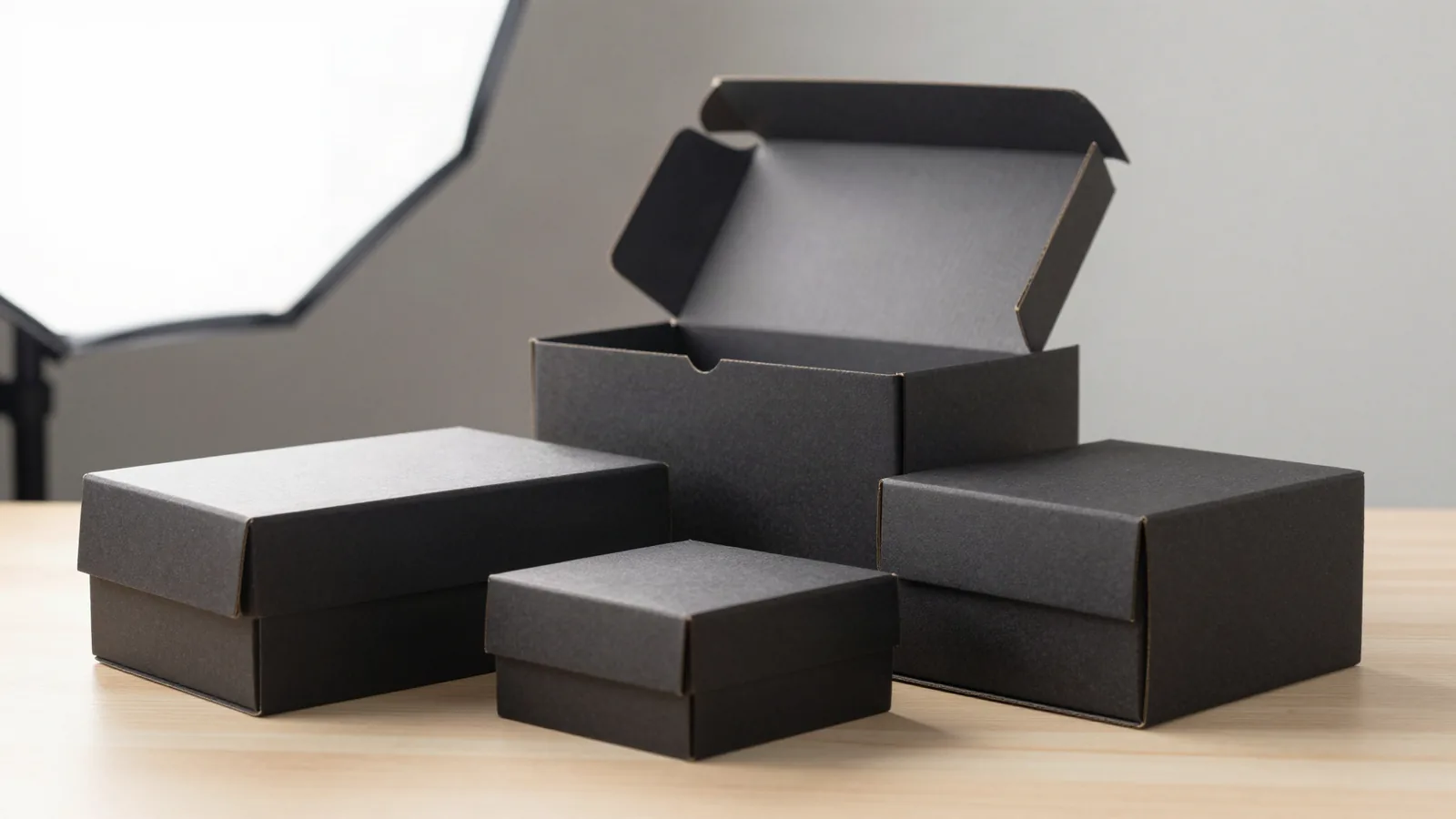




















































Skin care box packaging is the printed structure around a bottle, jar, tube, or set. It may be a folding carton, sleeve, rigid box, or carton with an insert. The package is drawn from the filled product, not an idealized outline. A dieline is the flat cutting and creasing template used to place panels, glue tabs, scores, folds, and windows. Start with the component and its closure.
How do I plan a skin care package around the product?
The largest point of the filled product sets the inside dimensions, including a pump, dropper, cap, lid, or folded label. Write length, width, and depth, then label each value as a product measurement or desired inside measurement. State the upright direction and the clearance around the component. If the package holds several pieces, list the arrangement and the gap between pieces. Keep the display panel clear of glue zones, seams, heavy scores, and small type.
Which box structure fits a bottle or jar?
A straight tuck end keeps the opening on a tuck panel, while a reverse tuck end moves the tucks to opposing ends. Use the structure that matches how the product is loaded and where the front panel must stop.
| Structure | Typical use | Check before artwork |
|---|---|---|
| Straight tuck end | Folding carton with aligned tuck panels | Opening and front-panel position |
| Reverse tuck end | Folding carton with opposing tuck directions | Seam and display-panel location |
| Auto-lock bottom | Carton base that locks during setup | Loading path and base support |
| Sleeve | Printed cover around an inner tray or carton | Inner package fit and stopping point |
| Two-piece rigid | Separate base and lid | Lid clearance and opening path |
An auto-lock bottom changes how the carton is set up and filled. A sleeve can work when an inner tray already controls the product position. A two-piece rigid box uses a separate base and lid, so the wrap, edge clearance, and opening motion need their own checks.
Which board works for a printed skin care carton?
For a folding carton, a typical industry reference range is 12 to 24 pt paperboard. A point, written pt, is one-thousandth of an inch in board-caliper notation. SBS means solid bleached sulfate paperboard, C1S means coated one side, and C2S means coated two sides. SBS gives a consistent print face. C1S and C2S change the reverse-side surface and how inside panels read.
Kraft board in the 18 to 24 pt range gives the carton a different paper surface. A rigid format commonly uses chipboard in the 1.5 to 3 mm range, wrapped in 100 to 157 gsm art paper. These are typical industry references. Caliper affects stiffness, crease behavior, edge feel, and the support around a bottle or jar.
What does a window change on the package?
PET is a clear plastic film used for a window patch, and a typical reference range is 0.2 to 0.3 mm. The cut opening, patch area, board panel, logo, information copy, and product clearance have to be checked as one layout. Mark the window on the dieline before artwork is finished. If the product should stay hidden, an opaque panel may suit the brief better.
How should print and finishes be placed?
CMYK means cyan, magenta, yellow, and black, the four inks used for process color. Offset printing suits detailed paperboard artwork. Digital printing can suit short runs or early artwork checks. Matte or gloss lamination changes reflection and color appearance. Soft-touch changes the hand feel. Spot UV is a clear coating applied to selected areas. Foil stamping adds a reflective accent, while embossing and debossing change the surface relief.
Keep small type away from scores, folds, glue tabs, and seams. Put a barcode on a flat, readable panel. If a pump or jar presses against the decorated face, adjust the insert or the inside clearance before the proof is approved.
Which CPL pages compare nearby formats?
The closest catalog reference is skin care boxes. Compare wax packaging when the component has a different footprint, wine box packaging for a taller carton, and shoe box packaging for a larger opening and lid relationship.
What belongs in a skin care quote request?
A comparable quote needs the same inputs every time.
- Product length, width, depth, closure profile, and desired inside clearance.
- Structure, insert plan, window request, board family, and caliper.
- Panel order, artwork coverage, barcode area, and variant count.
- Lamination, soft-touch, spot UV, foil, embossing, or debossing areas.
- Quantity, delivery location, and packed orientation.
What should I expect after I request pricing?
CPL quotes this work to spec from a 100-unit minimum. Pricing is from $0.49 per unit at volume, quoted to spec. Production is typically 8 to 10 business days after proof approval, plus delivery. Free US shipping, free design support, and a free dieline are available. The $19.99 sample kit is credited to the first order. For more structure guidance, see custom packaging design. Send the filled-product dimensions and artwork notes with the quote request.
Frequently Asked Questions
How much room should a skin care carton leave around a pump?
A skin care carton should be sized from the filled product, including the pump, cap, lid, label, and any insert. Record length, width, and depth, then state the desired inside clearance and loading direction. A bottle with a tall pump needs a different cavity and removal path from a jar with a wide lid, even when the product bodies look similar.
Which board is practical for a skin care carton?
SBS, C1S, and C2S paperboard are common folding-carton choices in a typical 12 to 24 pt range. Kraft board in the 18 to 24 pt range gives a different paper surface. Rigid boxes commonly use chipboard in the 1.5 to 3 mm range with 100 to 157 gsm art paper. Caliper affects stiffness, folds, and the support around the product.
When does a skin care package need a window?
A skin care package may use a window when the buyer needs to see the product, color, or component through the printed panel. PET window film in a typical 0.2 to 0.3 mm range is a common reference. The opening must be placed with the logo, copy, folds, glue zones, patch area, and insert. Mark it on the dieline before artwork is finished.
Where should spot UV or foil stop on a carton?
Spot UV or foil should stop short of scores, folds, glue tabs, seams, and high-contact edges. Spot UV is a selected clear coating, while foil stamping adds a reflective accent. Keep small type and barcodes on flat, readable panels. A finish boundary belongs in the artwork file, so the digital proof shows exactly where the treatment sits on the assembled carton.
What should I send with a skin care quote request?
A skin care quote request should include the filled product, length, width, depth, closure, desired inside clearance, structure, insert, window, board, artwork coverage, finish, quantity, and delivery location. Identify which variants share one structure. A labeled drawing or physical reference gives the dieline work a clear starting point and keeps the quoted scope comparable.












