




























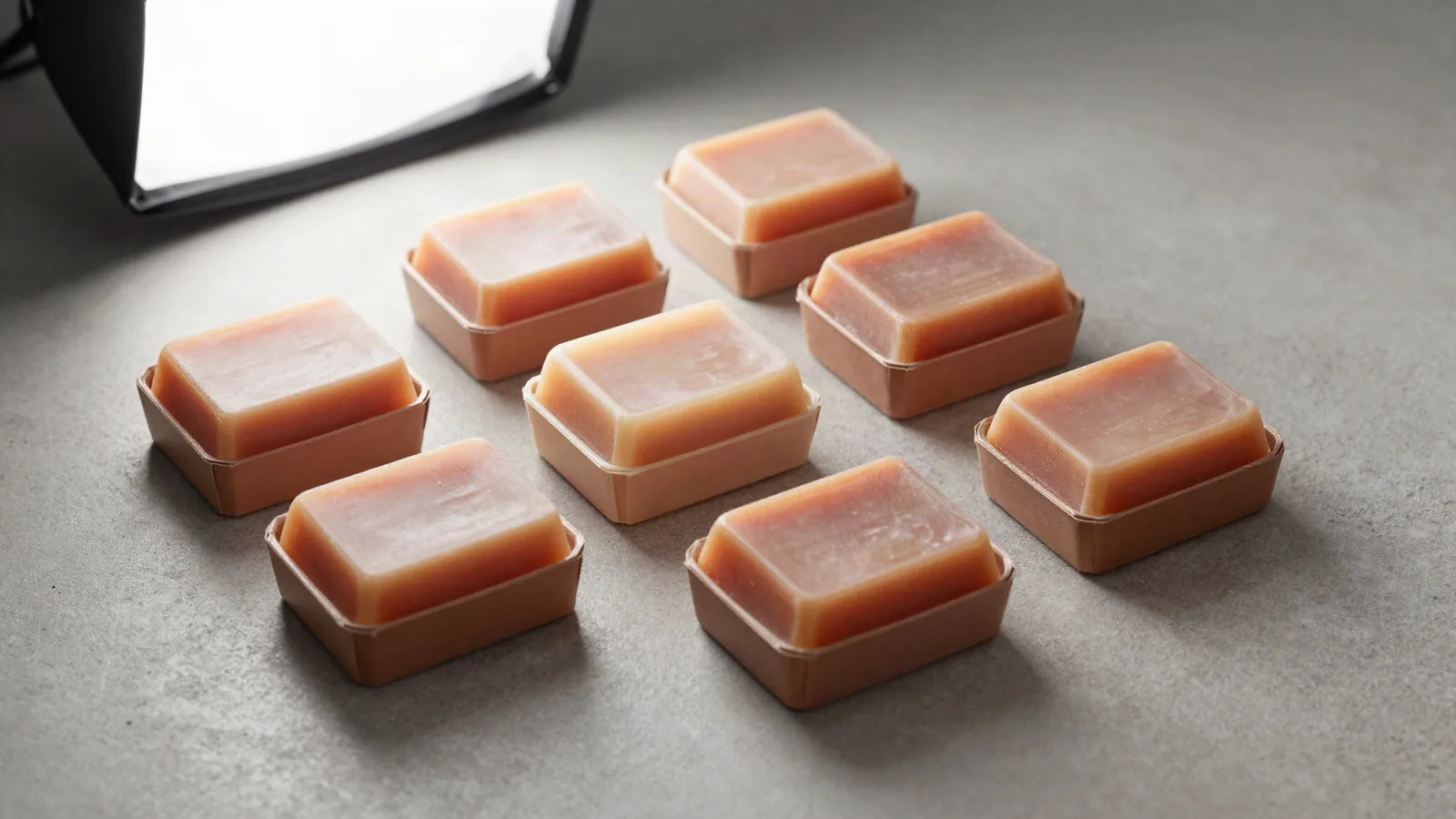




















































Soap packaging sleeves put a printed layer around a finished bar without turning the package into a full box. A sleeve is a cut and folded paper wrap, so its width comes from the bar's measured length, width, depth, edge profile, and chosen wrap path. There is no single sleeve width for every soap bar. A bar with rounded edges loads differently from one with square edges. Keep the fit record with the artwork. When a scent changes but the bar does not, change the approved copy field, not the structure.
What size soap sleeve fits a bar?
The right sleeve size is the measured finished bar plus the overlap and clearance required by the selected wrap style. Measure the packed bar after any inner wrap or liner is in place. Record length, width, depth, edge shape, and the side that should face the front panel. That record gives the dieline a physical reference. It also prevents a sleeve from being sized from a product name or an old photo.
| Fit input | What to record | What it changes |
|---|---|---|
| Finished bar | Length, width, depth | Flat sleeve path and panel size |
| Edge profile | Rounded or squared edges | Score position and loading feel |
| Wrap style | Full wrap, partial band, or open end | Product visibility and overlap |
| Overlap | Approved seam location | Glue area and front-to-back reading order |
Which soap wrap style shows more of the bar?
A partial band leaves more of the bar visible, while a full wrap gives the sleeve more printed surface. An open-end wrap keeps a defined loading direction and can make pack-out easier to repeat. The choice affects where the seam lands, which face the buyer sees first, and how much of the bar remains exposed after application.
Use a full wrap when the package needs a continuous printed field around the bar. Use a partial band when scent, color, texture, or the shape of the bar should remain visible. An open end needs a clear loading instruction because turning the sleeve during packing can move the seam or hide the intended panel. Check the assembled sleeve with the actual bar before the structure is approved.
| Wrap style | Visible product area | Operational question |
|---|---|---|
| Full wrap | Less of the outside bar remains exposed | Where should the seam and overlap sit? |
| Partial band | More of the bar remains visible | Which section carries the brand panel? |
| Open-end wrap | One loading direction stays clear | How will the sleeve be oriented during pack-out? |
How should a soap sleeve system handle several scents?
Keep the panel map and physical sleeve structure stable, then change only the approved scent fields. A panel map is the planned order of the front, back, side, seam, and information areas. Keep the logo position, collection name, type hierarchy, and reading direction consistent. Let the scent name, variant color, and seller-supplied product copy change in defined fields.
This arrangement gives the production brief a clear reference for each version. A new scent should be checked for spelling, color assignment, copy length, and bar fit before approval. If the new bar has a different profile, update the fit record and confirm whether it needs a separate dieline. Do not force a different bar into a sleeve built for another shape.
What belongs on a soap sleeve dieline?
A dieline is the flat cutting template that shows trim, scores, folds, glue tabs, bleed, and artwork panels. Put the actual sleeve path on that template before final artwork is placed. Keep type away from scores and the glue tab. Mark the seam, loading direction, overlap, and any area that may be covered when the sleeve is applied.
Low-resolution art can look acceptable on a screen and break apart in print. RGB artwork can shift when it is converted for press. A missing bleed can expose an unprinted edge after trimming. These are prepress problems, so catch them in the digital proof. The proof should show the sleeve as a package, not only as a flat artwork file.
Which finish fits a soap sleeve?
Matte lamination cuts glare, gloss lamination makes the surface shinier, and spot UV adds gloss to selected areas. Foil adds a metallic detail, while embossing or debossing changes the paper surface itself. A kraft stock gives the package a paper-led appearance. White stock gives the artwork a cleaner color base. Textured paper changes the feel before the buyer reads the label.
Choose the stock and finish together. A dark printed panel can read differently on kraft than on white stock, and a score can affect a coated surface. If the sleeve needs to pass through a manual packing step, check whether the finish makes the seam easy to handle. A physical sample is useful when the surface decision affects how the bar is loaded.
Which CPL products fit a sleeve-led bath collection?
The direct reference is custom soap sleeves. Use window soap boxes when the project needs a box structure with a planned viewing area. wax packaging can help a bath and home-fragrance line compare related presentation formats. towel packaging can carry the same visual direction into a gift set. These are separate formats, so keep each product's fit and handling record separate.
How do you approve a custom soap sleeve run?
Approve a sleeve only after the proof shows the actual bar fit, wrap direction, overlap, seam, artwork, and finish. Check every scent version against the same panel map. Confirm that the product name is correct, the edge profile matches the physical bar, and the sleeve does not hide the information the buyer needs to see.
The MOQ is 100 units. Pricing is from $0.49 per unit at volume, quoted to spec. Production is typically 8 to 10 business days after proof approval, plus delivery. Free US shipping and free design support are available. The $19.99 sample kit is credited toward the first order. For a smaller product line, review custom packaging for small business, then send the finished bar dimensions and preferred wrap path for a quote.
Frequently Asked Questions
Can one sleeve layout cover several soap scents?
One soap sleeve layout can cover several scents when the bar dimensions, wrap path, panel map, and finish stay consistent. Scent names, variant colors, and approved product copy can change in defined fields. A different bar profile needs a new fit check, and it may need a separate dieline before production.
What measurements should go into a soap sleeve quote?
A soap sleeve quote should include the finished bar length, width, depth, edge profile, inner wrap or liner, desired overlap, loading direction, quantity, artwork status, and destination. These details connect the sleeve to the actual product. A product photograph alone does not establish the flat sleeve path or seam position.
Can a soap sleeve leave the bar visible?
A partial band or open-end soap sleeve can leave more of the bar visible than a full wrap. The visible area depends on the finished bar, overlap, seam, loading direction, and product presentation. Check the assembled sleeve with the actual bar before approving the proof, especially when color or texture needs to remain visible.
What does proof approval cover for custom soap sleeves?
Proof approval for custom soap sleeves should settle the bar fit, panel order, reading direction, seam, overlap, product copy, artwork bleed, stock, finish, and version count. Production timing starts after proof approval, not when the inquiry is sent. CPL provides free design support and a digital proof before anything prints.
What is the minimum order and price for soap sleeves?
The MOQ for custom soap sleeves is 100 units. Pricing is from $0.49 per unit at volume, quoted to spec. Production is typically 8 to 10 business days after proof approval, plus delivery. Free US shipping and free design support are available. The $19.99 sample kit is credited toward the first order.












