



























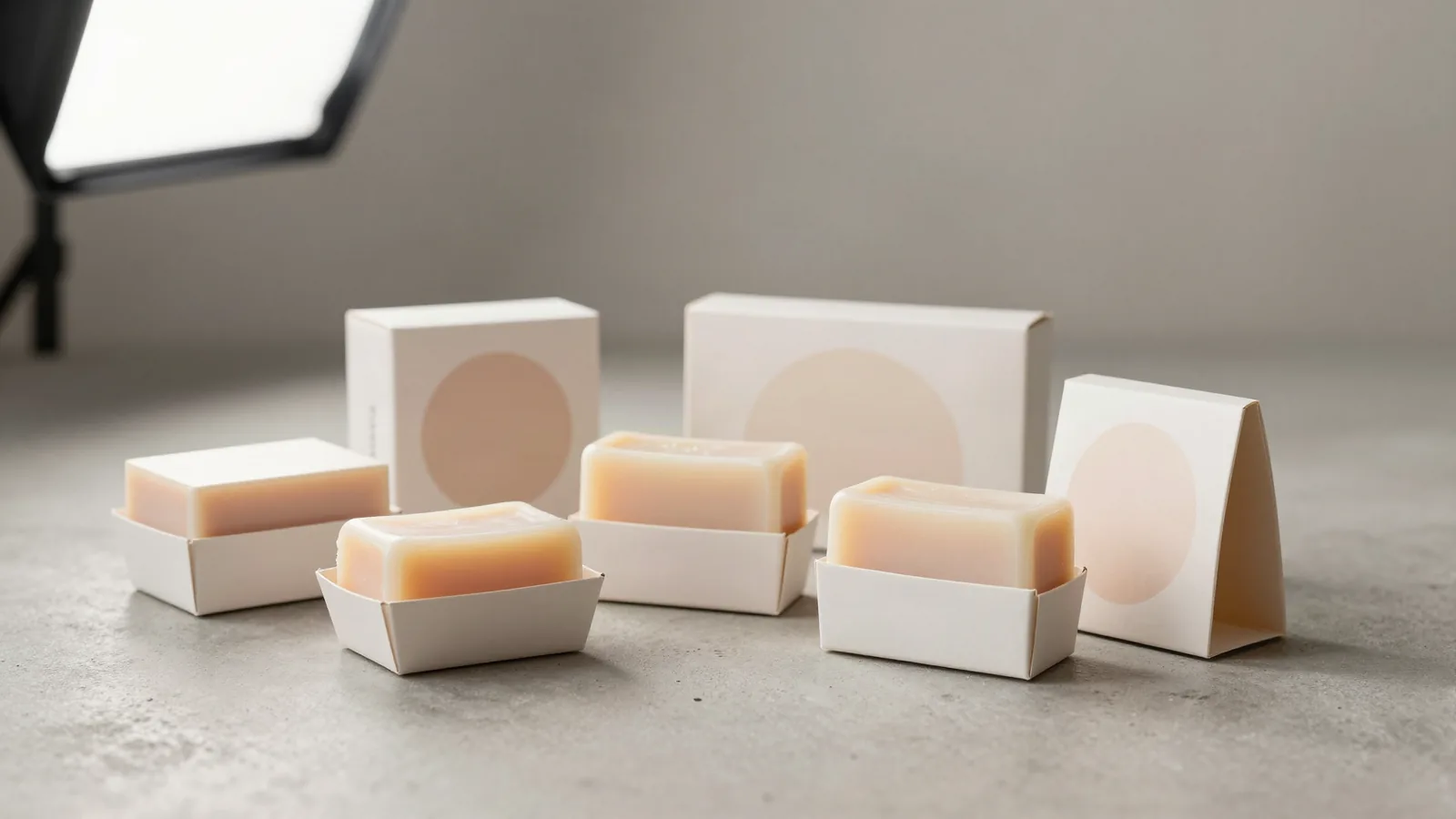




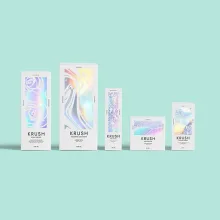
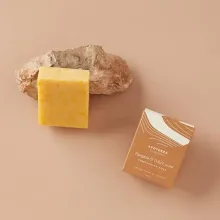




































Soap sleeve packaging is a printed paper wrap fitted around a finished bar. The useful specification starts with the bar in its packed condition, not with a generic label such as standard soap size. Record the finished length, width, depth, edge profile, wrap direction, overlap, stock, finish, and print method in one brief. That record keeps the dimensions, artwork, and physical package tied together from the first request through proof approval.
What size should a soap sleeve be?
A soap sleeve should be sized from the finished bar and its wrap path, not from an assumed category size. Measure the bar after any inner paper or liner is applied. Note which face is the front, where the seam should sit, and how much of the bar the sleeve should cover. A rounded edge can need a different score position from a squared edge, even when the overall length and width look similar.
| Measurement | Record in the brief | Packaging decision |
|---|---|---|
| Length | Finished bar length | Sets the sleeve's panel path |
| Width | Finished bar width | Sets the cross-panel fit |
| Depth | Finished bar depth with inner layer | Sets the wrap allowance |
| Edge profile | Rounded, beveled, or square | Sets score and loading details |
| Overlap | Approved seam and glue area | Sets closure and front-panel position |
What does GSM mean for soap sleeve stock?
GSM means grams per square metre, the standard way to describe paper weight. Caliper describes the sheet's thickness. Both belong in a soap sleeve specification because two papers with similar weight can have different stiffness, texture, and folding behavior. Ask for the selected stock by name, GSM, surface, and finish, then compare it with the assembled sleeve rather than judging the paper as a loose sheet.
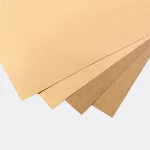
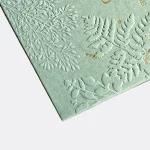
Kraft, white, and textured stocks create different starting points for the same artwork. Kraft shows more of the paper character beneath the print. White stock gives colors a cleaner base. Textured paper changes how the sleeve feels in the hand and can affect small type or fine lines. The final choice should follow the product presentation, the fold locations, and the surface the buyer needs to handle.
Which stock works for a printed soap sleeve?
White stock is the usual starting point when color contrast and small printed details need a clean base. Kraft is the better starting point when the paper appearance should remain visible. Textured stock is useful when touch matters to the package direction. None of those names is a complete specification. Confirm weight, caliper, coating, score behavior, and proof appearance before selecting the stock.
Keep the printed area away from scores and glue tabs. Heavy ink coverage can make a fold behave differently from an unprinted fold, and a coating can change the way the surface takes a mark. The proof should show the artwork on the selected stock direction. A physical sample is the right check when the paper feel is part of the decision.
Should soap sleeves use digital or offset printing?
Digital printing sends the artwork directly to press and is often the practical route for shorter runs or several scent versions. Offset printing uses plates and can make sense for a larger repeat run where the setup is spread across more units. At a 100-unit run, ask for the digital route first, then compare the quoted press method against the number of versions, stock, ink coverage, and finish.
There is no universal crossover point. A single design, several versions, heavy coverage, and a specialty stock can change the comparison. Keep the print method in the same brief as the sleeve dimensions and finish. That lets the quote answer the actual job instead of comparing two methods without the details that drive the result.
Which finishes can a soap sleeve use?
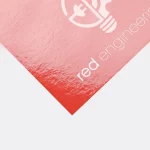
Matte lamination reduces surface glare, gloss lamination creates a shinier surface, and soft touch changes the hand feel. Foil adds a metallic area. Embossing raises part of the paper surface, while debossing presses an area into it. Spot UV places gloss on selected artwork instead of covering the full sleeve.
Finish placement belongs on the proof. Mark foil, spot UV, embossing, or debossing as separate artwork layers so the production file shows where each treatment goes. Check scores and folds in those areas. A finish can look right on a flat screen and behave differently at a fold, so the assembled sample is the useful test.
What should a soap sleeve proof show?
A soap sleeve proof should show the finished bar reference, panel sequence, reading direction, overlap, seam, score lines, glue area, artwork bleed, product copy, stock, finish, and version name. A digital proof catches missing bleed, RGB color conversion, low-resolution art, and type placed too close to a score before the run is released.
Free design support can help organize the file and identify open questions. The direct product reference is custom soap sleeves. If the brief needs a structured outer format, compare sleeve boxes and window soap boxes as separate packaging directions.
When should a buyer review another format?
A sleeve is the right format when the package needs a compact printed wrap around a finished bar. Review a box when the product needs a full enclosure, a planned window, or a more structured opening. Wax packaging is another catalog reference for comparing a different product presentation brief. Keep the soap sleeve page focused on the actual bar, stock, print, and proof.
How should a buyer prepare the soap sleeve order?
Prepare the finished bar reference, quantity, dimensions, artwork status, stock preference, finish preference, shipping destination, and any copy questions before requesting the quote. The MOQ is 100 units. Pricing is from $0.49 per unit at volume, quoted to spec. Production is typically 8 to 10 business days after proof approval, plus delivery. Free US shipping and free design support are available.
For a broader route, review custom packaging solutions. The $19.99 sample kit is credited toward the first order. Use the selected stock and finish in the brief, then approve the digital proof against the actual bar before the production clock begins.
Frequently Asked Questions
What does GSM mean on soap sleeve stock?
GSM means grams per square metre, the paper-weight measurement used in a soap sleeve stock specification. Caliper describes thickness, while texture and coating affect folding and hand feel. Ask for the stock name, GSM, caliper, surface, and finish together, then confirm the result with the digital proof and assembled sample.
Is kraft paper right for soap sleeve packaging?
Kraft paper is a useful starting point when the sleeve should show a natural paper appearance beneath the print. White stock gives colors a cleaner base, while textured stock changes the feel. The right soap sleeve stock still depends on weight, caliper, score behavior, artwork coverage, finish, and the intended physical presentation.
Should digital or offset printing be used for soap sleeves?
Digital printing is often considered for shorter runs or several scent versions because the artwork goes directly to press. Offset printing uses plates and can suit a larger repeat run. At a 100-unit order, ask for the press method against the actual versions, stock, coverage, and finish instead of assuming one method fits every job.
What must a soap sleeve proof show?
A soap sleeve proof should show the finished bar reference, sleeve dimensions, panel order, reading direction, overlap, seam, scores, glue area, bleed, copy, stock, finish, and version name. The proof should also expose low-resolution art, RGB conversion changes, and type placed too close to a fold before production.
What are the commercial terms for soap sleeve packaging?
The MOQ for soap sleeve packaging is 100 units. Pricing is from $0.49 per unit at volume, quoted to spec. Production is typically 8 to 10 business days after proof approval, plus delivery. Free US shipping and free design support are available. The $19.99 sample kit is credited toward the first order.