




















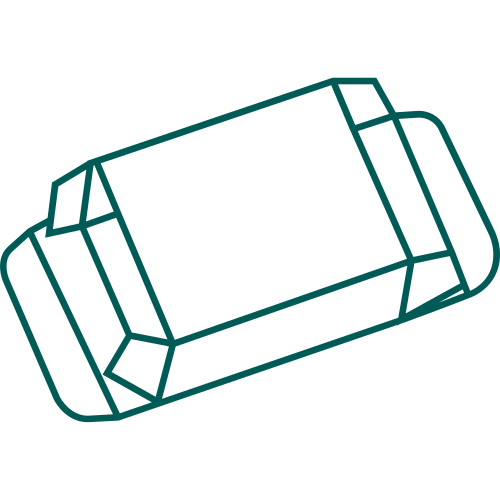




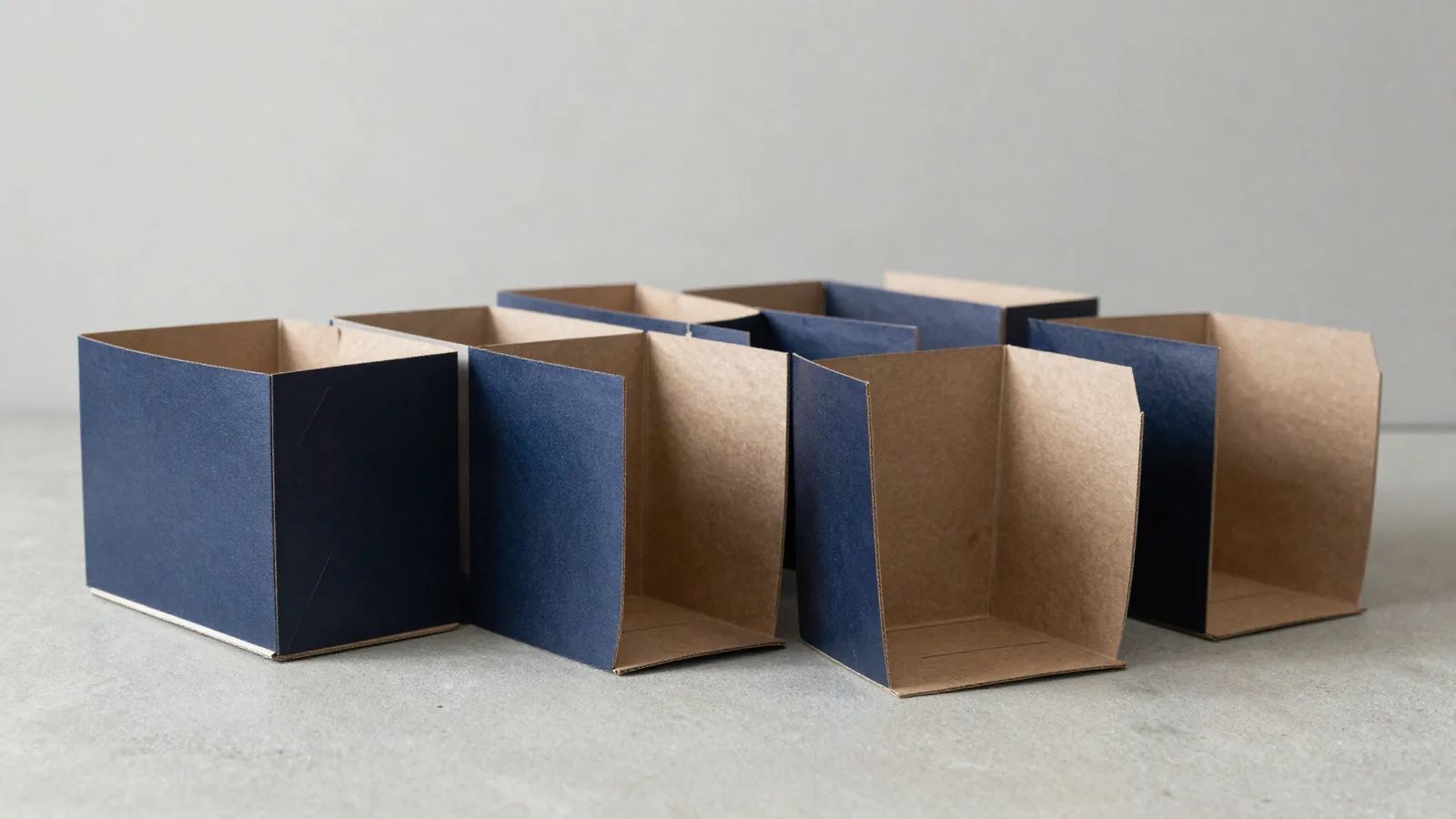


















































Types of sleeve boxes become clear when you describe what the hand moves. A sleeve is an outer paperboard layer that slides over or away from an inner tray, box, or rigid body. That outer layer can carry the first printed message, while the tray or body controls product position. Custom Packaging Lane's sleeve boxes page is the general reference for this construction.
What is a sleeve box?
A sleeve box has an outer sleeve and an inner package, and the opening comes from moving one against the other. The inner piece may be a tray, a carton, or a rigid body. That distinction matters because the same printed sleeve can create a loose reveal, a supported pull-out, or a structured presentation depending on what sits inside.
| Sleeve direction | What moves or stays fixed | Custom Packaging Lane reference |
|---|---|---|
| General sleeve | An outer sleeve moves around an inner package. | sleeve boxes |
| Sleeve and tray | The sleeve stays outside while the tray pulls through it. | custom sleeve and tray boxes |
| Rigid sleeve and tray | A stiff body and tray carry a more structured opening. | rigid boxes with sleeve and tray |
| Product-specific sleeve | The sleeve brief starts from the named product format. | custom sleeve cigarette boxes, |
| Window presentation | A viewing area puts the product into the first panel. | window display boxes |
The table describes movement, not a finished specification. A tray cut to the product's exact outline can keep it from rattling, but the clearance still needs to account for packing and removal. A sleeve that fits too tightly scuffs at the edges and slows packing. Put the actual dimensions, opening path, and desired reveal into the brief.
How do sleeve-and-tray boxes differ from rigid sleeve boxes?
A sleeve-and-tray box uses a sleeve around a tray, while a rigid sleeve-and-tray box adds a stiff body to that relationship. The rigid construction changes the feel of the opening and how the package holds its shape. Compare custom sleeve and tray boxes with rigid boxes with sleeve and tray when the opening motion is already clear but the outer structure is not.
The sleeve material also changes the read of the outside panel. Kraft paper keeps a visible brown fiber tone, white board gives the artwork a cleaner field, and matte or gloss lamination changes glare across the moving surface. Spot UV can mark one logo or panel detail, but keep the finish boundary away from scores and the sleeve edge.
What should the sleeve show before the tray opens?
The sleeve should carry the first message that the buyer sees before the tray opens, so the artwork needs the panel orientation and opening path before print. We draw the dieline with free design support and send a digital proof before anything prints. Check which panel faces forward, keep type away from scores and glue areas, and check bleed, barcode placement, and the direction of the reveal.
When does a window help a sleeve package?
A window helps when the product should be visible before the sleeve or tray moves. It gives the buyer a view into the package, but it also removes part of the uninterrupted print area and fixes the product position more tightly. Custom Packaging Lane's window display boxes reference can start that discussion. Confirm the viewing area and opening path in the proof.
Do product-specific sleeve labels change the construction?
A product-specific label changes the starting brief, not the universal dimensions. Check custom sleeve cigarette boxes and against the actual item, then confirm the cavity, closure, artwork, and material direction. The catalog name cannot replace a fit check.
What should happen before sleeve box production?
Record the inner anchor, moving part, product dimensions, first visible panel, opening direction, and material choice. Custom sleeve box projects use a MOQ of 100 units. Pricing is from $0.49 per unit at volume, quoted to spec. Production is typically 8 to 10 business days after proof approval, plus delivery. Free US shipping and free design support are available. Order the $19.99 sample kit for a physical opening check, then use custom packaging design to organize the visual brief.
Frequently Asked Questions
How are sleeve boxes grouped?
Sleeve boxes are grouped by the part that moves and the support inside it. These are starting structures, so the actual product fit and approved proof still control the final package.
What is the difference between a sleeve and a tray?
A sleeve is the outer paperboard layer that slides over or away from the package, while a tray is the inner support that holds the product. A sleeve-and-tray box uses both parts, so the opening path, cavity, clearance, artwork, and material direction should be checked together.
Do rigid sleeve-and-tray boxes open differently?
Rigid sleeve-and-tray boxes add a stiff body to the sleeve and tray relationship, so the package holds its shape during the opening. The motion still comes from the sleeve and tray, but the outer construction changes the feel and fit. Compare the rigid and non-rigid routes in the proof.
Can a sleeve box include a window?
A sleeve box can include a window as a product-visibility choice, and Custom Packaging Lane lists window display boxes as a catalog reference. The window uses part of the printed area and affects product position. Confirm the viewing area, sleeve movement, tray fit, and artwork before approving the dieline.
What commercial terms apply to sleeve boxes?
Custom sleeve boxes use a MOQ of 100 units, with pricing from $0.49 per unit at volume, quoted to spec. Production is typically 8 to 10 business days after proof approval, plus delivery. Free US shipping, free design support, and a $19.99 sample kit are available.