




























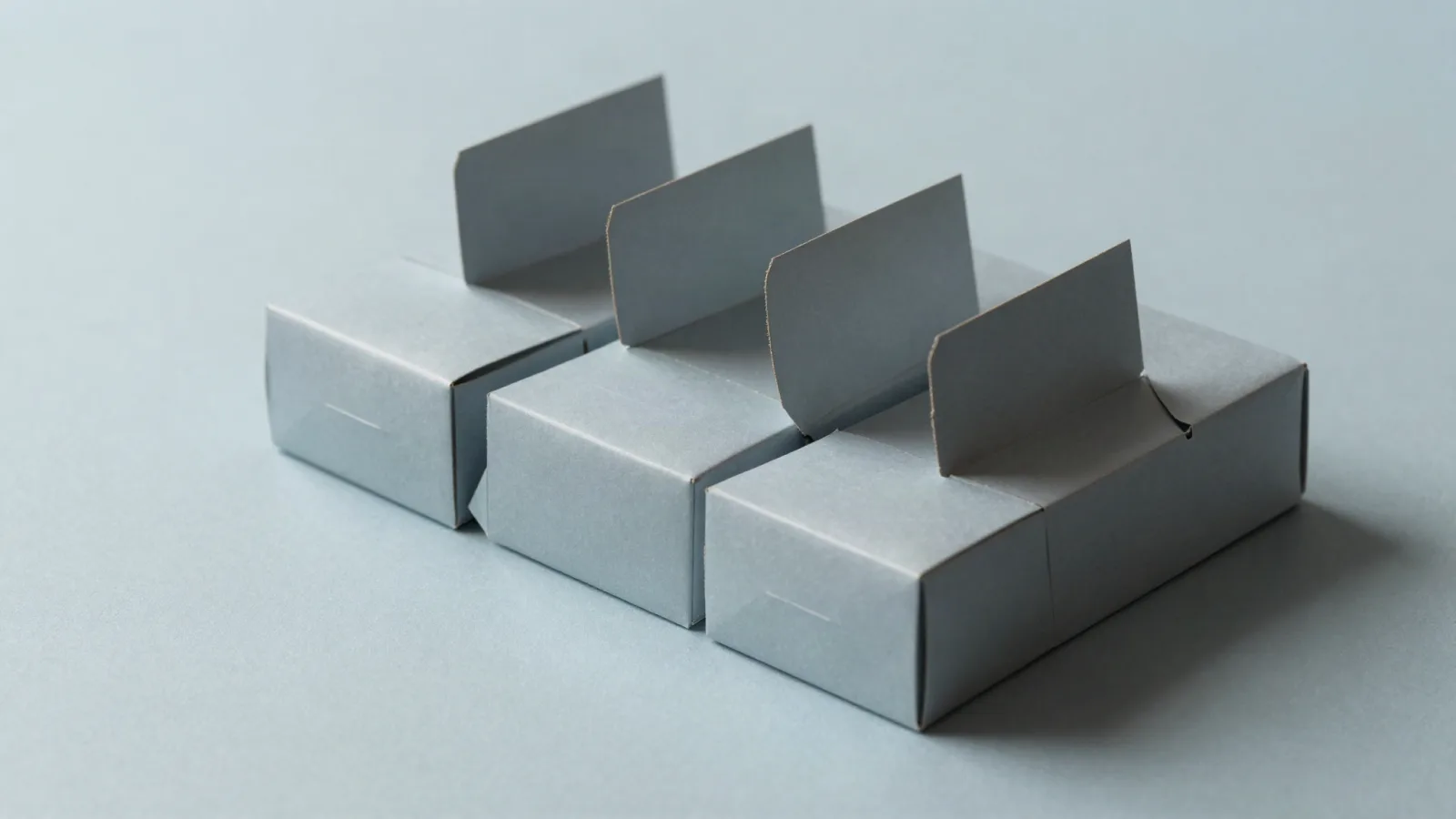




















































A tray and sleeve box pairs an inner tray with an outer sleeve. The sleeve is a separate printed wrap that slides over the tray, while the tray holds the product. A slide out tray box is defined by that movement, not by a universal stock size. Box sleeve packaging can also use a fitted inner box instead of an open tray.
The tray can hold one product, a set, or an organized arrangement. The sleeve carries a large branded panel, and the tray can carry interior artwork or an insert.
What is a tray and sleeve box?
A tray and sleeve box is a two-part package in which the tray carries the product and the sleeve controls the outside presentation. The tray slides into the sleeve along a planned path. That path affects the opening force, the visible first panel, and the space needed at the packing table.
A dieline is the flat template used to print, cut, and crease a package. For a tray and sleeve box, the dieline covers the sleeve and the tray separately. Proofing only the flat sleeve can miss a tray wall, glue area, or product clearance problem.
How does a slide out tray box open?
A slide out tray box opens when the inner tray moves through the sleeve far enough for the product to be seen and removed. The proof must show the hand position, tray edge, and product path.
| Part of the movement | What happens | What to check |
|---|---|---|
| Sleeve entry | Tray enters the outer wrap | Tray walls, sleeve opening, and alignment |
| First reveal | Product begins to appear | Brand panel and product orientation |
| Full opening | Product can be removed | Tray travel, grip area, and clearance |
| Return stroke | Tray moves back into the sleeve | Binding, sleeve edges, and closed fit |
A tray that binds can tear a sleeve edge or make the package hard to use. A tray that is too loose can slide open during handling. Check the assembled parts with the product, insert, and selected board in place.
How should you set tray and sleeve dimensions?
Set tray dimensions from the packed product, then set the sleeve opening around the finished tray footprint. Record inside length, width, and depth, plus product clearance, insert thickness, and the direction the tray should move. The usable tray size is not the outside size after board and folds are added.
Send a physical sample or a dimensioned drawing when the product is soft, irregular, or easy to compress. An insert cut to the exact product size can stop rattling, but it also changes the clearance needed for loading and removal. Put the insert in the proof with the tray and sleeve.
Which board and finish fit tray and sleeve packaging?
Folding paperboard suits a lighter tray and sleeve package with broad printed coverage. Rigid board gives the tray and sleeve a firmer hand feel. Corrugated board can be considered when the structure needs more protective support.
| Material direction | Physical behavior | Check before approval |
|---|---|---|
| Folding paperboard | Folds around a printed blank | Scores, glue tabs, tray walls, and print coverage |
| Rigid board | Holds a formed shape | Tray fit, sleeve clearance, wrap edges, and hand feel |
| Corrugated board | Adds fluted support between liners | Flute direction, board thickness, and sleeve movement |
Matte, gloss, soft-touch, foil, embossing, debossing, and spot UV change the printed surface. Select the finish after the sleeve fit is clear. Artwork that crosses a score, glue tab, or sleeve edge needs a separate check in the digital proof.
Which products use this box sleeve packaging?
Custom sleeve and tray boxes are the direct construction reference. Rigid boxes with sleeve and tray show the same movement with a firmer structure. Compare jewelry boxes with lid and tray when a top-opening alternative is under consideration. Custom lid and tray soap boxes and custom cardboard boxes with lid and tray give related product references.
Should you choose a sleeve and tray or a lid and tray?
Choose a sleeve and tray when the opening should travel horizontally through a guided slide. Choose a lid and tray when the product should appear after a lifted top opening. A sleeve-only package is a different structure because it does not include the fitted tray shown here.
- Use a tray and sleeve when the tray edge should guide the opening.
- Use a lid and tray when top access is easier for packing or removal.
- Use a sleeve-only format when the outer wrap is the main printed layer.
- Add an insert when the product can move inside the tray.
What should the quote and proof include?
The quote and proof should name the tray interior, sleeve opening, product orientation, board direction, insert, artwork, finish, quantity, and destination. The digital proof should show the closed package, the first reveal, the full opening, and the product in the tray. Check low-resolution art, RGB conversion, bleed, scores, glue tabs, and sleeve edges before approval.
The MOQ is 100 units. Pricing is from $0.49 per unit at volume, quoted to spec. Production is typically 8 to 10 business days after proof approval, plus delivery. Free US shipping and free design support are available. The $19.99 sample kit is credited toward the first order. For a broader artwork brief, use custom packaging design.
Frequently Asked Questions
Is a tray and sleeve box the same as a drawer box?
A tray and sleeve box and a drawer box both use a sliding opening, but the construction can differ. A tray and sleeve box uses an inner tray and an outer sleeve. A drawer box usually uses a drawer and a surrounding box. Confirm the actual tray walls, sleeve path, and product clearance in the proof.
Does the tray slide all the way out?
A tray and sleeve box can be planned for a partial reveal or a full pull-out. The selected movement depends on the product, grip area, insert, and sleeve fit. The digital proof should show the tray entering the sleeve, the first reveal, the removal path, and the closed position.
Can the sleeve be printed on all sides?
The sleeve can carry artwork across its available panels, but scores, glue areas, sleeve edges, and the opening can interrupt the print. Keep type and logos clear of those areas. The proof should show the folded sleeve around the actual tray so panel order and artwork placement are clear.
What dimensions are needed for a slide out tray box?
A slide out tray box quote needs the packed product length, width, and depth, plus clearance, insert thickness, tray movement, and sleeve opening. Send the product orientation and a physical sample or dimensional drawing when the shape is soft or irregular. The final usable tray size is an inside measurement.
What are the order terms for tray and sleeve boxes?
The order terms for tray and sleeve boxes include a 100-unit MOQ and pricing from $0.49 per unit at volume, quoted to spec. Production is typically 8 to 10 business days after proof approval, plus delivery. Free US shipping and free design support are available, and the $19.99 sample kit is credited toward the first order.












