


























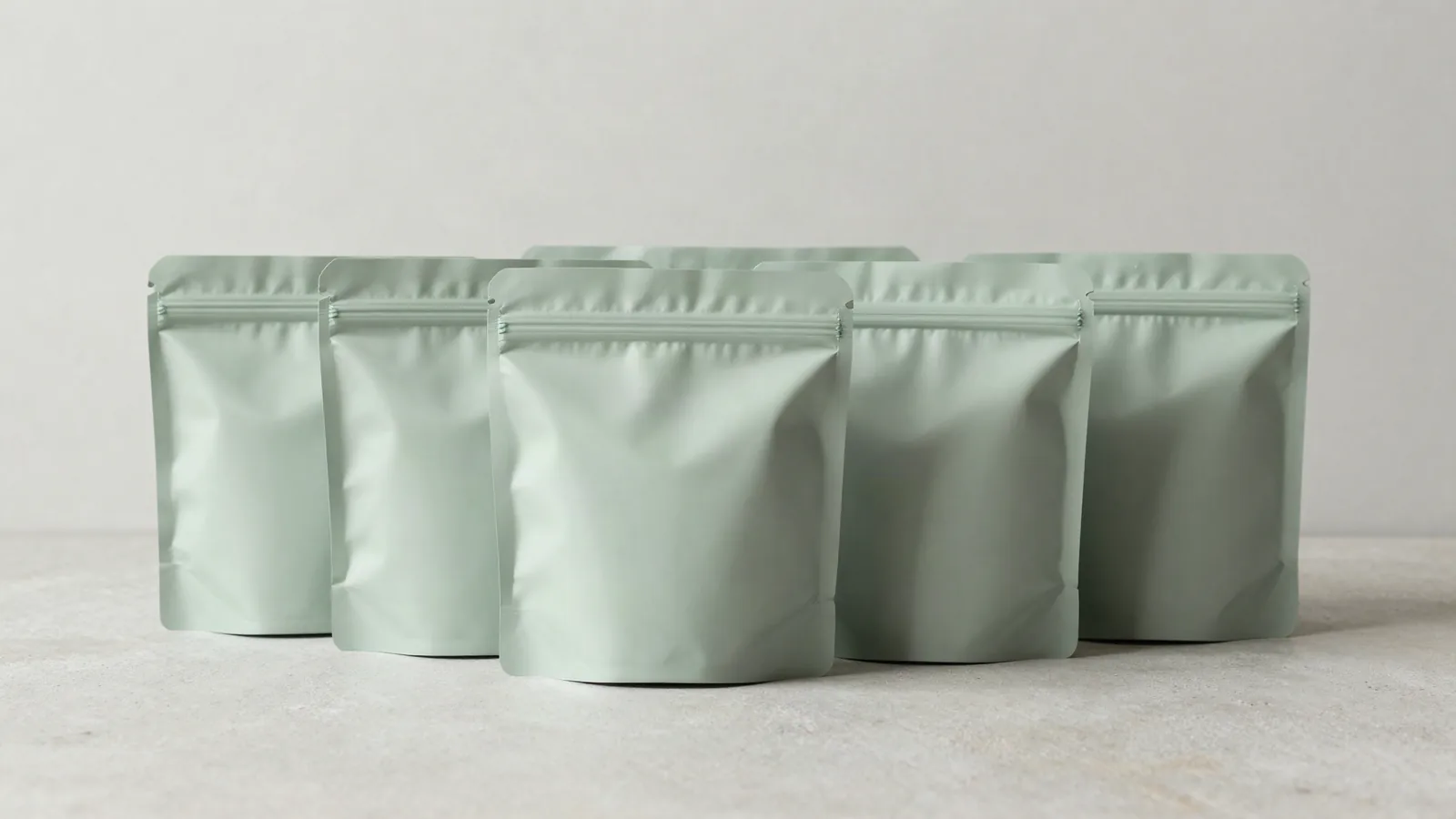



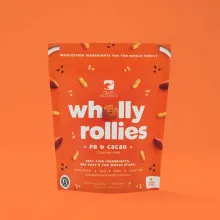





































Stand up pouches for food packaging are designed around the filled product, not a flat film outline. The bottom gusset opens to form the base, the seals define the usable face, and the top area has to leave room for a tear notch or zipper. Give the fill weight, product shape, filled height, target width, gusset direction, and opening request before artwork is arranged. For layout help, review custom packaging design alongside the pouch brief.
How does a stand-up pouch stay upright?
The bottom gusset is the folded section that opens under the pouch when it is filled. Front and back panels, side seals, the top seal, and the gusset work as one structure, so a pouch that looks wide enough when flat may stand differently after filling. A zipper pouch adds a resealable opening, while a plain top seal leaves a different fill and opening plan. Review the package filled, with the product level and closure in place.
| Format | Construction reference | Material reference | Buyer decision |
|---|---|---|---|
| Stand-up pouch | Bottom gusset with sealed edges | PET, AL, and PE laminate layers | Confirm filled height, face width, gusset depth |
| Zipper pouch | Stand-up format with zipper closure | Mylar or foil laminate | Decide whether resealing belongs in the brief |
| Windowed pouch | Printed film with a viewing area | PET window reference, 0.2 to 0.3 mm | Keep the window away from seals and artwork details |
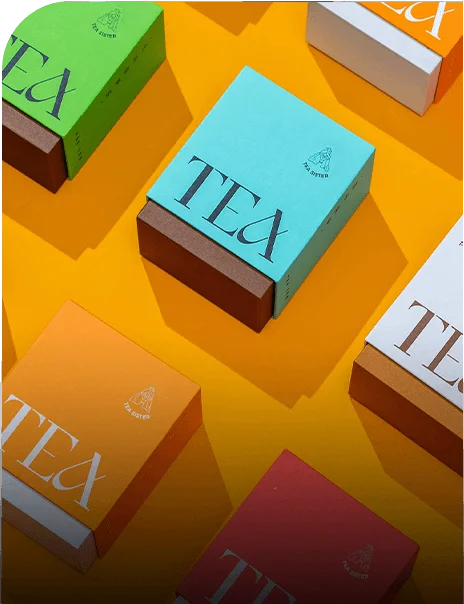
| Box alternative | Straight tuck, auto-lock, or mailer | SBS 12 to 24 pt, or E, B, or C flute, 32 ECT | Choose when rigid panels or an outer shipper matters |
Use zipper pouches when the opening needs resealing. Thanksgiving food boxes show the different planning logic of a paperboard format, while seed packaging is a useful catalog reference for a small flexible or botanical presentation format.
Which laminate layers should I discuss?
PET is a polyester film, AL is an aluminum layer, and PE is a sealant film used in common flexible-packaging references. Mylar or foil laminates may use PET, AL, and PE in different layer sequences, and that sequence changes the surface, barrier direction, seal behavior, and print side. Do not select a laminate from the product name alone. Tell us the contents, filling conditions, closure request, and storage direction, then ask us about food-contact options for your product.
What pouch size fits the filled product?
Typical stand-up pouch width is about 3 to 7.5 inches, but width alone cannot set the dieline. Measure the filled product height, desired face area, gusset direction, seal area, closure position, and product level. Add the label panel, tear area, zipper, or window to the same layout. The final check should happen with the pouch filled, because the gusset changes the footprint and the visible face.
How should pouch artwork and finishes be laid out?
The artwork file needs clear front and back panels, seal allowances, closure zones, and edge-safe areas. Digital printing can suit a short run or an artwork check. For a carton used with the pouch, offset CMYK is a common paperboard reference, while flexo is common for corrugated surfaces. Matte or gloss lamination changes sheen, soft-touch changes feel, and spot UV or foil belongs only in areas supported by the selected process. Keep important type and barcodes out of seals, gussets, and tear zones.
When should I choose a pouch instead of a food box?
A pouch fits a brief that calls for flexible film, a gusseted base, or a resealable opening. A box fits a brief that calls for broad rigid panels, a defined shelf shape, or an outer mailer structure. The choice is a physical tradeoff: film folds and stands through its gusset, while paperboard holds a more defined panel shape. Compare zipper pouches with Thanksgiving food boxes before deciding which opening and display behavior matches the product.
What should I send for a pouch quote?
Send the filled product, target width and height, gusset direction, closure, laminate direction, artwork coverage, finish, quantity, and delivery location. Include an outer box if the pouch will sit inside one or ship in one. Mark any window, tear area, zipper, label panel, or seal allowance on the initial brief. The pouch quote is easier to review when the filled dimensions and the film outline arrive together.
Custom Packaging Lane quotes stand up pouches from a 100-unit minimum, with pricing that may be from $0.49 per unit at volume, quoted to spec. Production is typically 8 to 10 business days after proof approval, plus delivery. Free US shipping, free design support, and a free dieline are available. The $19.99 sample kit is credited toward the first order. Ask us about food-contact options for your product when you send the fill details.
Frequently Asked Questions
What is a stand-up pouch bottom gusset?
A stand-up pouch bottom gusset is the folded film section that opens when the pouch is filled and creates the base. Its depth affects the filled footprint, front-panel area, product level, and seal layout. Give the product shape, filled height, and intended fill level so the gusset is reviewed as part of the complete pouch.
Which laminate layers are common for stand-up pouches?
PET, AL, and PE are common layer references in Mylar or foil flexible laminates. PET is a polyester film, AL is an aluminum layer, and PE is commonly used as a sealant film. The sequence must match the contents, seal method, closure, artwork, and intended use, so ask about food-contact options for your product.
How wide should a stand-up pouch be?
A typical stand-up pouch is about 3 to 7.5 inches wide, but the correct width depends on the filled product, height, gusset depth, closure, seal area, and desired face. Measure the product in its filled configuration and mark any zipper, tear area, label panel, or window before the artwork is finalized.
What is the difference between a zipper pouch and a plain pouch?
A zipper pouch has a resealable closure in the top area, so the zipper, seal, fill level, and artwork must share the available space. A plain pouch can use a top seal without that closure. Choose the format based on how the product is opened, used, stored, and closed after the first opening.
What information helps quote a custom food pouch?
A custom food pouch quote needs the product, filled dimensions, target width, gusset direction, closure, laminate preference, artwork coverage, finish, quantity, and delivery location. Include any outer box, window, tear area, zipper, or label panel. Ask about food-contact options for your product instead of assuming a laminate suits every contents category.