




























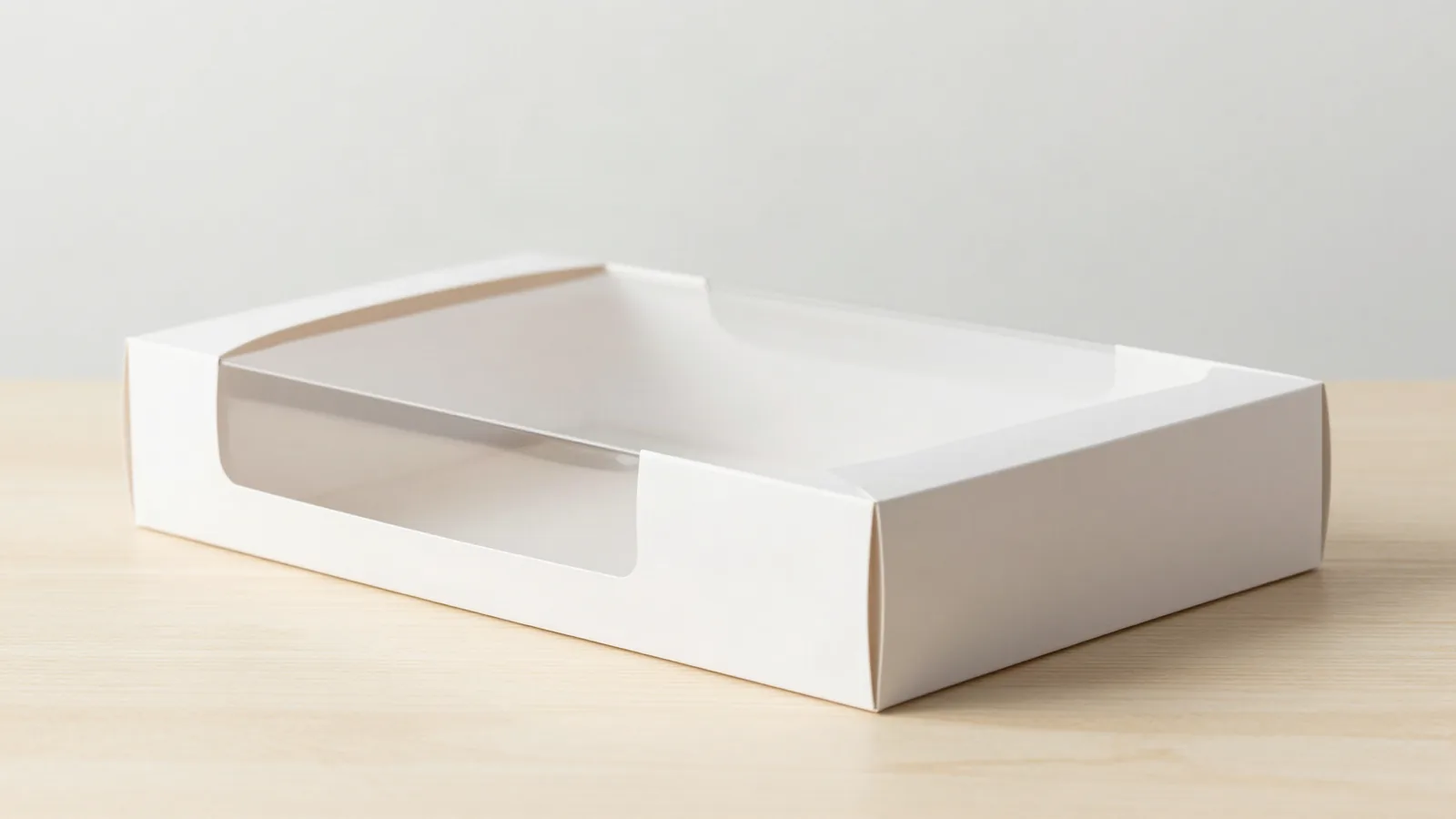




















































A wedding cake sampling box is a printed package for cake portions, flavor labels, inserts, and a controlled opening. The filled plan decides whether it needs separated flavor areas, a label panel, a tray, an insert, or a window. A dieline is the flat cutting template used to cut and fold the box. Describe how the recipient gets the set, then use custom packaging for small business to frame the bakery brief.
What should a wedding cake sampling box organize?
The interior layout determines the box footprint and opening. Mark every portion, filling, topping, flavor name, label, note card, and information panel that travels inside. Then choose whether the recipient opens the box flat, lifts a lid, slides out a tray, or carries a handled format. A tasting layout drawn after the outer size usually creates wasted space or leaves a card without a useful home.
| Tasting goal | Useful structure | Interior check | Brand panel |
|---|---|---|---|
| Assorted flavors | Tray carton or divider box | Separate areas with clear labels | Flavor system on a reserved panel |
| Take-home appointment | Mailer or auto-lock bottom | Carry direction and closure | Instructions on the lid or top panel |
| Display presentation | Two-piece rigid or magnetic flap | Opening aligned with tasting layout | Bakery branding on broad panels |
| Visible assortment | Windowed carton or sleeve | Viewing area clear of inserts | Window coordinated with labels and artwork |
Which box structure fits the sample layout?
Straight tuck end and reverse tuck end both use folded carton panels, but their flap direction differs. An auto-lock bottom and a crash-lock base change assembly because the bottom folds into a locked form. A two-piece rigid box has a separate lid and base. A drawer or slide reveals the set from one end, while a magnetic flap creates a front opening. Pick the closure after the portions and tray are drawn, since the opening edge determines where hands and labels land.
Do inserts or a window belong in the first mockup?
An insert controls position, while a window controls visibility. Paperboard dividers can separate portions in a flat layout; shaped foam can create individual cavities when a piece needs fixed support. A PET window, a clear polyethylene terephthalate film patch, is commonly referenced around 0.2 to 0.3 mm. Keep window patching clear of folds, seals, labels, and adhesive areas. If the samples touch an interior surface, ask us about food-contact options for your product.
What measurements should I send for the box?
Write the size as length x width x depth, then label every value inside or outside. Measure the tasting tray, portion arrangement, label cards, liner, and divider, including anything that occupies the cavity. About 1/16 in, or 1.5 mm, is a common planning tolerance reference for packaging. The final fit still depends on board caliper, scores, folds, inserts, and the assembled contents. Add the opening position and carry orientation.
What artwork has to survive the fold?
Keep the bakery name, logo, collection title, flavor guide, and appointment message on the panels the recipient sees first. Offset CMYK is a common reference for detailed paperboard artwork. Digital printing can suit short runs or early artwork checks. Matte or gloss lamination, soft-touch, spot UV, foil stamping, embossing, and debossing each change the surface treatment. Mark every effect on the proof, and keep folds, glue flaps, dividers, windows, and closure edges visible while checking the flat file.
Which catalog products are useful references?
Catalog pages are comparison points, not ready-made dimensions for a tasting set. Custom cake pop boxes show a smaller portion format. Custom foam box inserts frame shaped support. Tall cake boxes give a vertical clearance reference, while wedding card boxes and embossed tin boxes show event or metal directions. Use those structures to name the discussion, then send the actual tasting layout.
What should go into the quote request?
A useful request starts with the filled packout and ends with the delivery route. Put these details in one brief:
- List portions, flavors, fillings, toppings, labels, tray, liner, divider, note card, and information panel.
- State inside and outside dimensions as length x width x depth, with the opening position and carry direction.
- Name the structure, closure, insert, window, print method, and finish areas.
- Mark folds, glue flaps, dividers, seams, labels, and adhesive zones on the artwork.
- Share quantity, destination, artwork status, and any food-contact question.
Custom Packaging Lane quotes the box to spec from a 100-unit minimum. Pricing is from $0.49 per unit at volume, quoted to spec. Production is typically 8 to 10 business days after proof approval, plus delivery. Free US shipping, free design support, and a free dieline are included. The $19.99 sample kit is credited to the first order. Send the filled tasting layout to begin.
Frequently Asked Questions
How should I lay out several cake flavors?
A wedding cake sampling box with several flavors should place each portion beside its label, then reserve space for the tray, liner, divider, and note card. The filled layout should set the inside length, width, and depth. Check the opening after all pieces are loaded so one sample does not hide another.
Which closure works for separated tasting portions?
A straight tuck end or reverse tuck end keeps the tasting box in a folded carton format. An auto-lock bottom or crash-lock base changes how the box is assembled. A two-piece rigid, drawer, slide, or magnetic flap creates a different opening path. Choose after the portions, labels, and insert are placed.
Can a wedding cake sampling box have a PET window?
A PET window is a clear film patch that can show part of the tasting presentation before opening. A common reference is 0.2 to 0.3 mm. Keep the patch away from folds, seals, labels, and adhesive areas. Ask about food-contact options when cake or a liner may touch an interior surface.
How should I measure a cake sampling box?
Write the box as length x width x depth and identify inside or outside measurements. Measure the tray, portions, labels, liner, divider, and any insert that occupies the cavity. About 1/16 in, or 1.5 mm, is a common planning reference. Confirm the assembled fit with the actual contents.
What artwork belongs on a wedding cake sampling box?
Include the bakery name, logo, collection title, flavor guide, appointment message, and any handling note. Assign each item to a panel, then mark folds, glue flaps, dividers, windows, and closure edges. Finish locations should be shown on the proof so the assembled presentation matches the intended artwork.












