

























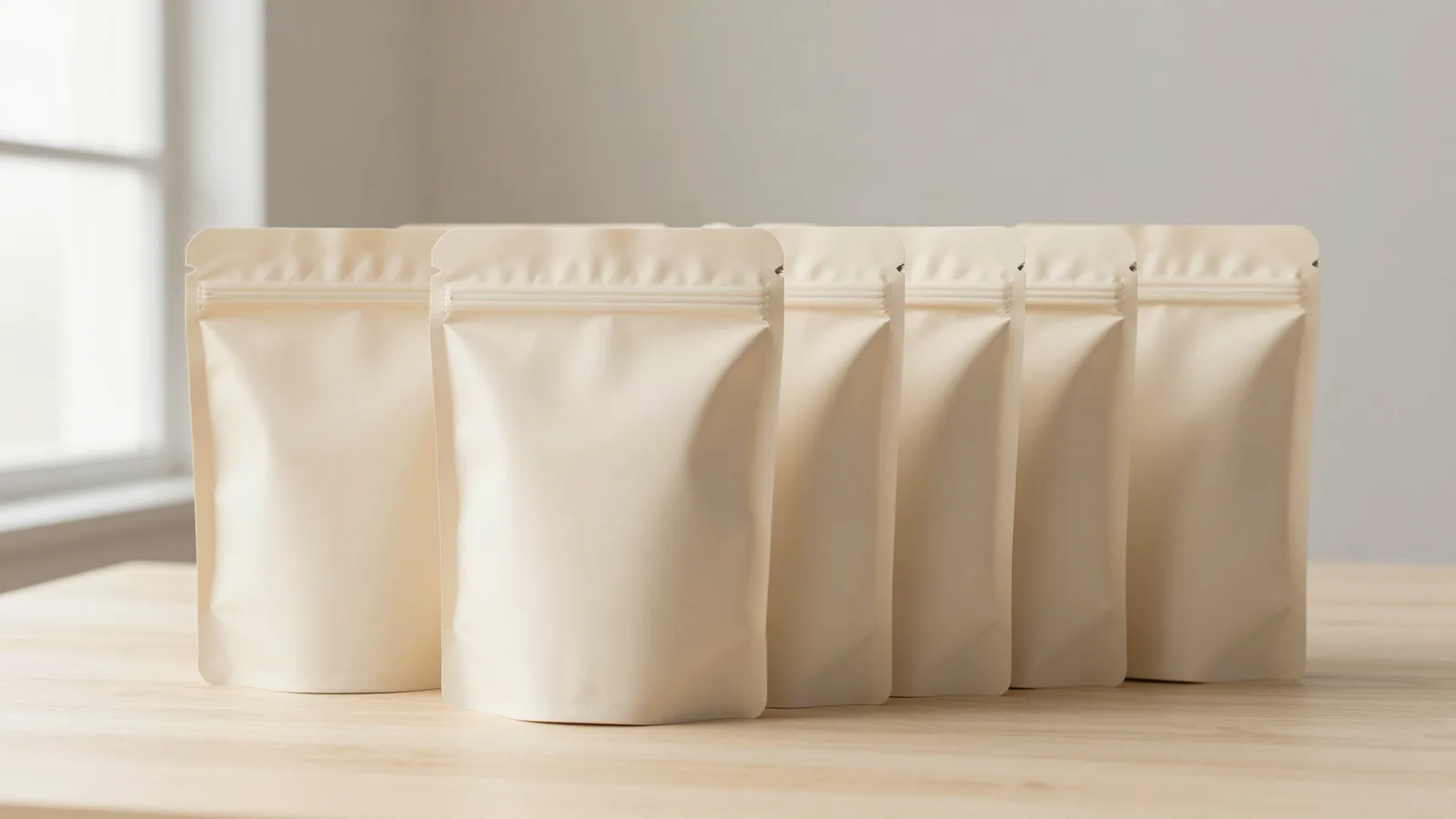



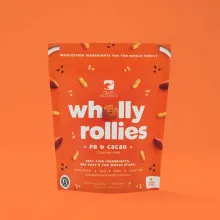




































A stand-up pouch is a flexible package with a bottom gusset that expands when filled and lets the package present upright. Capacity belongs to the filled product, not the empty pouch photograph. Density, particle size, settling, headspace, zipper position, and gusset shape all affect the finished result. Start with the product and target fill, then specify the film layers, closure, artwork, finish, and display position against that reference.
How should a stand-up pouch capacity be chosen?
A stand-up pouch capacity should be chosen from the product's target fill and packed volume, then checked against the finished pouch dimensions. A light, bulky product can occupy more space than a dense product at the same weight. Particle size and settling also change the fill height. Give the quote the product form, target fill, headspace, and display position instead of choosing a pouch from an empty image.
| CPL capacity reference | Planning use | Still needed for the final fit |
|---|---|---|
| 1/8 ounce | Small-fill flexible package reference | Product density, headspace, closure, and gusset |
| 3.5 grams | Compact fill reference | Product volume, seal area, front panel, and artwork |
| 4 ounces | Larger flexible fill reference | Filled width, base stability, zipper position, and display |
These capacity references appear in CPL's flexible packaging materials, including mylar formats. They are planning anchors, not universal capacities for every stand-up pouch. The final pouch needs to be checked against the actual product and selected construction. If the contents will contact the package, ask us about food-contact options for your product before the material direction is approved.
What do the layers in a stand-up pouch do?
The layer stack controls the printed outside, the barrier discussion, and the product-facing seal layer. PET or polyester film can provide the outer print direction. VMPET or aluminum foil can provide a barrier-focused middle layer. PE or LLDPE can form the inner sealing layer. The exact construction must be tied to the product, closure, finish, and sealing requirements in the quote.
| Layer direction | Function to discuss | Question for the brief |
|---|---|---|
| PET or polyester film | Outer print and surface direction | How should the artwork and finish read? |
| VMPET or aluminum foil | Light and barrier direction | What protection question does the pouch need to answer? |
| PE or LLDPE | Inner seal and product-facing layer | What seal and contact details belong in the quote? |
Mylar is a polyester film name, not a complete pouch construction. A metallized film or foil layer is what creates the barrier direction in a laminate, so the word mylar alone does not identify the pouch's protection. Ask for the actual layer stack, seal layer, finish, and closure before approving the material.
When should a pouch use kraft, clear, or opaque film?
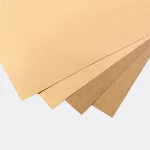
Use a kraft surface when the package should show a paper-led appearance, a clear face when product visibility matters, and an opaque or metallic surface when the artwork needs a covered base. These choices describe what the buyer sees first. They do not replace the layer-stack discussion. A kraft outer surface can still sit over other films, and a clear panel does not answer the full barrier question.
Use kraft stand-up pouches as a kraft-led starting point. herbal tea pouches and give the brief product-led routes for discussing fill, closure, artwork, and display. Keep the final film construction attached to the selected pouch rather than assuming a product category decides it.
How do the zipper and gusset change the pouch?
A zipper takes space from the top of the pouch, while the bottom gusset controls how the filled package stands. A gusset is the folded panel that opens as the pouch fills. The top seal, tear feature, hang hole, and zipper each occupy their own area, so they must be shown with the front panel and artwork on the same specification.
For the broadest starting point, review custom stand-up pouches. For a resealable direction, review zipper pouches. Keep the pouch name, target fill, dimensions, layer stack, closure, gusset, finish, artwork orientation, and product reference in one brief. A pouch that stands well empty can settle differently when filled.
What should a stand-up pouch proof show?
A stand-up pouch proof should show the filled-product reference, capacity, finished dimensions, gusset, closure, seal area, layer direction, artwork orientation, finish, quantity, and destination. Check the zipper position against the usable front panel. Check the bottom fold against the artwork. Check the seal area against the copy and any opening feature.
Low-resolution art, RGB conversion, missing bleed, and type placed too close to a seal can create avoidable prepress problems. Free design support can help organize the proof before approval. The $19.99 sample kit can help compare film feel and surface direction before the final pouch construction is selected.
What commercial terms apply to stand-up pouches?
The MOQ is 100 units. Pricing is from $0.49 per unit at volume, quoted to spec. Production is typically 8 to 10 business days after proof approval, plus delivery. Free US shipping and free design support are available. For a wider packaging route, review custom packaging solutions, then send the product form, target fill, preferred closure, material direction, quantity, and destination for a quote.
Frequently Asked Questions
How do I choose a stand-up pouch size?
Choose a stand-up pouch size from the product's target fill, density, particle size, settling behavior, headspace, closure, gusset, and display position. A capacity reference does not replace a filled-product check. Share the product form and packed dimensions so the final pouch can be matched to the selected construction and front-panel artwork.
What do the 1/8 ounce and 3.5 gram references mean?
The 1/8 ounce and 3.5 gram values are separate CPL flexible-packaging capacity references used to start a sizing discussion. They are not proof that every stand-up pouch with either reference has the same finished dimensions. Confirm the product volume, density, closure, gusset, headspace, and filled fit before approval.
Is Mylar a complete stand-up pouch material?
Mylar is a polyester film name, not a complete stand-up pouch material specification. The pouch's barrier depends on the laminate, such as a metallized film or foil layer, plus the inner sealing layer. Ask for the actual layer stack, product-facing material, finish, closure, and seal details in the quote.
What does a gusset do on a stand-up pouch?
A gusset is the folded bottom panel that opens as the pouch fills and helps the package stand upright. Its shape affects base stability, filled width, front-panel area, and artwork placement. The gusset must be checked with the closure, seal area, target fill, product settling, and finished pouch dimensions.
What MOQ and timing apply to stand-up pouches?
The MOQ for stand-up pouches is 100 units. Pricing is from $0.49 per unit at volume, quoted to spec. Production is typically 8 to 10 business days after proof approval, plus delivery. Free US shipping and free design support are available. The $19.99 sample kit is credited toward the first order.