




























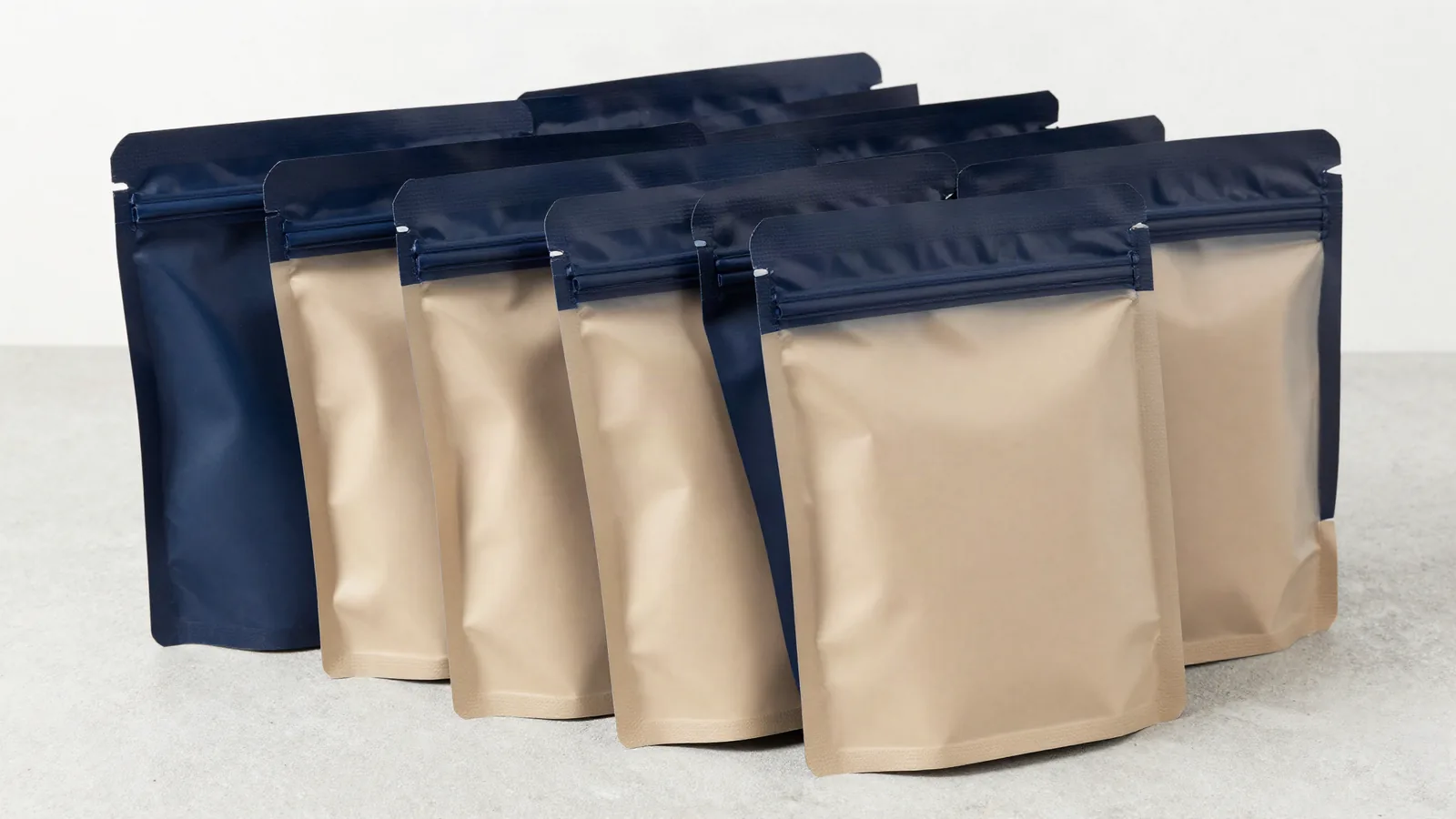




















































What does a standup pouch manufacturer actually produce?
A standup pouch gets its upright shape from a bottom gusset, the folded panel that forms a base after filling. It is flexible packaging, not a rigid carton. A converter prints the web, cuts the pouch body, then seals the sides and base. The build can include a zipper, spout, tear notch, hang hole, rounded corner, or clear window, and each feature changes the cut pattern or filling sequence.
A laminate is two or more bonded film layers. PET can carry the printable outer surface, AL is the aluminum barrier layer, and PE is the sealable inner layer. The layer stack controls opacity, light and oxygen protection, seal behavior, and how the pouch feels in hand. Ask us about food-contact options when the pouch will touch food.
Which standup pouch structure fits the product?
The closure tells the filling line and the customer how the pouch will behave after it leaves the case.
| Format | Typical product fit | Construction point | Buyer check |
|---|---|---|---|
| Zipper pouch | Dry goods, snacks, powders | Top zipper and heat-seal margin | Repeated opening and closing |
| Spout pouch | Liquids, sauces, personal care | Fitment, cap, and pour path | Opening size and product flow |
| Window pouch | Retail products where visibility matters | PET viewing area inside the cut pattern | Keep the window clear of seals |
| Foil pouch | Products needing light and oxygen protection | PET / AL / PE laminate | Compare the barrier and seal layer |
Start with custom standup pouches, kraft standup pouches, or kraft paper zipper pouches. For dispensing, compare the cosmetic spout pouch and aluminum foil spout pouch.
How should I size and specify a standup pouch?
A filled product, not the flat art file, sets the pouch size. Record the product width, height, depth, fill weight, headspace, closure clearance, and the way the contents settle. Headspace is the empty space above the fill that lets the closure seal without catching product. Standup pouches commonly run about 3 to 7.5 inches wide, but gusset depth, seal margins, zipper placement, spout position, and product density change usable capacity.
Tell the supplier whether filling happens by hand or equipment, then mark the opening direction, tear notch, hang hole, rounded corners, and bottom gusset on the brief. Powder, liquid, and irregular pieces move differently inside the same nominal size. A filled physical prototype checks balance, opening behavior, and shelf presentation before the flat file gets approved.
Which printing and finishing choices should I compare?
Print method decides how much artwork variation a pouch run can absorb. Flexographic and gravure printing suit longer flexible-packaging runs, while digital printing suits short runs, test versions, or multiple variants. A press review should cover color targets, white ink, reverse-side printing, metallic effects, repeat length, ink coverage, and registration around seals. Registration is the alignment of one printed layer or color with another.
Matte lamination cuts surface sheen; gloss lamination increases it. A spot UV area creates a hard, glossy accent, and foil adds a metallic mark, but both need clear placement on the artwork. Keep the desired effect off folds, zippers, and heat-seal zones. The package may look right on a flat screen and still fail when the gusset opens.
How should I check pouch artwork before production?
A dieline is the flat cutting template used to place panels, folds, seals, and trim lines. It should mark the front and back panels, bottom gusset, zipper or spout, safe text areas, tear features, and every window boundary. Keep type away from scores, where a score is a pressed fold line, and leave the printer's stated bleed outside the trim edge.
Low-resolution art looks soft at final size. RGB art can shift when it is converted for press, and copy left too close to a score can break across the fold. Check the reading direction, white-ink treatment, barcode placement, and opening sequence in the digital proof. That proof is the point to catch a wrong panel or seal clearance, not after a finished run is packed.
What should I ask a standup pouch manufacturer before ordering?
A useful quote names the product, fill method, layer structure, finished size, closure, print process, finish, and delivery destination.
- Send product dimensions and fill weight.
- State zipper, spout, tear notch, hang hole, window, or foil preferences.
- Mark front, back, gusset, seal, and closure areas on the artwork.
- Note hand filling or equipment filling.
- Ask for a proof that shows the pouch flat.
Custom Packaging Lane is a US-based packaging supplier. Quotes use a 100-unit minimum, with pricing from $0.49 per unit at volume, quoted to spec. Production is typically 8 to 10 business days after proof approval, plus delivery. Free US shipping, free design support, and a free dieline are available. The $19.99 sample kit is credited to the first order. Use custom packaging design to organize the artwork and structure brief.
Frequently Asked Questions
What is the difference between a zipper pouch and a spout pouch?
A zipper pouch closes across the top and suits dry goods, snacks, or powders that need repeated access. A spout pouch uses a fitment and cap for liquids, sauces, or personal care products that are poured or dispensed. The closure changes the seal area, artwork safe zone, filling method, and opening motion, so choose it from product behavior.
What do PET, AL, and PE mean in flexible packaging?
PET is the printable outer film, AL is the aluminum layer that supports light and oxygen protection, and PE is the sealable inner film. A PET / AL / PE laminate combines those jobs in one flexible structure. The actual layer order and seal conditions should match the product, filling method, and intended use.
What width is typical for a standup pouch?
A typical standup pouch is about 3 to 7.5 inches wide, but width alone does not confirm capacity. Gusset depth, seal margins, closure placement, headspace, and product density change the usable fill area. Measure the filled product and check a physical sample before treating a nominal pouch width as the final specification.
Can a standup pouch have a clear window?
A standup pouch can use a clear window when product visibility fits the structure. PET window film is commonly around 0.2 to 0.3 mm. The opening should stay clear of folds, heat seals, zipper placement, and copy that must remain readable. Window size also changes the amount of printable surface left on the front panel.
How do I check a filled pouch before printing?
A filled pouch sample lets you check balance, standing behavior, closure access, headspace, and the way the product settles. Test the actual product or a representative fill, then inspect the bottom gusset, tear notch, spout or zipper, and artwork orientation. A flat file cannot show how the pouch behaves after it opens and takes its final shape.












