




























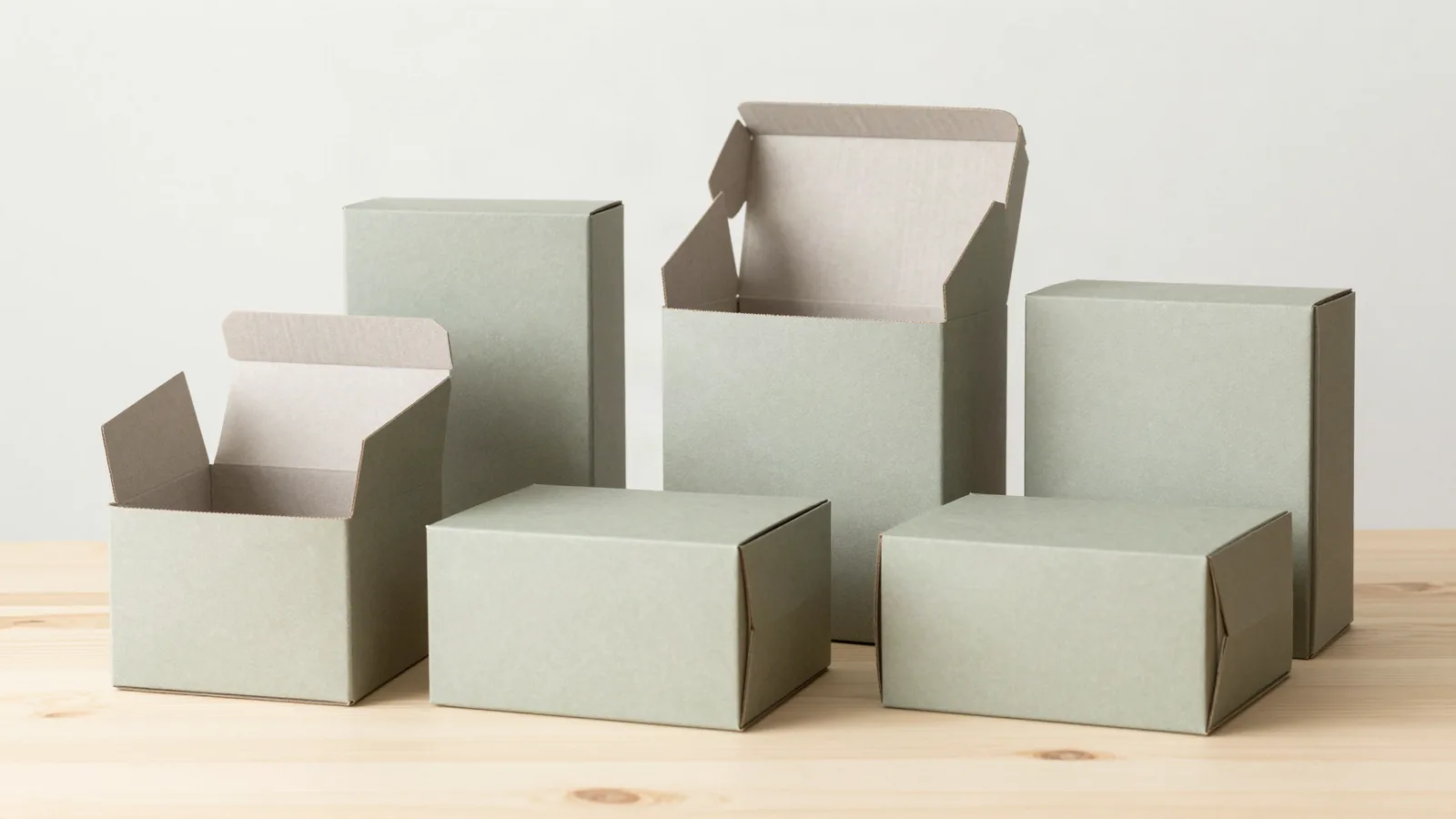




















































An invitation box is sized around a stationery suite, which is the invitation, reply card, envelope, and enclosure pieces packed together. The box has to hold the complete stack, keep loose pieces in their place, and present the first item in the order the recipient should discover it. List the suite before drawing the package.
What belongs in an invitation box?
The packed suite sets the inside length x width x depth, including the card stack, envelope position, loose inserts, ribbon or paper wrap, and any finger-lift clearance. A tolerance is the small amount of clearance between the loaded pieces and the inside walls. About 1/16 in (1.5 mm) is a common packaging convention, but the actual stationery should decide the final fit.
- Identify the invitation face that should appear first.
- Separate stacked cards from pieces that need their own pocket or cavity.
- Mark the opening direction and any pull tab, sleeve, or lift point.
- Keep text, monograms, and artwork away from folds and closure areas.
A thick invitation stack, rigid envelope, or layered insert can consume more space than a single flat card. Load the complete suite before approving the inside dimensions.
Which structure suits the invitation experience?
A drawer or slide creates the most staged reveal because a tray travels inside an outer shell. A sleeve keeps the exterior simple, a two-piece rigid box separates lid and base, and a magnetic flap makes the front panel part of the opening action.
| Structure | Where it fits a stationery brief | What to decide |
|---|---|---|
| Sleeve | Printed wrap around a tray, stack, or existing package | How the sleeve stays aligned during handling |
| Drawer or slide | Layered reveal with a tray and outer shell | Pull point and slide guide |
| Two-piece rigid | Separate lid and base for a fixed presentation | Clearance over the loaded base |
| Magnetic flap | Flap-led opening with a closed front panel | Closure position away from the invitation |
Choose the structure after arranging the stationery in its intended order. The opening must make sense with the envelope, reply card, insert, and any pull point already in place.
What board construction fits an invitation box?
Rigid chipboard in the 1.5 to 3 mm range gives the presentation box a fixed shape; lighter paperboard folds around the suite. Folding cartons commonly reference SBS, C1S, or C2S paperboard from 12 to 24 pt. Kraft board is commonly discussed around 18 to 24 pt. Rigid chipboard can be wrapped in 100 to 157 gsm art paper.
Board selection changes corner behavior, wrap seams, lid clearance, and the feel of the opening. A rigid envelope or layered insert needs room above the card stack, and the lid must close without pressing the pieces out of position. If the box travels inside a separate outer shipper, define that layer in the brief.
Which print process fits detailed stationery?
Offset CMYK is the common reference for detailed paperboard artwork, while digital printing can suit short runs or artwork that may change. Keep fine type, monograms, and patterns away from folds, seams, glue areas, and closure points.
Matte or gloss lamination changes the surface sheen. Soft-touch changes hand feel. Spot UV can isolate a monogram or pattern, while foil stamping, embossing, and debossing add physical contrast to selected details. Put each finish on the proof with the opening direction visible.
When does an invitation box need an insert?
An insert earns its space when cards, envelopes, or small enclosures need fixed cavities, separation, or a lift point. The interior component may be paperboard, foam, or another specified material. Custom foam box inserts can prompt questions about cavity layout, edge clearance, and the order in which the suite loads.
Check the insert with the actual stationery inside. Test the open and closed package, then confirm that the first item presented is the item intended.
Which catalog examples can guide an invitation package?
Invitation boxes are the closest catalog reference for a stationery-led format. Embossed tin boxes give a comparison point for a metal container and a paperboard or rigid presentation structure. Wine box packaging can frame questions about a structured opening, fitted interior, and presentation panel even when the product differs. Use the custom packaging design hub for artwork, dieline, and finish planning.
How should delivery affect the box design?
The outside carton controls the delivery plan; the presentation box is only one layer. US ground carriers commonly calculate dimensional weight with L x W x H / 139, so give the destination and outside carton dimensions with the brief. State whether the invitation box is the final presentation package or an inner component.
Load the package before checking movement, corner pressure, and the position of the opening panel. Then review the arrangement inside the outer carton, where empty space and compression can change the result.
Custom Packaging Lane quotes from a 100-unit minimum. Pricing is from $0.49 per unit at volume, quoted to the approved specification. Production is typically 8 to 10 business days after proof approval, plus delivery. Free US shipping and free design support are available, with a free dieline drawn from the suite. Order the $19.99 sample kit, credited toward the first order.
Frequently Asked Questions
How do I size an invitation box?
An invitation box should be sized around the complete stationery suite, including the invitation, reply card, envelope, inserts, ribbon or paper wrap, and finger-lift space. State the inside length x width x depth, then check the loaded pieces. About 1/16 in (1.5 mm) is a common tolerance convention, but the actual suite controls the final clearance.
Which structure creates a staged invitation opening?
A drawer or slide creates a layered reveal with a tray and outer shell. A two-piece rigid box separates the lid and base, while a magnetic flap makes the front panel part of the opening action. A sleeve keeps the exterior simple. Arrange the stationery in its intended discovery order before selecting the structure.
What does an insert change inside the box?
An invitation box insert gives a card, envelope, or enclosure a defined cavity, separation point, or lift point. It also uses interior space and changes the loading sequence. State what the insert must hold, then check the actual suite inside the open and closed package before the dimensions are approved.
How do finishes affect detailed invitation artwork?
Offset CMYK suits detailed paperboard artwork, while digital printing can suit short runs or changing artwork. Matte or gloss lamination changes sheen, soft-touch changes hand feel, and spot UV, foil stamping, embossing, or debossing isolate selected details. Keep fine type away from folds, seams, glue areas, and closure points.
What does L x W x H / 139 mean for mailing?
US ground carriers commonly use L x W x H / 139 to calculate dimensional weight. An invitation box should therefore be reviewed inside its outside carton, with the destination and carton dimensions recorded. Check movement, corner pressure, empty space, and opening-panel protection in the loaded arrangement.












