








































































A breakable box is packaging planned around a fragile product, its clearance, its insert, and the way the closed package moves through handling. The name describes the job, not a standard structure. Start with the product in its packed orientation and draw the protection path outward: cavity, support, closure, outer package, then packed footprint. A glass container, ceramic object, or delicate kit can fail when the insert leaves room to rattle, when type sits over a score, or when the outer shipper is sized before the loaded interior is known. Keep the brief practical.
What should a breakable box resolve first?
The product's packed orientation decides the first drawing: note its fragile areas, contact points, cavity, clearance, insert, and opening direction before choosing the outer package. Then label the job as display, handoff, parcel delivery, or a combination of those uses. A shaped cavity can keep a single object from moving, while dividers or pads separate several pieces. If the package touches a consumable product, ask us about food-contact options for your product. Put the protection notes beside the presentation notes, because a closure or insert can change how the buyer reaches the product.
Which structure should I compare for a fragile product?
Folding cartons, corrugated shippers, two-piece rigid boxes, and mailers with inserts solve different parts of the same brief. A folding carton is a printed board package for a contained product. A corrugated shipper is the fluted outer carton used for parcel handling. A two-piece rigid box has a separate base and lid. A mailer with an insert combines a roll end tuck top format with internal support.
| Structure | Role in the package | Question to test |
|---|---|---|
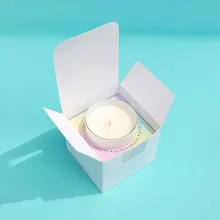
| Folding carton | Printed board package for a contained product | Does the insert control movement inside the carton? |
| Corrugated shipper | Fluted outer carton for delivery handling | Do the flute, closure, and supports fit the route? |
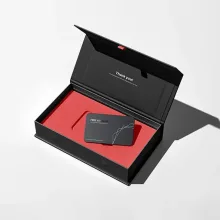
| Two-piece rigid box | Separate base and lid for presentation | Does the base, lid, and insert hold the reveal? |
| Mailer with insert | Roll end tuck top package with internal support | Does the product stay positioned through opening? |
Which materials are common for breakable packaging?
Corrugated E, B, and C flutes are common references for an outer shipper, and 32 ECT is a common board-strength reference. ECT means edge crush test, a measure used to discuss how corrugated board handles compression at the edge. E-flute is thinner and usually prints finer detail than B-flute; C-flute sits between those common choices. For printed cartons, SBS, C1S, or C2S paperboard in the 12 to 24 pt range is a common starting range. Kraft board commonly falls in the 18 to 24 pt range. Rigid chipboard in the 1.5 to 3 mm range can be wrapped in 100 to 157 gsm art paper. Choose caliper and flute with the filled weight, insert, stacking path, and surface requirement in view.
How should I plan a protective insert?
An insert should hold the loaded product in a repeatable position without blocking the lid, instructions, or opening sequence. Custom foam can create a shaped cavity, while paperboard or chipboard dividers can organize several pieces. Draw every cavity, divider, pad, support, and contact point from the loaded product outward. An insert cut too close to the product can stop the lid from closing; an oversized cavity lets the product rattle. Test the insert with the closed lid, tuck panel, or mailer, then check how the product goes in and comes out.
How do dimensions affect the shipping package?
Inside measurements control fit, and outside measurements control the packed footprint. Write the inner box as length x width x depth, then record the assembled outer package separately as length x width x height. About 1/16 in, or 1.5 mm, is a common tolerance reference, subject to the material and structure. Carrier dimensional weight for US ground commonly uses L x W x H / 139, so check the shipper after adding the insert, closure, and any separate protective layer.
Which closure and finish details matter?
Closure choice changes assembly, base support, and how the package opens on a counter or doorstep. An auto-lock bottom and a crash-lock bottom both change the way the base carries load. A mailer, roll end tuck top, or FEFCO 0427 reference changes the opening and panel layout; FEFCO 0427 is a standard corrugated packaging reference code for a folded structure. Offset CMYK is common for detailed board artwork, flexo is common for corrugated, and digital printing can suit short-run checks. Matte or gloss lamination, soft-touch, spot UV, foil stamping, embossing, and debossing should sit away from folds, seams, glue tabs, and insert contact points.
Which catalog products can guide a breakable box brief?
The catalog gives you real structure references before the fragile product is quoted. Start with custom foam box inserts when cavity geometry and movement control are central. Compare wine box packaging for a bottle-oriented structure, and review shoe box packaging for a broader folding-box footprint. Custom DNA test kit boxes can frame a multi-component insert discussion, while embossed tin boxes provide a durable presentation reference. These pages do not replace the fragile product measurements.
What should I include in a breakable box request?
A useful request gives the drafter the filled product, the loaded orientation, and the delivery route before artwork is reviewed. A digital proof is where you catch low-resolution art, RGB color shifts, missing bleed, a barcode placed too close to a fold, or type set over a score.
- Fragile product dimensions, orientation, contact points, and clearance needs.
- Insert, cavity, divider, pad, support, lid, closure, and opening sequence.
- Inner measurements plus packed outside dimensions for delivery checks.
- Board, corrugated flute, print coverage, and finish direction.
- Handling context, destination, quantity, and any separate inner package.
Custom Packaging Lane quotes a breakable box to spec from a 100-unit minimum, with pricing from $0.49 per unit at volume. Production is typically 8 to 10 business days after proof approval, plus delivery. Free US shipping, free design support, and a free dieline are available. Order the $19.99 sample kit, credited to the first order, then use custom boxes with logo when the structure and artwork are ready.
Frequently Asked Questions
How do I keep a fragile product from moving inside the box?
A fragile product stays put only when the cavity, clearance, and insert match its packed orientation. The insert should control contact points without squeezing the item or leaving room for movement. Check the loaded box with the lid closed, then inspect the opening sequence. Product weight, score placement, and the outer shipper still need review because an interior fit cannot correct a weak closure or oversized parcel.
Is foam always the right insert for a breakable package?
Foam is useful for shaped cavities, but it is not the only insert choice. Paperboard or chipboard dividers can separate several pieces, and pads can protect a contact area. Choose after mapping the product surface, cavity shape, removal sequence, and lid clearance. The right test is a loaded sample, not an empty insert on a desk.
What does 32 ECT tell me about a shipper?
32 ECT is a commonly stated board-strength reference based on edge crush testing. It gives the buyer a way to discuss corrugated board strength, but it does not describe the whole package. Flute, direction, closure, footprint, insert, and handling route still affect the shipper. Treat 32 ECT as a trade reference, then review the loaded structure.
Should package dimensions be measured inside or outside?
Measure the product and cavity with inside dimensions, then record the assembled package with outside dimensions. Use length x width x depth for the inner fit and length x width x height for the packed footprint. About 1/16 inch, or 1.5 mm, is a common tolerance reference. The structure and material decide the final clearance.
Can decorative finishes go on a protective package?
A protective package can carry matte or gloss lamination, soft-touch, spot UV, foil stamping, embossing, or debossing. Keep treatments away from scores, seams, glue tabs, and surfaces that rub against the insert. A finish that looks good on a flat sheet can crack at a fold or disappear under a support, so inspect the folded structure.