




























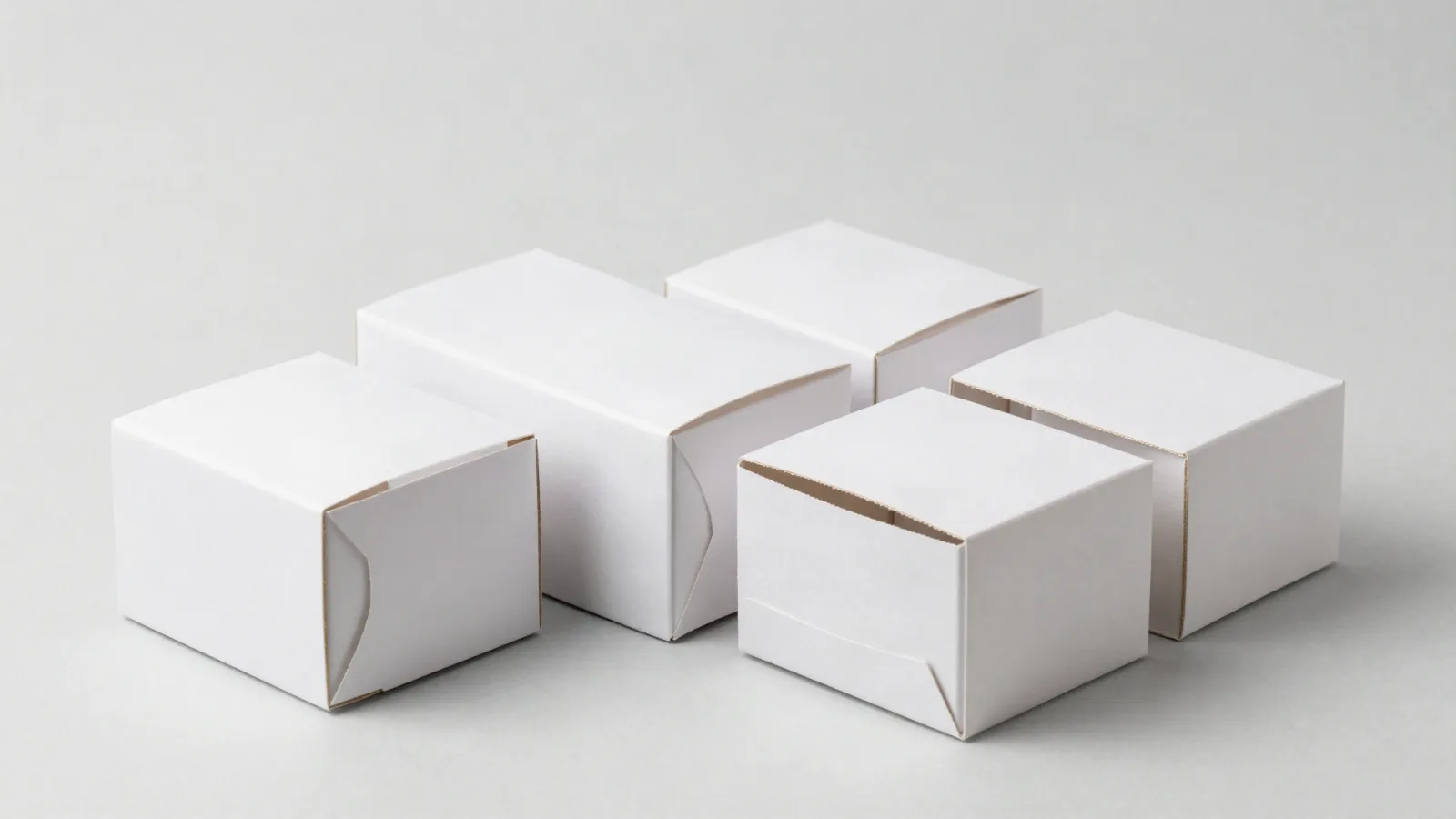




















































Straight tuck end boxes are folding cartons with top and bottom tuck flaps that close in the same direction. A panel map is a labeled plan of the assembled front, back, sides, top, bottom, glue tab, scores, and closure areas. It connects the flat dieline to the carton a buyer actually handles.
What are straight tuck end boxes?
Straight tuck end boxes are folding cartons with matching tuck direction at both ends. The style sets the closure relationship, not the board grade, print method, finish, or finished size. Those decisions belong in the same request because a panel that looks large in the flat file may become a side panel after folding.
Start with the product dimensions and how it enters the carton. Then identify the outward-facing panel and opening end. We draw the dieline from the product details, and a digital proof comes before anything prints.
How should artwork be laid out on a straight tuck end box?
Lay out artwork from the assembled carton first, then place it on the flat dieline. Put the logo and product name where the buyer sees them first, and reserve side or back panels for supplied copy, variant information, or handling notes.
Prepress catches details that a screen mockup can hide. Low-resolution art loses edge detail. RGB artwork can shift when converted for press. Type set too close to a score can split across a fold, and missing bleed can expose the board at a cut edge. The proof is where these errors should be found.
Which panels need labels in the dieline?
Each panel needs a named job before the file is approved. The exact assignment can change, but the file should show it clearly.
| Area | Possible job | Proof check |
|---|---|---|
| Front panel | Logo, product name, main artwork | Faces the buyer after folding |
| Back panel | Supplied product copy | Text direction and clear margins |
| Side panels | Variant or collection cues | Reads on a shelf or in a group |
| Top and bottom | Closure context and orientation | Flaps tuck without covering copy |
| Glue tab and scores | Structural assembly areas | Important artwork stays clear |
Do not let the product name do the panel planning. A carton for a candle, a tuck-end carton for an accessory, and a carton with a seal-end closure can use different front, side, and opening priorities even when the outside dimensions look close. The assembled view settles the orientation.
Keep the glue tab and structural scores separate from customer-facing copy. A panel map also gives the printer a clean place to record finish notes and artwork versions.
How do scores, glue tabs, and finishes affect the proof?
A score is a pressed line that guides a fold, and a glue tab is the area joined during carton assembly. Keep small type, barcodes, and fine foil detail away from both unless the approved dieline calls for it.
Matte, gloss, soft-touch, foil, spot UV, embossing, and debossing should be listed by panel and surface. Check the flat file and assembled view together. A finish that looks centered before folding can land near a score or disappear around a tuck.
Which CPL products can you compare with straight tuck end boxes?
Custom straight tuck boxes are the direct reference. Custom tuck end boxes show the broader family. Custom seal end tuck boxes give a different end treatment, and reverse tuck candle boxes provide a contrasting tuck direction. Use a comparison page to frame the build, not to copy a dieline without checking the product.
What should a straight tuck end box request include?
A useful request names the carton style, packed dimensions, opening end, outward-facing panel, paperboard direction, finish, artwork status, quantity, and delivery destination.
- Product dimensions and packing direction
- Panel map with folds, glue tab, and closure areas
- Paperboard and finish direction
- Artwork file and copy status
- Quantity and delivery destination
Keep supplied copy and the artwork version with the request. Free design support covers the dieline and proof, so the panel map is ready before printing. Use custom packaging design for the design route.
What are the order terms for straight tuck end boxes?
The MOQ is 100 units. Pricing is from $0.49 per unit at volume, quoted to spec. Production is typically 8 to 10 business days after proof approval, plus delivery. Free US shipping and free design support are available. The $19.99 sample kit can help your team check stock, finish, and fold direction before approval.
Frequently Asked Questions
What does STE mean in packaging?
STE means straight tuck end, a folding carton style with top and bottom tuck flaps that close in the same direction. The acronym describes the closure layout, not the paperboard, finish, size, or print method. Those details belong in the dieline, quote, and proof for the actual product.
Where should the logo go on a straight tuck carton?
The logo should sit on the outward-facing panel that the buyer sees first after assembly. The product name can share that panel, while supplied copy and variant details can move to the back or sides. Check the assembled view because flat artwork can rotate or shift across scores.
Should scores be visible in the artwork file?
Scores should remain visible in the dieline because they show where the carton folds. Keep small type, barcodes, foil detail, and important artwork away from scores and glue tabs unless the approved construction places them there. Review the flat file beside the assembled carton before approval.
Which product is the closest CPL reference?
Custom straight tuck boxes are the closest CPL reference for a straight tuck end carton. Custom tuck end boxes show the wider style family, while seal end and reverse tuck candle boxes help compare different closure arrangements. The final dieline still follows the packed product dimensions.
How soon does a straight tuck end box run start?
Straight tuck end production is typically 8 to 10 business days after proof approval, plus delivery. The clock begins after proof approval, not at the first quote request. The MOQ is 100 units, pricing is from $0.49 per unit at volume, quoted to spec, with free US shipping and free design support.












