




























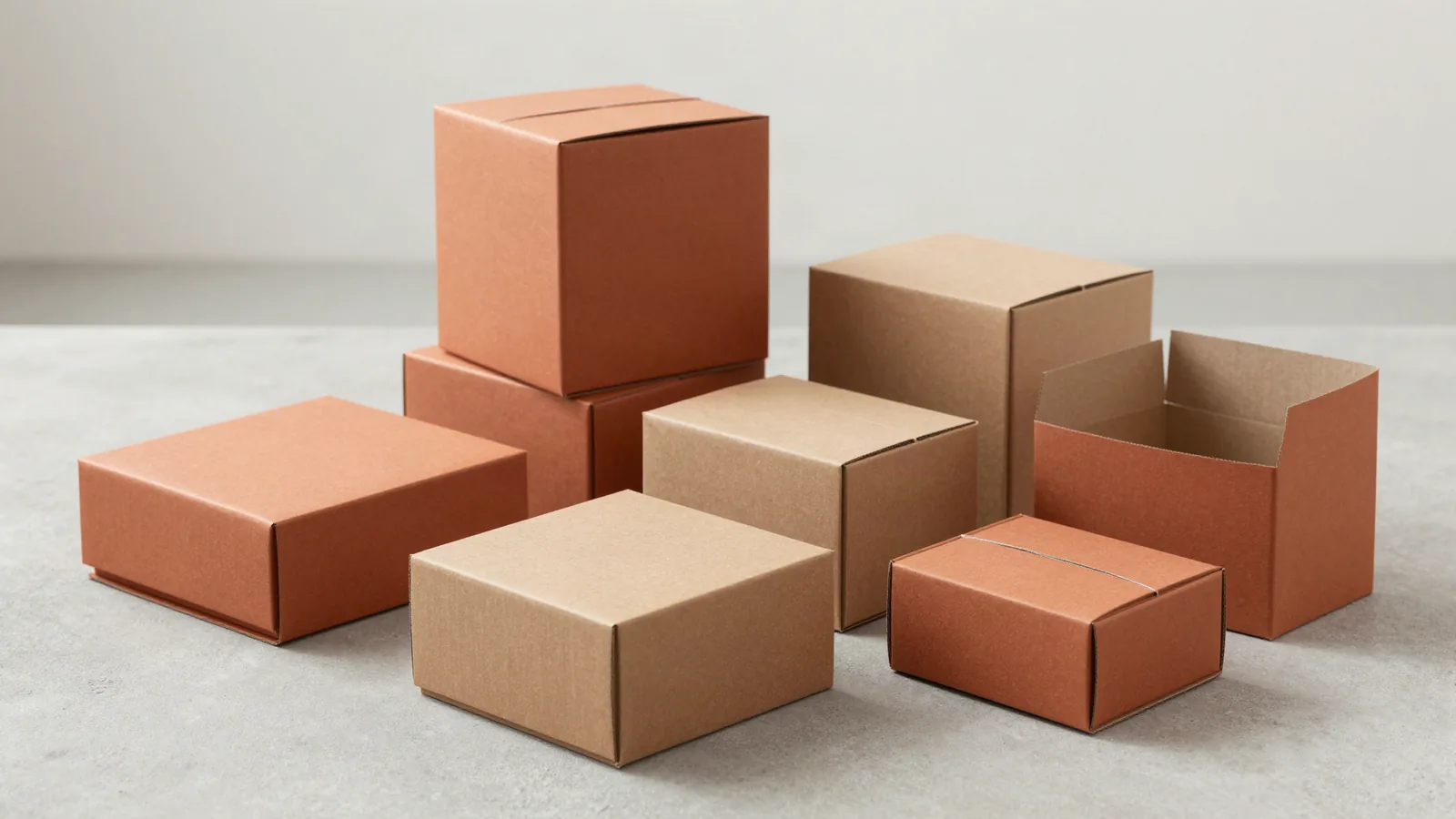




















































A dieline is the flat cutting template used to print, cut, and fold a package. Unique custom packaging starts there, not in a mockup. The dieline has to account for the product shape, opening motion, touch points, and the steps needed to fold, glue, or assemble the package. A concept can look clever on screen and still become a crooked lid, blocked window, or tray that traps the product at the packing table.
What does unique custom packaging need to do?
The opening motion should have one job: make the product easy to reveal and easy to put back. A drawer or slide adds a pull-out action. A two-piece rigid box separates lid and base. A sleeve can hide or reveal a contrasting inner package. Pillow and gable structures change the silhouette, while a mailer has to protect the product through handling. Each choice needs a packing reason.
| Format | What the buyer sees | First structural check |
|---|---|---|
| Custom tin | Metal body with a separate lid | Lid fit, edge treatment, and printable area |
| Drawer or slide | Inner tray moving through an outer sleeve | Pull clearance and tray stop |
| Magnetic flap | Rigid lid landing at a defined closing point | Magnet placement and wrap turns |
| Window carton | Printed board with a visible product area | Window clearance from folds and glue |
| Pillow or gable | Silhouette carrying part of the presentation | Clean forming, closing, and packing |
| Mailer | Roll end tuck top outer package | Product restraint and closure strength |
A stable reference plane keeps the concept from becoming a collection of unrelated cuts. Solve the product cavity, board direction, crease pattern, closure, and packed dimensions before treating artwork as final. For an asymmetrical product, a tray, divider, or shaped support can do more work than a highly cut outer shell.
Which materials fit a distinctive structure?
Board caliper is the first material decision because a folding carton, rigid wrap, and corrugated mailer do not crease or stack the same way. The typical industry reference for SBS, C1S, or C2S paperboard is 12 to 24 pt. Kraft board is commonly discussed in the 18 to 24 pt range. Rigid chipboard is typically 1.5 to 3 mm and can be wrapped in 100 to 157 gsm art paper. E, B, and C flute corrugated board are common outer-package references, with 32 ECT used as a common strength convention.
E-flute has a finer print surface and smaller profile than B-flute. B and C flute give the outer pack more thickness and cushioning. A custom tin needs a separate check for lid fit, edge treatment, and printable area because its metal body does not follow a paperboard dieline.
Which finishes make the unusual detail easy to see?
Offset CMYK suits detailed paperboard artwork. Digital printing fits short runs or several artwork versions. Flexographic printing is common for corrugated surfaces. Matte and gloss lamination change reflection. Soft-touch changes hand feel. Spot UV, foil stamping, embossing, and debossing can pick out one mark or panel without cutting a new silhouette.
The proof should show every score, fold, bleed, and finish location. Check low-resolution art, RGB artwork that shifts when converted for press, type set too close to a score, and bleed missing from the file. At a press check, inspect solid ink fields, fine type, foil registration, and whether the finish lands where the dieline says it should.
Which product formats can I compare before choosing a structure?
The closest reference depends on what carries the experience. Use custom tin packaging when the metal body and lid are the point. custom taper candle packaging shows how a long, narrow product can guide the opening. custom stevia packaging is a small-unit organization reference. For tools and equipment, compare custom scissor packaging and custom drone packaging boxes. Custom printed macaron packaging boxes show how a visible product area can carry the reveal.
What can go wrong before a unique package ships?
A flat sample can hide a bad fold. Assemble the package with the actual product, then check fit, retrieval, closure, and the order of opening. Record how many boxes nest in a master carton and how the packed cartons sit on a pallet before the quote is finalized. Those details affect handling even when the retail box looks right.
- Check product orientation, clearance, and the order of opening.
- Confirm the direction of the board, tin, corrugated, or wrapped rigid material.
- Mark folds, seams, locks, magnets, windows, glue zones, and insert supports.
- Inspect print coverage and finish placement after the package is folded.
- Confirm assembly steps, packed dimensions, quantity, and delivery location.
How does CPL quote a unique packaging project?
Send product dimensions, the desired opening, material direction, artwork status, finish areas, quantity, and delivery location. CPL quotes unique custom packaging to spec from a 100-unit minimum. Pricing is from $0.49 per unit at volume, quoted to spec. Production is typically 8 to 10 business days after proof approval, plus delivery. Free US shipping, free design support, and a free dieline are available. Order the $19.99 sample kit, which is credited to the first order. Compare structures through custom packaging solutions.
Frequently Asked Questions
Can a package be distinctive without a complicated shape?
A package can stay distinctive with a plain folding carton if the opening, product view, or insert does a clear job. Use one unusual feature, such as a drawer, window, sleeve, or shaped profile, then keep closure and packing steps ordinary. The dieline still needs clean folds, glue zones, and a stable product fit.
How do inserts change a custom presentation?
An insert turns an open cavity into a defined product position. For an asymmetrical item, a tray, divider, or shaped support can stop movement without forcing the outer shell to carry every restraint. Cut the insert to the measured product, then check retrieval, rattling, and the order in which the customer sees the contents.
What is the difference between paperboard, rigid board, and corrugated?
Paperboard folds and prints cleanly for cartons. Rigid chipboard holds a separate lid, base, or drawer because the wrapped board keeps its shape. Corrugated board adds a fluted interior that changes thickness, cushioning, and stacking behavior. E-flute suits finer print detail, while B and C flute are common outer-package references.
Which finish should carry the focal detail?
Use the finish where the buyer's eye already lands. Spot UV can isolate a mark, foil can create a sharp contrast, and embossing or debossing can change the surface without changing the cut shape. Matte or gloss lamination affects reflection, so inspect the selected area on the folded package instead of judging a flat artwork file.
What files and measurements support a useful dieline review?
Send inside product dimensions, the opening motion, closure preference, insert needs, artwork panels, and delivery context. Note every surface that gets touched or lifted. The dieline review should catch low-resolution art, missing bleed, type near a score, and clearance problems before the package reaches assembly.












