





















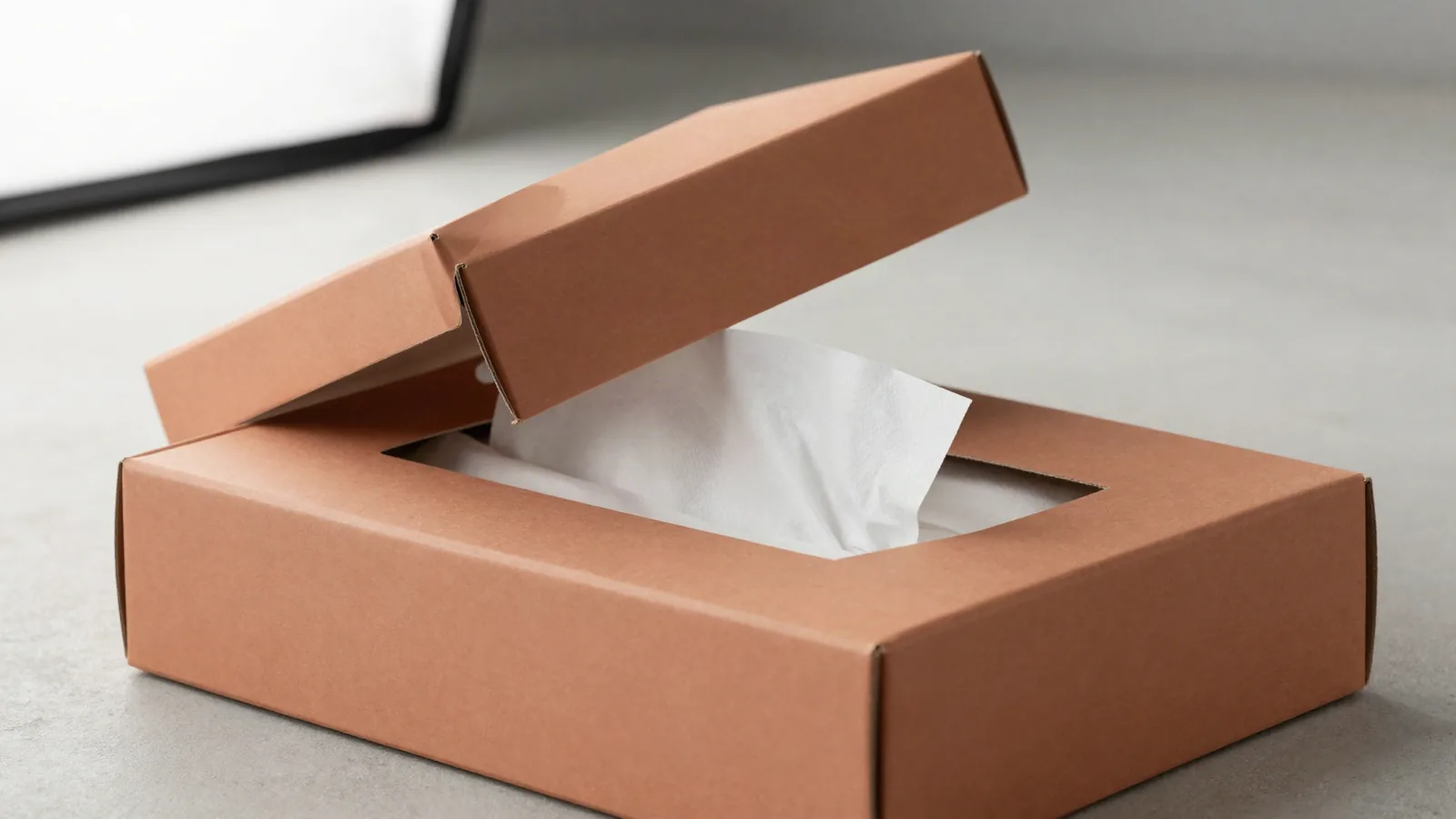









































Void fill packaging is material placed around a product to occupy empty space inside a shipping box, mailer, or carton. Packaging void fill can hold an item in place, soften contact with the box, or stop parts from colliding. Paper, crinkle material, and inserts do different jobs. Choose the material after you know what moves, where it moves, and what the packout must look like when it arrives.
A stock box often leaves air around a product because its length, width, or height was chosen for several items. Filler takes up that space after the box is already selected. It also adds a packing step. That is the practical reason buyers compare void fill with a box built around the product.
Can a custom box eliminate void fill?
A custom-dimension box can reduce or remove supplemental filler when the product dimensions and packout stay consistent. The box starts with the product footprint, height, closure, and required clearance. The product still needs room to load and unload. A box that is too tight can crush corners or fight the closure.
An insert is another route. An insert is a shaped interior piece that holds the product away from the outer walls or separates several pieces. If the insert is cut too loose, the product rattles. If it is cut too close, loading slows or the product catches. Test the filled package, not an empty sample.
| Packaging approach | What it controls | When to consider it |
|---|---|---|
| Stock box plus paper filler | Open space after the box is selected | Several products share one carton |
| Custom-dimension box | Open volume through closer sizing | Product dimensions stay consistent |
| Box with an insert | Product position and separation | Movement needs more control |
| Product-specific box | Fit, closure, and repeatable loading | One product needs a defined packout |
Which products benefit from a closer package fit?
Product-specific boxes give the product a defined starting footprint. Wine box packaging has a bottle-focused packout to plan around. Wax packaging and towel packaging show why an item's shape and surface change the structure discussion. Shoe box packaging gives another fixed footprint. These product pages are starting points, not proof that every order needs the same insert or filler.
Several product sizes can change the answer. A small set of box sizes may pack better than one oversized stock box. List each product size before the dieline is drawn.
How should you compare void fill with a custom box?
Compare the complete packout. Count the steps to load the item, check whether it shifts when the closed box is handled, and look at the inside after the box is opened. Also check whether the chosen box needs an insert, paper, or another stabilizer. Loose filler is not the only variable.
Run the same check with the stock box and the custom-dimension box. Use the product in its normal packed state. A digital proof checks artwork and structure before printing, but it does not replace a fit check with the actual product.
What should I send before the dieline is drawn?
A dieline is the flat cutting template for a package. Send the product length, width, and height, packed quantity, closure preference, shipping context, and presentation requirements. Tell us if an insert will hold one item or several. A product photo or physical sample can clarify shape, but the actual item still needs to be checked in the finished packout.
We draw the dieline with free design support, then send a digital proof before anything prints. The MOQ is 100 units. Pricing is from $0.49 per unit at volume, quoted to spec. Production is typically 8 to 10 business days after proof approval, plus delivery. Free US shipping is available.
The custom packaging design page is the place to start. Order the $19.99 sample kit to compare board and fit before approval. The sample kit is credited toward the first order.
What types of void fill solve different packing problems?
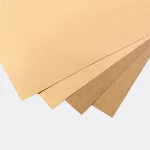
Crumpled kraft paper blocks irregular gaps, air pillows occupy light open volume, partitions separate repeated items, and molded pulp holds a product in a formed cavity. These formats do different work. Blocking limits travel, cushioning manages impact, and separation prevents products from striking each other. A pack may need one function or a combination, so the material should be selected after the movement path is identified.
| Format | Primary job | Useful condition | Watchpoint |
|---|---|---|---|
| Crumpled kraft paper | Blocking and light cushioning | Irregular gaps around a stable item | Compression can reopen space |
| Air pillows | Filling light open volume | Non-sharp products in parcel boxes | Puncture can remove support |
| Corrugated partition | Separation and cell control | Several similar items in one carton | Grid must match the loading pattern |
| Molded pulp insert | Repeatable product location | One defined product geometry | Cavity requires product-specific tooling |
How much void fill should a package use?
The stopping point is reached when the secured closure leaves no harmful product travel and the walls remain flat. Fill the actual gaps around the product rather than laying material only across the top. A basic shake check can expose obvious movement, but it does not reproduce parcel drops, vibration, compression, or repeated impacts.
Pack several units with the same method and record the material amount, placement, loading order, and closing effort. Pay attention to settling after handling. Paper can compress, pillows can migrate, and loose pieces can move away from a heavy corner. The acceptable packout is the one that remains repeatable for the person packing it and keeps the product separated from the outer walls through the intended handling route.
Can void fill increase packing and parcel cost?
Yes, an oversized outer carton consumes more board, storage cube, and pallet space even when the filler itself is light. It can also add a separate dispensing, placing, or cleanup step at the packing station. The useful comparison is total material and labor for a completed pack, not the purchase price of filler by itself.
Measure the closed parcel at its furthest points after packing. Bulged panels, raised flaps, and uneven closures increase the occupied cube. Compare the stock carton with a closer structure using the same protection goal, then record filler quantity, packing time, actual parcel weight, outside dimensions, and test outcome. Removing filler only helps when the replacement pack still performs its protective job.
Which custom boxes can reduce loose filler?
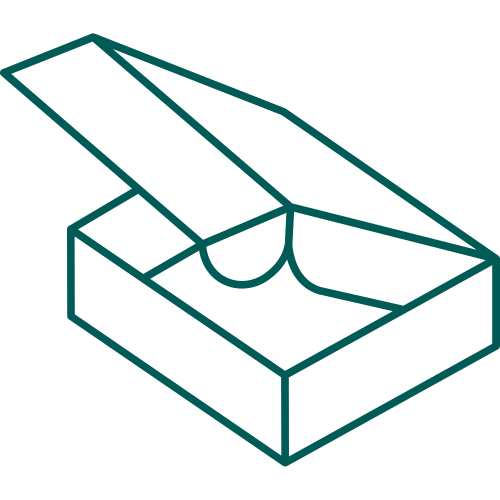
A roll end tuck front mailer can hold a consistent product near its side walls, while a folding carton can place a light retail item inside a smaller scored paperboard cavity. E-flute often suits a mailer that needs a compact wall and a printable face. One commonly specified corrugated option for that build is 32 ECT. See custom mailer boxes for that structural direction.
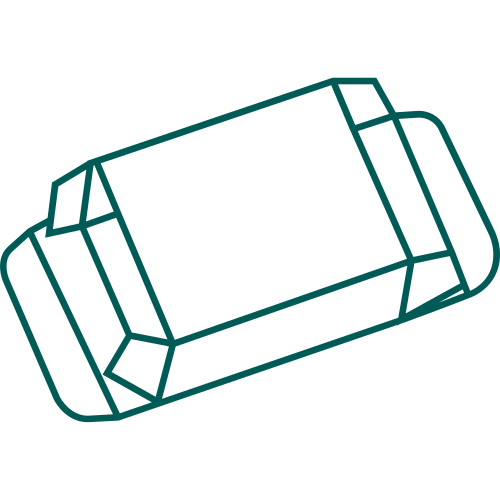
A custom folding carton can use a straight tuck end, reverse tuck end, auto-lock bottom, or crash-lock bottom according to the loading and closure needs. The carton still needs clearance for the product and any inner wrap. Neither format replaces cushioning by name alone. Product fragility, weight distribution, surface sensitivity, and the distribution route decide whether paper, a formed insert, or another protective component remains necessary.
How should a void fill solution be qualified?
Route-specific pack testing provides the decision through controlled drops, vibration, compression, closure retention, and opening inspection. A packout is the complete product, inner components, filler, and outer package in the condition used for shipment. Record product orientation and filler placement before each trial so a passing result can be reproduced.
Inspect for movement, scuffs, cracked components, crushed corners, closure opening, and filler displacement. Test more than the empty box because the load changes how every panel reacts. Start with custom packaging solutions when the outer structure is part of the problem. Use the sample kit to compare board surfaces before placing the final material request, then qualify the finished packed configuration rather than a loose component by itself.
Frequently Asked Questions
What is packaging void fill?
Packaging void fill is material placed around a product to occupy empty space inside a box, mailer, or carton. It can limit movement, cushion contact, or separate pieces. Paper, crinkle material, and inserts perform different jobs. The right amount depends on the product shape, box dimensions, closure, and handling path.
Why do boxes need void fill?
Boxes need void fill when open space lets a product shift, collide with another item, or contact the outer walls during handling. Paper and inserts address that space in different ways. A custom-dimension box can reduce the amount needed, but the filled package still needs a fit check with the actual product.
Can a box made to size remove filler?
A box made to the product's dimensions can remove supplemental filler from some packouts when the product size and loading method stay consistent. The box still needs clearance for loading, a workable closure, and enough structure for handling. Test the closed package with the actual item before removing the filler step.
What measurements help reduce empty space?
Product length, width, height, packed quantity, closure preference, shipping context, and presentation requirements help reduce empty space. Provide each product size when several items share a package. A product photo or physical sample can clarify shape, but the final fit must be checked with the actual product.
What are Custom Packaging Lane's order terms?
Custom Packaging Lane has a 100-unit MOQ. Pricing is from $0.49 per unit at volume, quoted to spec. Production is typically 8 to 10 business days after proof approval, plus delivery. Free US shipping and free design support are available. The $19.99 sample kit is credited toward the first order.